Listen on
Overview
Delivering life-saving allogeneic cell therapies quickly faces a core challenge: the wide variability in biological starting materials. For data leaders, this means finding ways to manage donor diversity, scale production from small clinical trials to commercial volumes, and overcome often manual data collection that slows down critical insights. If not managed effectively, these factors can delay patient access, increase costs, and compromise product quality.
Host Ross Katz speaks with Amy Gamber, VP of Manufacturing at Atara Biotherapeutics—producer of the world’s first approved allogeneic T-cell therapy—who explains how her team addresses these issues. She details how strategic process monitoring, focused automation, and an acute awareness of production costs are essential for delivering consistent, high-quality treatments to patients within days.
This conversation covers the specific data capabilities required to move groundbreaking therapies from discovery to reliable commercial availability, from controlling donor variability and scaling processes to automating data collection and connecting manufacturing metrics with patient outcomes.
Key Takeaways
Donor variability in allogeneic cell therapy demands advanced analytical strategies for matching and material selection.
Cells from healthy donors introduce inherent process variability, complicating manufacturing consistency. Atara addresses this by defining critical quality attributes early, conducting small-scale production screening, and leveraging HLA typing to forecast and proactively source donor profiles that cover patient populations. This analytical approach helps control variability before manufacturing begins, improving the likelihood of a high-quality final product.
Phased automation investment is key to scaling cell therapy manufacturing from clinical to commercial.
Early-phase trials prioritize speed and minimal investment. However, commercial scale demands reliable, closed, automated systems for consistency, contamination control, and higher yields to treat thousands of patients. The decision point for this investment relies on a strong business case, balancing initial capital expenditure against projected savings from reduced waste and improved product quality.
Manual data collection from contract manufacturers severely limits real-time intervention and continuous process improvement.
Relying on CMOs to manually collect and share data—often in PDFs or paper records—creates significant delays in obtaining actionable insights. While ‘for information only’ data provides early visibility, true real-time monitoring and automated tracking are hindered. This lack of immediate data makes proactive problem-solving and rapid corrective actions difficult, costing time and potentially affecting lot quality.
Connecting manufacturing data to patient outcomes represents the next frontier for optimizing cell therapy efficacy and R&D.
Current manufacturing data typically focuses on lot performance. A significant blind spot exists in linking specific lots to individual patient responses. Bridging this gap would allow closed-loop feedback to refine manufacturing processes and inform future product development. Overcoming regulatory and data privacy challenges in collecting patient-level outcome data is the next major hurdle for further personalization and improvement.
Related: CorrDyn provides data engineering and data reliability services for biotech and life sciences manufacturers. We also help clients with data cost optimization and process automation.
Full Transcript
Jason: Hi everyone, this is Jason, producer of Data in Biotech. Before we get started, I wanted to let you know about our latest white paper. It’s a comprehensive guide to implementing machine learning models in biotech manufacturing. It’s a complete overview of all the potential problems of ML adoption and, more importantly, how to solve them. To download it, simply visit connect.corrdyn.com/biotech-ml. We’ve also dropped the link in the show notes of this episode. Okay, let’s get into it. Welcome to Data in Biotech, a podcast from CorrDyn where we explore how companies leverage data to drive innovation in life sciences. Every two weeks, we sit down with an expert from the world of biotechnology to understand how they’re using data science to solve technical challenges, streamline operations, and further innovation in their business. In this episode, we talk with Amy Gamber, Vice President of Manufacturing at Atara Biotherapeutics. Amy shares her insights into the complexities of manufacturing cell therapies, highlighting the importance of managing donor variability, scalability from trials to commercial production, and continuous process monitoring. She and Ross also discuss the necessity of automation to facilitate advanced data collection and the potential of AI in biotech manufacturing. Here we go.
Ross Katz: Amy Gamber, welcome to the Data in Biotech podcast.
Amy Gamber: Thank you very much for inviting me. I’m very happy to be here.
Ross Katz: Well, just to kick us off, could you give us a brief introduction to your background and what brought you here today?
Amy Gamber: Sure. As you said, I am Amy Gamber. I am the Vice President of Manufacturing at Atara Biotherapeutics. In this role, I manage a network of contract manufacturing sites for both clinical and commercial cell therapy programs. That function includes external manufacturing, as well as process engineering and manufacturing support.
Ross Katz: Can you tell us a little bit about Atara Biotherapeutics and the work you do and how that relates to the manufacturing processes you’re talking about?
Amy Gamber: Absolutely. Atara is an allogeneic T-cell company, and our mission is twofold. The first is we have our allogeneic cell therapy product, which is tabelecleucel, or Tab-cel — that’s easier to say. It’s the first allogeneic T-cell therapy approved in the world, which is really exciting to be part of. It has a really great efficacy and safety profile. We’ve treated 500 patients. The thing that speaks about this, for me, is that without this treatment, patients may die in 30 to 45 days. It’s a particularly cruel disease for the indication. We’ve got a therapy that can be dosed within three days at a commercial GMP scale, which for a cell therapy, that’s great. It’s because it’s off-the-shelf, essentially. With that, we’re also leveraging that Tab-cel experience to build on it with our early-stage portfolio with CAR-T programs to really focus on unmet need in the oncology and autoimmunity spaces. We have two INDs for our CAR-T programs — it’s again allogeneic CAR-T — and we’re continuing to develop our pipeline in this area. For me, that’s the challenge: managing both a commercial scale in two jurisdictions eventually, both the EU and the US, as well as small-scale early phase one programs.
Ross Katz: Interesting. And allogeneic in this case refers to donor-derived. Am I right?
Amy Gamber: Exactly. Allogeneic is taking cells donor-derived from healthy patients, whereas autologous — which is another arm of cell therapy — is taking the patient’s own cells and using them for treatment.
Ross Katz: Can you just walk us through the process for how you go from the very beginning of getting the donor cells all the way through the manufacturing process and the delivery to the 500 patients that you’re talking about? I think that might help to frame the manufacturing conversation later on.
Amy Gamber: Sure. It’s actually interesting because it’s not a sequential process. We take the donor cells — we take leukapheresis, and we call them leukapacks just for ease. We take that from a healthy donor and convert it into a material called a PBMC, a peripheral blood mononuclear cells, and that is one of our starting materials. That’s the basis for our program. From there we convert it into another intermediate. What’s unique about allogeneic is both of those starting materials are then frozen and stored, cryogenically preserved and put in storage. When we’re ready to run a manufacturing campaign, I can pull those items out of storage and run them through about a 40-ish day process. I can run that ahead of time on my own schedule, much like you would for a biotech or even a small molecule campaign. I can then cryopreserve that and have it available in inventory. When a patient presents needing the treatment, we go through a matching process and we’re able to pull, ship, and treat the patient within roughly three days. That’s a huge improvement over some of the autologous programs where you have to take the patient’s cells, go through the process of making the drug, and then give it back to them, which sometimes can take a lot longer.
Ross Katz: Right. So it sounds like there are points in the process where you can store in inventory so that you can manufacture on your own timeline and manage your inventory accordingly, versus having to manufacture and ship directly to the patient on the fly. Am I thinking about that right?
Amy Gamber: Exactly. We’re able to pick our manufacturing slots. We can look at our inventory, we can look at coverage, we can look at patient projections, and then we can decide, okay, I need to run a campaign of, you know, six, 12, 20, whatever lots. I can schedule that ahead of time and have that done and stored and ready to go well in advance of when a patient is needing the treatment.
Ross Katz: Interesting. Can you just talk about some of the biggest challenges that you face in managing a manufacturing process like this?
Amy Gamber: There are a couple of things. The biggest one is donor variability. You’re looking at — and I think this is across cell therapies in general — whether you’re using the autologous product where you’re using the patient’s own cells or you’re doing allogeneic where you have healthy donors. In either case, your starting material is in fact donor cells and there’s so much inherent variability in people, you automatically are introducing variability in your process. So you have to figure out how to control for that. With autologous products in particular, not only do you have the challenge of having all these different diverse people, but then you’re adding in age, immune status, where are they in their disease state, and their immune system can already be compromised because of the illness or because of the treatments they’re going through like chemotherapy. That really can add to the variability of the T-cell population that can be harvested for further development. And even with allogeneic, you don’t have the challenges that you might have with sick patients, but you still have this wide diverse population and how are you making sure that, one, you’re collecting the donor types that you need to cover your ultimate patient population but still accounting for that variability? The other challenge is scale. Oftentimes a lot of cell therapy — in particular some of the products that we’re in, at least initially — are orphan drug, which means they’re treating smaller populations that are sometimes in the hundreds instead of thousands or tens of thousands. How do you look at it when you’re in a phase one trial where you have a small handful of products and you don’t want to make a whole lot of investment into your programs until you know if you have something that works? But then at some point you’ve got to translate that into commercial scale where you need a robust commercial process that can be inspected and approved by the agencies and has to be able to treat whatever your patient population is at that point. Where do you make that investment?
Ross Katz: So you talked about two main challenges — donor variability and scale. If it’s okay with you, I’d like to take them one at a time. On the donor variability side, how do you think about segmenting the population, parsing out the variability in a way that allows you to gain control over it and understand which donor samples to match with which patients?
Amy Gamber: There are a couple of things. One is really what we’ve learned through our Tab-cel experience — how to better manage the variability of our donor. The way we do that is we’ve learned that you can define those critical quality attributes in your PBMC process. From that, we know how we can start to prescreen. We know what we’re looking for, and we now do a small-scale production process where we can look at things like alloreactivity, what is the capability of those cells of becoming an EBV CAR-T, can it be transduced. We’re now applying those lessons to our early phase CAR-T. That’s one way where we’re starting to control that donor variability. The other thing we look at is what are the different HLA types that we need. HLA’s are the markers within your genetics or your cells. That tells us, okay, we need more of this particular HLA type because 20 or 30 percent of the population potentially would match to that. We can go to the donor sites we’re using for collections and say, this is the profile that I’m looking for. Can you help us find donors that can match that particular population? Then we bring them in for collection. We’re doing this because we can do it ahead of time — we can forecast, well, we think in 2025, 2026, we’re going to need XYZ patient populations to be treated, so we can do this all well in advance of when we would need the actual product.
Ross Katz: Yeah, this is interesting. So I’m imagining that’s an analytical exercise to understand the patient population in terms of the biomarkers that are out there, the diversity of them, which segments are growing and which are shrinking and how that relates to demographics, and then mapping that onto the way that you gather donor samples. Am I thinking about that right?
Amy Gamber: Yeah, you are. It’s fairly sophisticated in terms of the thought process that goes behind it. I’ll confess that in terms of how we manage it tool-wise, we’re doing something fairly simple — spreadsheets and manually populated databases. But overall, you’re thinking about it exactly right. We’re looking at what donor populations are available within these various databases so that we can forecast, okay, we want to go into this country, this country, this country, this is what the donor profile looks like. We can work with that and say, okay, you have XYZ donors, we think we’re going to need this. The other thing we’ve done that’s very interesting is we’ve started looking at donors that have more than one — we talk about HLA types that are more frequent in the population and those that are more rare. We’ve tried to find populations where you get a donor that has more of those high-frequency HLA types so that when we get into the manufacturing process — because these are cells, you don’t always know what you’re going to get — we’re more likely to have something that’s going to be usable for a broader segment of the population.
Ross Katz: I want to move over to the scale side. It sounds like you’re thinking about different phases of bringing these manufacturing facilities up to scale — you need the ability to manufacture small batches, but also the ability to get up to commercial scale. Can you walk us through how you think about that problem and what aspects you look at at each level to understand your ability to scale?
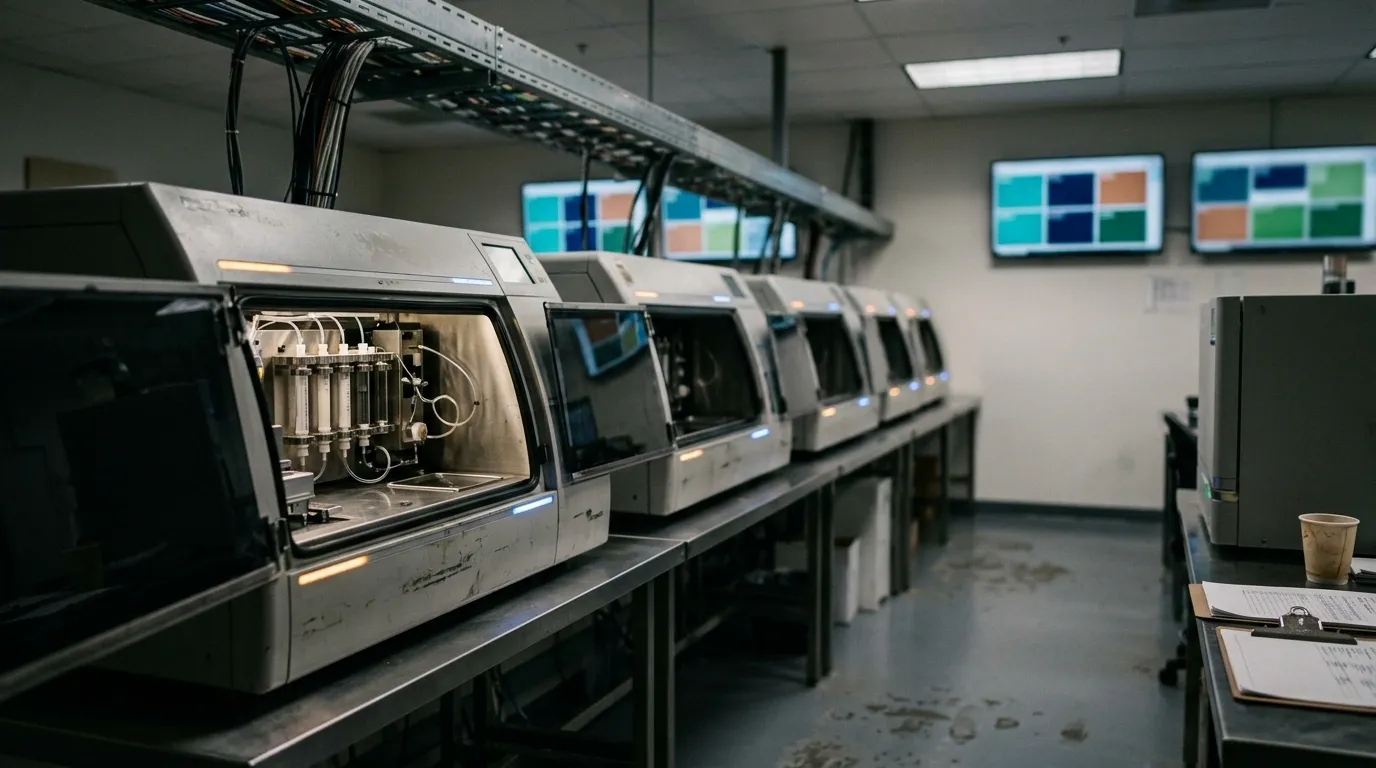
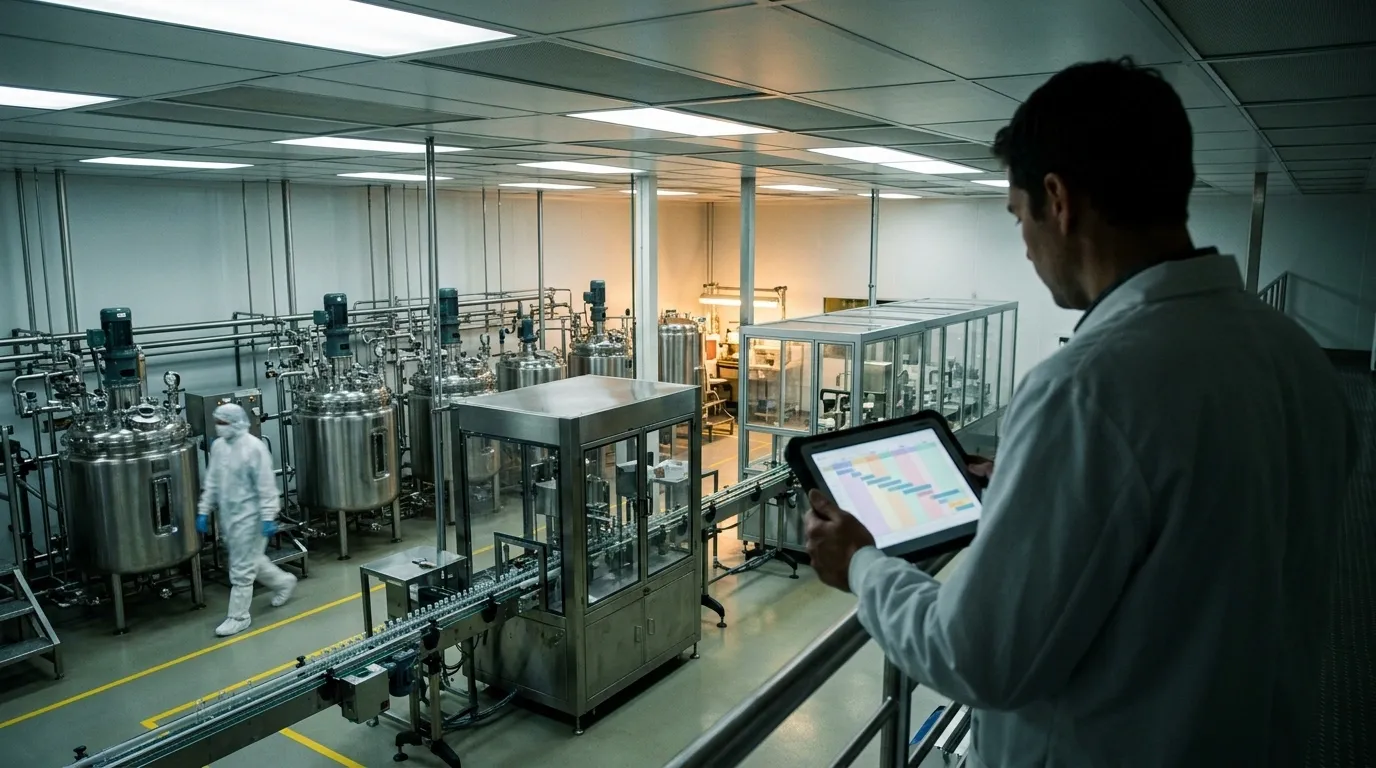
Amy Gamber: In the earlier phases, it’s really about how do I get in, get my data, get out. How fast can I get something into a CDMO, get a manufacturing process. What we’re looking for is: can we use standardized platforms, what data do we already have that tells us this is going to work based on prior experience with the equipment or the process? We want to be as efficient as possible when we get in. But we’re not necessarily worried about how much product we need, because we’re not usually treating large populations in an early first-in-human trial — you’re treating a handful of patients. I can run six or eight lots and get more or less what I need for that first stage trial. But then if you’re going into something like autoimmune, now you’re faced with treating thousands of patients — some of these autoimmune diseases get into the millions of patients. A small benchtop, manually filling process is not going to cut it. That’s where you start making investments into things like automation or significant scale. You want a closed system because that gives you more control, less contamination risk than an open process, and more consistency. Cells are very picky about how they’re handled. Your pipetting technique in a manual process can have a lot of impact on how happy your cells are, do they grow, how much can you harvest in a particular lot. At small scale, that might be fine. But at commercial scale, I’m looking at automation — I need this mixing, XYZ speed, rotation. I can program that in, put it in a bioreactor, and get that consistency as well as the scale. The trick is where do you make that investment, where do you make that pivot from, okay, I know I’ve got something that works, and now I’ve got to start building out a robust process that’s going to serve my commercial population and be able to be validated and get through the regulatory process.
Ross Katz: At each of those processes, I’m imagining that you need visibility into what’s going right, what’s going wrong, and where you need to apply tighter degrees of control. Can you walk us through from a data perspective what lenses you use at each of these scales to understand what’s happening and where you need to intervene or apply a deeper degree of attention to improve the process?
Amy Gamber: One of the big things we use is our continuous process monitoring program, which is run out of my manufacturing services group. We track and trend the data. We understand where our critical and key parameters are and, particularly for the more developed programs, what are the levers we can pull that influence those parameters. By tracking and trending it, we can look at what are my set points, what are my targets, how am I doing, am I staying in control. If we start to see a trend where things are dropping or we’re constantly hitting out of limits, that gives us a signal that we have a problem and we need to go in, do an investigation, find out what’s happening, and make some corrective actions.
Ross Katz: Can you give us some examples of the metrics that you use in that quality control and management system?
Amy Gamber: We look at things like cell growth, cell viability, total viable cells — that tells us how the cells are doing, how’s the lot expanding. We also look at things like number of vials that we harvested, what was the yield overall, what was the particulate reject rate. Those are all things that we trend on a regular basis, and we do this across both our commercial programs and our clinical. We like to start early and baseline that so that as we develop the program we can tell whether we’re getting more efficient, whether the product is staying relatively the same throughout the development phases, so that when we do get into commercial, we have a pretty good understanding of how this product is going to behave.
Ross Katz: Are you using the same assays, the same measurements at each of these phases so that you have a one-to-one comparison, or does the nature of your ability to measure at different phases change or alter the comparisons you’d make between them?
Amy Gamber: A lot of the assays do stay the same — cell growth, cell viability, those are pretty standard assays. But some do change. You do get better on your potency assays — how strong is your drug, how well does this work? That’s probably the biggest one, and it gets refined throughout the development because you learn more about how it behaves and you can refine those assays as you go along. Generally they don’t change drastically, but you are doing characterization work along the way that gives you more insight and you might refine these assays as you go through the development process. Some of the basics — how the cells behave, are they growing, are they producing cells, how we’re harvesting — those measurements all stay consistent throughout the entire development cycle.
Ross Katz: How do you think about the data capabilities that you need to answer these questions and, like, developing them over time?
Amy Gamber: One of the things we’ve done is identify what parameters we need to be tracking and trending. For us, one thing I would like to have been able to do more is have more automation in how we collect that data. Right now it’s very manual. That’s partly because we are using different CDMOs and they all have different internal processes for how they collect and share that data with us. We’re somewhat dependent on them to provide it to us. That can make it a labor-intensive process — we’re collecting from batch records, analytical method results. A lot of that is often shared to us in a paper form, so somebody going through and pulling that data out can be very labor-intensive. What I would like to see, and what we have started to talk about, is how can we automate that more so we can get more real-time access to that data. Because if you can see it early, you can do an earlier intervention. You can say, okay, this lot looks like it’s not doing well. Let’s go back and look at the last four or five days, what did we do and what corrections can we make to put this back on the right track? The other thing we do is track how different donors perform. It’s not a one-for-one — you can get multiple lots out of one donor collection, we call them sister lots, and you can go back and say, okay, this lot looks like it’s doing XYZ. Let’s go back and see the last time we used this donor, did we see a similar performance? That also tells us, oh, this is normal behavior for this particular donor, or, hmm, last time it worked really well, it doesn’t seem to be doing as well. Again we need to go in and do an intervention. That data is also tracked and trended through various applications.
Ross Katz: So the CDMOs that you’re working with, they’re literally mailing you paper or sending PDFs?
Amy Gamber: No no no no no. This is GMP. We don’t do that.
Ross Katz: Right. So it’s just locked in these PDF-type formats where the data’s in tables that can’t be read by a machine nor compared across the different CDMOs that you’re working with — is that how I should be thinking about it?
Amy Gamber: There are various tools that we use. We upload them to shared data sites — validated tools. There are validated mechanisms that we use, and then we use what we call for information only, or FIO, where they can drop in the unapproved data ahead of time, but it gives us a sense of what’s happening. As long as we all understand this is your first cut, not the fully quality-approved and reviewed version.
Ross Katz: Right. There’s a speed-accuracy trade-off: you get the data as quickly as you can so that you can understand what’s happening and come up with some preliminary questions, so that when the accurate data arrives somewhat later you can determine whether those questions are noise or whether they’re actually signal.
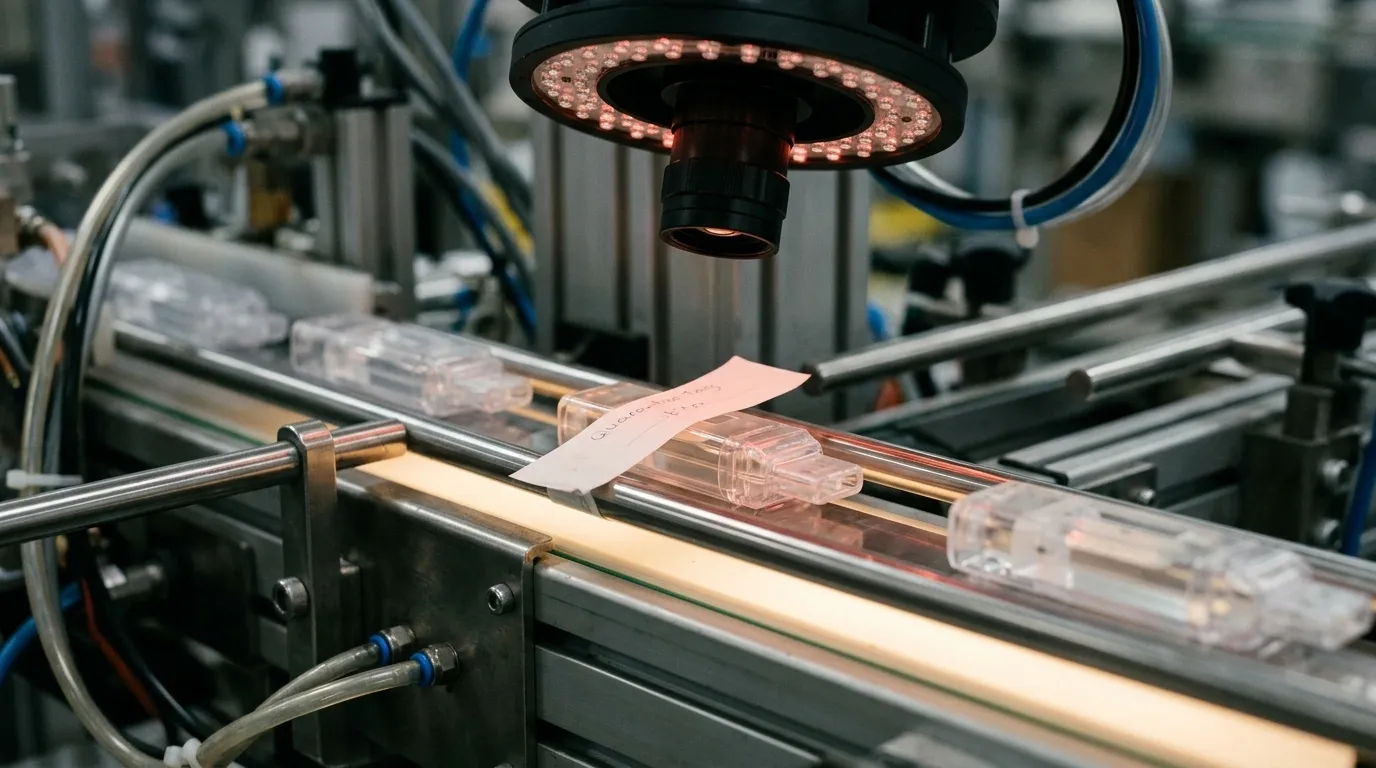
Amy Gamber: Exactly. This is where things like electronic batch records can be helpful. For a phase one product where I’m doing very small lots, is it worth the effort to go in and program for an electronic batch record system? Maybe not, because it’s not that much data, it’s fairly manageable. But when you start looking at that more commercial robust scale, that’s where we really like to get into those electronic systems because that allows for quicker turnaround of that data. You don’t have to have somebody manually pulling up a spreadsheet. They can download a report and we can get it a lot quicker.
Ross Katz: Let’s say that all the data currently coming from your CDMOs was in the format that you needed and integrated together. Beyond that, what are the blind spots you see on the horizon with regard to the manufacturing process that you think on a one-year, three-year, five-year time horizon you need to get a handle on?
Amy Gamber: We tend to look at it very discretely in terms of how is this lot doing. We do it from campaign to campaign, but what we aren’t doing is tying it all the way through to the patient. I can look at my data right now and say, okay, from campaign A to campaign B to campaign C, this is how we performed. The part that we haven’t done is say, okay, this lot went into this patient and we saw this response. Why? Was it something about the patient? Was it something about that particular marker or product? Being able to get that feedback loop — this particular donor worked well, this particular donor didn’t seem to have as good a response — and then how do we further refine the manufacturing process to be even more efficacious when we come to treating our patients.
Ross Katz: That makes sense. And I would imagine there are all sorts of implications with trying to gather that data — you’re entering the world of regulatory requirements, difficulty of interfacing with patients, getting the outcomes reported accurately from the provider. Are there any other challenges I’m missing?
Amy Gamber: Data privacy — HIPAA and GDPR in Europe. There are some significant challenges in getting consent, getting consistent data from physicians. I think it’s probably a little farther away than I would personally like, because I think that would make us more effective. But I think it’s something that, looking at the industry, people are starting to think about more and more — how do we overcome those hurdles so that we can eventually get that data and make these personalized medicines even more effective.
Ross Katz: There’s a feedback loop between the therapeutic that you’re delivering to the patient and the outcome of the patient that allows you to then improve the therapeutic so that this patient and the next patient benefit from it.
Amy Gamber: And that’s also data you can use — if you’re using a common platform like we are, that’s also data that can inform future products to make them even more effective and safe.
Ross Katz: Right. So it feeds back into the research and development of the therapeutics themselves.
Amy Gamber: Exactly.
Ross Katz: I want to talk about the manufacturing side from a cost perspective. I know from working with manufacturing organizations that cost is always top of mind — how can you produce the highest quality product but as efficiently as possible, given that these processes can be some of the most capital-intensive that biotech organizations engage in. Can you walk me through how you think about reducing cost and becoming more efficient in the context of your manufacturing processes?
Amy Gamber: That’s where process monitoring is really helpful. We’re looking for things like waste and lot failure and how we address those to get more efficient and make cost savings. A good example — I mentioned that we trend our particulates. We looked at it and realized we were losing a good amount of our product to particulate rejects. We discovered that by making a material change and doing some different things to our final filtration, we were able to reduce that reject rate by about 20 percent, and that translates into about a two to three million dollar savings over just the first year we’ve had that implemented. We’ve got another one where if we make some equipment changes and put some investment into getting that change filed, that’s another probably four million dollars we can save on an annual basis in terms of waste. Those are two good examples of where, if you’re looking at your trending data and tracking back to why am I seeing what I’m seeing, then working back to what’s an intervention — whether it’s a change to your process or change to equipment — you can realize some fairly significant savings.
Ross Katz: When you’re looking at the trends, you can view it as a predictive maintenance problem where every so often you need to intervene with the machine. But you can also view it as this component is not meeting our needs, we need to swap it, or the people processes surrounding the machine are not sufficiently robust or they’re deteriorating. How do you suss out how to approach the solution to a problem when you’re seeing these trends in your metrics?
Amy Gamber: It’s a lot of detective work, actually. You see the signal, you think you have a problem, and then you have to go through this methodical process — whether you call it a root cause analysis or 6M or whatever tool you’re using — and systematically look at what are all the things that could possibly be causing this. Then you get data to say, is this really what’s causing it, or is this data that’s not causing it, and why do you think that? One of the things I see is that a lot of teams have bias. Based on their previous experience, they want to jump to, well of course it’s this because it was this before. Pushing the cross-functional teams — development people, manufacturing people, quality, QC all together — to say, yes it could be that, but how do you know? What data do you have that actually demonstrates that is the problem? The other part is you have to go in and talk to the people, because there’s the machine, there’s the process itself, and then there’s the people who surround that. Being able to go in and observe — okay, Joe operator said he’s doing XYZ, but then we went in and watched him and he’s not actually doing XYZ, he’s doing ABC, and that’s part of my problem and I need to correct that. It’s a combination of looking at what data is available and then sense-checking it with what you actually see on the floor. That often tells you whether you have a process problem or a human problem that you need to work through with training, better education, or coaching.
Ross Katz: At some point in the detective process, if you’ve ruled out that it’s people and there’s something going on with the machine, there’s an experimentation process that needs to happen to determine whether altering certain variables leads to the change in the outcome you’re talking about. But running experiments on a machine is a cost — you’re taking that machine offline. Can you talk about how you think about the value of intervening with an experimental regime that helps you understand your process better versus the cost of taking machines offline?
Amy Gamber: These are validated systems, so we don’t get to experiment on them. They have to run in their validated and compliant state. What we do is run protocols in our development labs — either our own organization or we contract out with the CDMO and ask them to do that. Usually it’s similar like-for-like equipment and we try to do similar conditions so that we can get as close to what we’re seeing. Part of that depends on what your issue is. If it’s something more minor, more of an improvement opportunity or a tweak to the process, we may make the decision to continue to manufacture while we’re investigating and while the study is going on and we’re collecting the data. If you’re resolving an issue that’s causing quality and compliance problems in your final product that could harm product quality or patient safety, that’s where you have to make the more difficult decision to take it down while you investigate what’s happening — stop until you know and can implement a corrective action, then bring it back online. That’s more difficult because even though we’re manufacturing product ahead of time, if you’re in the middle of a run, that’s not something you take lightly. It takes time to bring it down, there’s money and opportunity cost, and bringing it back up is always a bit of a challenge.
Ross Katz: It depends on what you view as the downstream impact of the problem that’s occurring and how critical it is to patients and to business operations — how broad an intervention you’re going to make in order to gather the information you need.
How do you think about risks in the manufacturing process — things that might emerge in the future that you feel like you need to mitigate now so that you don’t have to do any of the interventions we’re talking about?
Amy Gamber: We really do try and look ahead — what have historically been problematic areas, and what interventions or investments can we do now to improve future performance. A good example is one of our processes that’s very manual and open. We’re looking at moving to an automated closed system because that will get us more consistency, it’s going to be an easier product to run, less contamination risk. That’s an investment, so you put together the business case: how many issues have we had based on contamination or operator issues, what do we think we’re going to get, and what’s the investment? It’s usually a six-month to one-year process to get that implemented and ready to go. But knowing where your weak points are in your process and looking at technology and your data and being able to say, if I make this intervention now and make this investment now, I can get more product, I can get a better quality product, I will have less rejects — that’s the thought process that we go through.
Ross Katz: There’s a payback period on these kinds of investments where you understand the timeline where the value accrues to you, and since those rejects are a known cost you can estimate in advance when those costs are going to hit you — and if you eliminate them, that gives you your ROI.
Amy Gamber: Yes, that’s exactly right.
Ross Katz: What systems do you need to have in place in order to understand your manufacturing process better and accomplish the goals the organization needs to accomplish?
Amy Gamber: One of the biggest challenges is that we have smaller orphan indications — smaller lots. It’s very challenging. I would like to get more clinical data collected because it’s hard sometimes to tell what is actually a signal that I need to be working on versus what’s just noise in the system when you’re working with such small data sets. How do I get access to more data in general? We’re working with six, eight, 10, 12 lots. You can’t get statistically significant and meaningful results off of that. If there’s a way we can either leverage what other people have, if something were commercially available, or just get more patient experience and bring that data in so that we can understand — okay, this is really something we need to address. The other thing is better tools. Because we’re small, we have chosen not to make a lot of the investment and do a lot of this manually. I’ve actually been chewing my IT VP’s ear on this. I’m like, this would really help me if I had some more automation. And he’s like, yes we know, but this is where you make the choices of where you want to invest your money. If we can get some of those tools in — for example, we talked about electronic batch records. There are some modules you can get that, if you implement them, will do some of that automated tracking and trending. Instead of doing a data dump it will actually do some of that work for you. It’s an investment we would need to make, and we would need to partner with our CDMOs that have those batch records. But having that ability just at our fingertips would be hugely useful.
Ross Katz: At the scale you’re at with the number of patients you’re engaged with, you want as much data as you can to understand what that manufacturing process is going to look like and what problems you’re going to encounter, but you’re also constrained by the scale and can only draw the conclusions that the data enables you to.
Amy Gamber: That’s right. And one of the things I’m always worried about is data overload. There’s also the concern that just because I have more data doesn’t necessarily mean it’s going to give me a better outcome — it may just be more data that I then have to sort through and figure out whether it really means something. We got to be very thoughtful about what I really need and not just pull everything in because I have access to it.
Ross Katz: Do you have a list of the three key questions you need answers to that you would be excited to answer once the data’s available?
Amy Gamber: One thing I would love to know — and we’ve talked about this — is when I put a donor through, what’s my guarantee that this is going to ultimately result in a great product? Is there a biomarker or something we could screen for early on that’s going to tell me yes, this is going to get you a high-yielding, high-performing lot every time? I would love that. That would be phenomenal.
Ross Katz: It’s like a predictive QC measure — a machine learning model that looks at all the data coming through and gives you an indication of the expectation of your quality assay metrics or the probability that this is a high-quality product.
Amy Gamber: Yeah, that’s probably questions one, two, and three for me here.
Ross Katz: As we draw toward a close, I’m interested in zooming out — how do you think about biotech manufacturing more broadly? What are the technologies you’re most excited about applying to the manufacturing process in the years to come, or that you see as emerging and might have a great impact on the work that you do?
Amy Gamber: One of the things — it’s a buzzword right now — but we talk about AI a lot. I’m very interested in where that’s going to take the industry. It comes back to how do you build those data models so you can get more predictive. This is something we’re currently taking a wait-and-see approach on. But as that whole part of the data industry expands, I think there are going to be opportunities to get some good modeling and tools available. That can really help us because if I can do predictive modeling ahead of time and save running manufacturing that’s not ultimately going to be successful, that’s a huge win for the company and for patients — we’re not spending resources on things that ultimately aren’t going to work for them. The other thing, particularly in cell therapy, is it’s such a new industry and we really haven’t settled on what’s the standard platform we’re going to use. As we develop this technology and the equipment — what’s going to be our standard basis for manufacturing and how do we take it from bench scale to large commercial scale — that will be particularly helpful. We’re even seeing that when you go out and look, everybody has their own platform, their own set of equipment, so every time you put in a new process it’s another investment. Having somebody who says we’ve run this, we’ve modeled this, we know this works, here’s the data that supports it — and you can look at it and say, okay, I know if I put my money here this is going to eventually get me a robust commercial program that I can run.
Ross Katz: Well, Amy, it’s been a pleasure to have you on the podcast. I really appreciate the time and I’ll look forward to connecting down the line.
Amy Gamber: Sounds great. Thank you very much for having me.
Jason: And that’s it for this episode of Data in Biotech. If you enjoyed the episode, please subscribe, rate, or leave a review in your podcast platform of choice. See you next time.