Listen on
Overview
The pharmaceutical industry faces a pressing challenge: how to rapidly develop and manufacture increasingly complex drug formulations, particularly with growing demand for personalized medicine. Traditional manufacturing methods struggle with the speed and flexibility required for these next-generation therapeutics. Aprecia Pharmaceuticals offers a solution through its advanced industrial 3D printing process, which, counterintuitively, leverages a layer-by-layer approach to achieve unprecedented speed in development and real-time quality control at scale.
In this episode, Kyle Smith, President & COO, and Jake Mayer, VP of Advanced Manufacturing at Aprecia, explain how their unique binder jet 3D printing technology enables precision manufacturing of pharmaceuticals directly into blister packs. They discuss the critical role of data and process analytical technology (PAT) in managing a manufacturing process where no manual exists, ensuring GMP compliance, and moving towards automated, closed-loop control. Their insights reveal how building a robust data infrastructure is as vital as the manufacturing equipment itself for innovating in a highly regulated industry.
This conversation provides a blueprint for data leaders grappling with the complexities of digital transformation in manufacturing. It highlights how a meticulously designed data collection and analysis system can de-risk novel technologies, accelerate time-to-market for challenging products, and set new standards for quality assurance and supply chain resilience.
Key Takeaways
Layer-by-layer 3D printing enables faster development and iteration, not just high throughput.
While individual tablet creation is iterative, Aprecia’s 3D printing process allows for rapid dose-ranging studies, producing a wide range of strengths from a single formulation without requiring new product batches. This inherent flexibility, supported by real-time data, shortens clinical development timelines from months to weeks, giving innovators a significant speed advantage in drug development.
Individual tablet traceability shifts quality assurance from batch sampling to 100% unit-level inspection.
By marking each blister cavity with a unique barcode, Aprecia ties all manufacturing data directly to the individual tablet. This enables real-time quality assessments and multivariate modeling on critical quality attributes for every single product, a level of granular control and traceability that is impractical with traditional pharmaceutical manufacturing.
Successful advanced manufacturing relies on a deep, integrated data infrastructure.
Developing a novel 3D printing process necessitates a parallel effort in building out a comprehensive data and IT infrastructure. This includes deploying process analytical technologies (PAT) like near-IR spectroscopy and 3D line scan cameras, integrating data streams into a PAT management software, and building complex multivariate models for real-time decision-making. The equipment itself functions optimally only when backed by robust data collection and analysis.
AI-driven predictive formulation can significantly accelerate early drug development.
Leveraging extensive manufacturing and processing data, Aprecia aims to develop algorithms that predict optimal formulations based on an active’s material characteristics immediately upon arrival. This capability would provide highly confident formulation suggestions, drastically reducing trial-and-error and accelerating the path from molecule characterization to clinical readiness.
Related: CorrDyn provides data engineering expertise for biotech and life sciences manufacturing, focusing on building robust systems that ensure data quality and reliability in regulated environments.
Full Transcript
Jason: Hey everyone, it’s Jason, producer of Data and Biotech. Quick one, every episode of this podcast is now on YouTube with animated glossaries that break down the technical terms we discuss. Just search Data and Biotech on YouTube to watch. Welcome to Data and Biotech, a podcast from CorrDyn where we explore how companies leverage data to drive innovation in Life Sciences. Every two weeks, we sit down with an expert from the world of biotechnology to understand how they’re using data science to solve technical challenges, streamline operations, and further innovation in their business. Here we go.
Ross Katz: Kyle Smith and Jake Mayer, welcome to the Data and Biotech podcast.
Kyle Smith: Thanks for having us.
Ross Katz: So, Kyle, Jake mentioned that Aprecia does industrial 3D printing. Would you mind just, since you’ve been with the company for such a long time, orienting us to the history of Aprecia and how the organization evolved and the work that you do today?
Kyle Smith: Yeah, for sure. I think it’s important to level set on the kind of 3D printing we do because there are a lot of flavors of 3D printing at this point. So we do binder jet 3D printing. That’s powder liquid 3D printing. We’re laying down layers of powder of varying thickness and we’re putting a binding fluid on top of that powder to bind the particles together. If you do that over and over, you’ve created an article. In our case, it’s a pharmaceutical product, but you can use that technology to make any kind of widget that you want.
Ross Katz: Just starting from there, and I don’t know Kyle or Jake, if you are the best person to answer this, but I would love to hear more about how you go from that tabletop piece of equipment to the scaled-up operations that you have today and what are some of the challenges that you faced along the way that you had to think through.
Kyle Smith: A lot of time and a lot of problem solving. If you think about it, we’re the only ones in the world that have equipment like what we have. It’s not like we go buy the equipment and somebody comes and says, “Here’s the manual, here’s how you qualify, here’s the qualification package, you’re off and running.” You didn’t learn how to do this in your PhD, you didn’t experiment on this equipment. So the analogy of building the bike while you ride it, building the airplane while you fly it, that’s relevant here. You’re trying to problem solve not just the formulation and the process, but also the equipment and how to ensure it’s first and foremost GMP compliant. The standard from the FDA doesn’t change just because you have an advanced manufacturing technology or a cool 3D printing technology. It’s always an iterative process. As innovators, you can fall into a trap where it’s like, okay, we’re constantly tinkering and making improvements here, oh, we can do this. You have to have really clear endpoints established and say, “Okay, we have to focus to drive to that point, we can go deploy that technology, we can use it to do XYZ and then this is what the next innovation is going to look like.” That’s really where Jake’s team is focused. Even just in the last couple years, we’ve had new innovations that we’ve built on top of the stuff that was from the early 2000s. That’s where Jake’s team has really spent a big bulk of their time over the last several years.
Ross Katz: And I think we have two advantages that play to our favor. Kyle’s absolutely right in the sense that when it comes to industrial scale GMP qualifiable 3D printing binder jetting equipment, there’s ours and there’s really maybe not any other players in the world. But we do have two things that play in our favor: fundamentally it’s an inkjet printing process. The inkjet printing industry is well established and has been around for quite some time. We can leverage a lot of the learnings and the expertise that’s been developed in other industries. Similarly, even within the additive manufacturing and 3D printing industry, binder jetting is not exclusive to pharmaceutical binder jetting. In fact, what I was working on prior was industrial scale metal binder jet additive manufacturing. The pharmaceutical industry is rightfully very risk averse and slow to adopt technology, and I think that’s all well justified for very good reasons as a consumer of pharmaceuticals myself. But it offers us a benefit of being able to take advantage of some of the learnings across other industries, trying to apply binder jetting in industrial 3D printing and what challenges they’re running into trying to scale.
Kyle Smith: Yeah, I think what would help would just be to outline the manufacturing process as it stands today. Then, with the idea that understanding the manufacturing process a little more deeply will allow us to understand how you’re using data and automation to enable that process, scale it up, and accomplish all of your goals.
Ross Katz: So Kyle kind of gave a brief overview of binder jetting as a 3D printing process. You’re laying down a layer of powder, depositing a layer of printing or binding fluid, and you’re layer by layer building an article or, in our case, a dosage form. That’s traditionally referred to as a powder bed fusion process. That’s powder bed fusion whether you’re binding with a laser, whether you’re binding with a polymer as we’re doing, a polymer laden print fluid. That’s again, an established process in other industries, that powder bed print fluid deposition binder jetting. We refer to that as our open bed technology and a lot of our previous and historical development has been in that open bed platform. In fact, our drug product that’s on the market, the Spritam drug product, is manufactured in that manner. Our latest technology development is what we refer to as our in-cavity 3D printing platform. This is slightly different. Now we’re taking advantage of the benefits that are provided by a blister cavity. Ultimately what we would do historically is we would 3D print in an open bed and then you would effectively do an archaeological excavation to recover your parts from the powder bed, then prepare them, dedust them, recover loose powder, inspect them, and then we would package them. In our case, we’re packaging them in blister packs. So what we did was basically blend those two technologies together and we said, “What if we 3D printed a tablet directly in a blister pack?” That has all sorts of theoretical benefits to it. So our in-cavity platform is that premise where we deposit a layer of powder into a pre-form blister cavity, then we come over the top of that and we deposit a layer of print fluid, and we repeat that process over and over. If you look at the process from a high level, we first form our blister cards. We do that ourselves in house. Then we load those blister cards into our in-cavity 3D printing machine where we layer by layer assemble or build our tablets in the blister card in their primary packaging. We’ll then drive off residual solvents with a post 3D printing drying process. Then we process them through our final packaging equipment where we’ll mark the tablets, we’ll lid the tablets, we’ll mark the lidding, and then we’ll seal those and punch out our final blister cards that are fully ready to ship off to secondary packaging or clinical trials or an intermediate co-packer. So, that’s generally the overview of our in-cavity process. We outfit that whole production line with a range of instrumentation and collect all sorts of data along the way.
Kyle Smith: To elaborate on the clinical trial piece a little bit, this is not just the data, this is also the manufacturing process that enables this. If you’re trying to run a dose ranging study and it’s, say, 100X from the low end to the high end of your dose strengths that you’re evaluating, the traditional way says, “Let’s produce a bunch of batches and have them on stability and have those ready to go to the clinic.” We’ve heard from innovators and seen examples where they’re wrong, and we need something that’s twice as big as the biggest strength that we had when we went into the clinic. That can set you back. The clinic wants it in weeks and the formulator is over here saying, “Well, that’s going to be a few months with traditional manufacturing techniques.” Think about our technology, going back to the design space. Now I’m talking more on the physical process itself. If I’ve made, Jake used the example of, a five-layer tablet, let’s say it’s a 200 milligram tablet. I could make that a 10-layer tablet and that’s a 400 milligram tablet, and I could just as easily make that a 20-layer tablet and that could be an 800 milligram. I could also go the other direction and go smaller on the 200 milligrams. So I can get a huge range, potentially beyond 100X, in terms of the range from the lowest to the highest dose strength. I don’t have to change the formulation, I don’t have to go make new product. With the rapid dissolving uniqueness that comes with our tablets, I’m not worried about it being an 800 milligram. Some people might hear that and say, “Gosh, that’s a horse pill, that’s way too big. You wouldn’t be able to formulate that.” When you first look at it, until you’ve tried the tablet, you’re like, “Yeah, we actually can’t.” But once you try it and you do the demonstrator, you’re like, “Oh, okay, this is, it’s just like swallowing water.” The ease of administration from the patient perspective or a caregiver perspective or a clinician’s perspective that’s trying to run the clinical trial, they’re like, “Okay, this is actually something that we are able to do quite seamlessly.” That goes beyond just the data that allows us to actually do that, which the data enhances the ability to run that kind of program.
Ross Katz: Jake, would you mind outlining the data platform that you have today and what is the data you’re able to get off of the machines and then how are you using that data today?
Kyle Smith: Yeah, happy to. One of the things I don’t think I mentioned earlier, but it’s key, and Kyle mentioned this, but when we form those blister cards that we’re then 3D printing our tablets into, we actually are marking each individual blister cavity with its own unique barcode. We do that because now we can, as we’re collecting data about our manufacturing process, we’re collecting data about every tablet that we form and then we have traceability back of all of that data back to the individual tablet. It’s just not practical in other traditional pharmaceutical manufacturing processes to achieve that. But in our process, it’s actually quite achievable. So there’s a range of types of data that we’re capturing along the way. Ultimately, all of that data is trying to help us make real-time quality decisions. We’re taking a very traditional pharmaceutical quality approach. We develop our target product profile, it’s all quality by design, target product profile, and identifying critical quality attributes, critical process parameters. Then we outfit our equipment with as much process analytical technology as we’ve been able to, and we continue to develop more process analytical technology. We are working toward capturing and assessing and making real-time quality decisions on those critical quality attributes and monitoring our critical process parameters and then attributing all of that to each individual tablet.
Ross Katz: Can you just give us some examples of what those critical quality attributes, critical process parameters look like? How they’re being used, what that real-time process analytical technology response looks like?
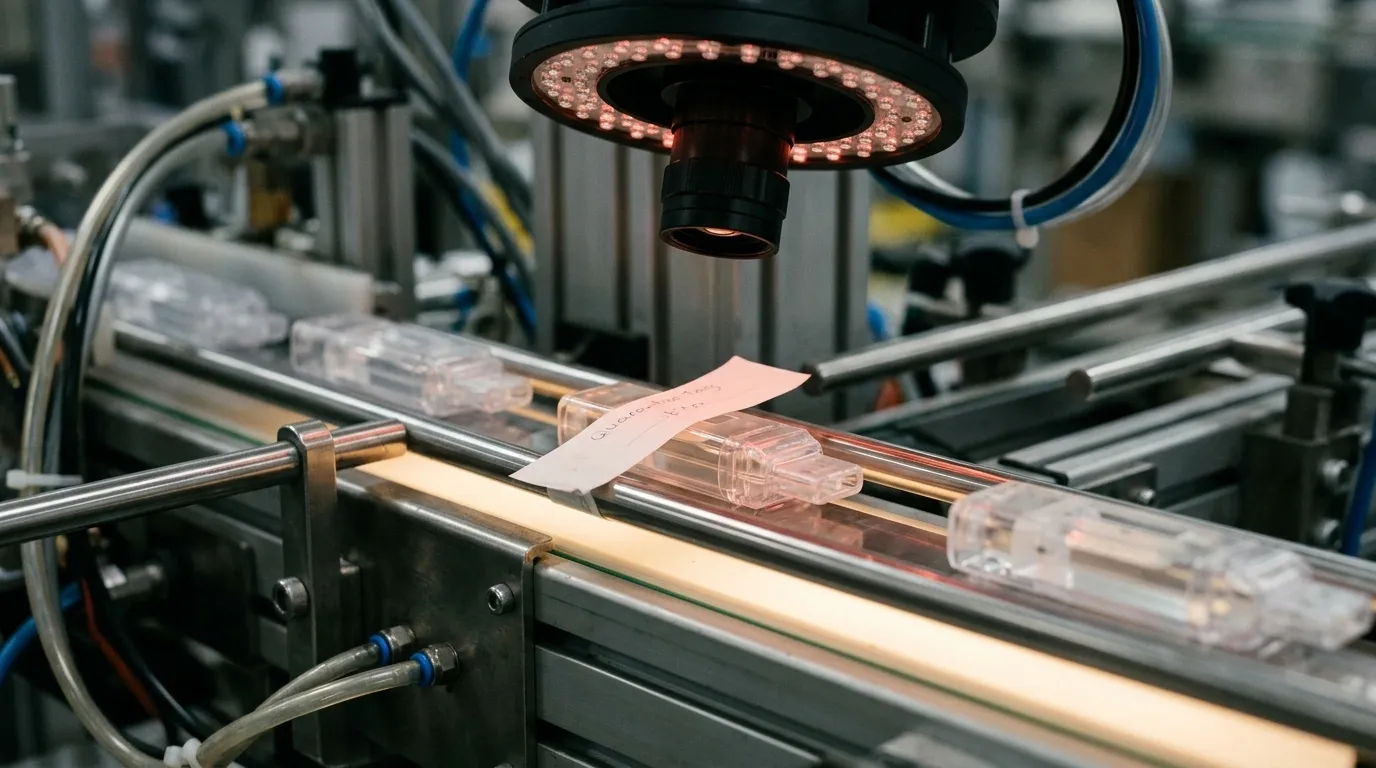
Kyle Smith: So we have a few different types of instruments that we incorporate throughout the manufacturing process. For those that are familiar with PAT, some of these will be very familiar. We’re using near IR spectroscopy. We’ll do that during the blending process. We’re blending to target content uniformity during our blending process. Then we’re monitoring that content uniformity in our on our equipment with near IR scopic probes embedded into our powder dosing equipment. We have two critical unit operations in our 3D printing process: depositing or dosing powder precisely and then laying down our print fluid. Our print systems, those are kind of the two most critical for us. So then we have shortwave infrared imaging systems that we’re looking at our deposited print fluid and we can make a quality assessment based on the health of our print systems. Did we print the image that we intended to print? Was there some sort of aberration or defect in that printing process and we need to either correct or divert those that product stream. Beyond that, we have traditional industrial imaging systems. We’re looking at things like pharmaceutical elegance. We have the benefit of forming our tablets inside of a cavity, which is wonderful. It creates a really nice surface finish on most of the tablet. For our top surface, we actually physically interact with to try and dress that surface and create a pharmaceutically elegant tablet. So we inspect that. Then we’re looking at our print quality for downstream operations as well with traditional industrial imaging technology. We’re looking at the marking on the tablets, we’re looking at the printing on the packaging, and we’re associating all of that back to your traditional critical quality attributes. I forgot a key one here that I’ll bring up that is unique to our process. We have a 3D line scan camera that we’re using to measure the deposited powder from our doer technology. We can combine that technology with our scopic near IR probes and we can look at assay. We can look at, as I mentioned, content uniformity. We can build models to tell us what our disintegration performance and then in turn what our dissolution performance is going to be. So all traditional pharmaceutical critical quality attributes that are going to show up in your target product profile. We’re outfitting the equipment with the instrumentation to build the models to be able to make quality assessments directly on those CQAs in real time.
Ross Katz: So one of the things that you mentioned was if you notice that, for example, the surface finish of the pill isn’t looking right or maybe the content is not as uniform as you would expect it to. It doesn’t compare to your ideal of what the outputted pill should look like, that you could just set aside that package. Then I’m assuming there’s a question of, “Okay, do we print again or is there some sort of maintenance activity that needs to happen on the machine?” That’s my intuition about your options when some of these flags get raised from the system, but I’m interested in, from your perspective, how you handle anomalies that occur within the system and what are your response options and how do you go through them?
Kyle Smith: We have all of those PAT instruments as well as other data streams: things like temperature and time and pressure and feed rates, speeds. All that data is flowing into a PAT management software that we have over top of our process. So we’ve got a number of inputs that are coming into that software and what that software then allows us to do is build a multivariate model and make a quality grade or a quality assessment based on a wide variety of inputs. It’s one thing to say, “Hey, I’ve got a single parameter and it’s out of spec.” But if I’ve got eight, 10, 12 parameters, it starts to get pretty complex pretty quickly. That’s where multivariate and in our case chemometric modeling as well, when you talk about the spectroscopic data, comes into play and we can start to make assessments to determine, “Hey, is this just a one-off?” We had an anomalous event out of one of our unit operations and so we don’t have to worry about it. Or are we seeing trending? Are we seeing across the board all of our tablets, because one of the unique things here is again all of these assessments are happening at the individual tablet level. So it’s not a sub sample, it’s truly 100% inspection. We can say, “Hey, are we seeing, we know outright if that was an anomalous event or if no, we’re trending that way across the entire batch.” We can correct for that.
Ross Katz: Kyle, I’m also interested in from your perspective, from the leadership level of Aprecia, what are the highest value either uses of data that are ongoing today from the systems that Jake just described, or opportunities for data? I’d love to hear what’s driving a lot of value now and what do you expect will drive a lot more value in the future?
Kyle Smith: In terms of the biggest value driver, speed is something we all have to do: speed to deployment. That’s in the formulation development process, in the clinical development process. When you get to manufacturing, shortening supply chains, ensuring that you have robust supply chains so that you don’t have drug shortage issues. That’s a big focus obviously across the industry and of the federal government right now. All the data that Jake just described and all the processes that we’re able to monitor and pull these data sources in and make decisions, really just lead to ability to do things quicker. Every innovator company is under pressure to do things faster and faster. So, I think the real advantage, or at least the real value driver here, is, “Okay, it’s nice that we have all this data, we’ve got all this information, but what it translates to practically is we can do things quicker with this unique process.”
Ross Katz: Yeah, that’s interesting. Jake, back to you, if speed is of the essence, I’m assuming that your PAT system is as close to real time as you can get it. How quickly is the system detecting anomalies or responding to what’s happening during pill formulation?
Kyle Smith: It’s somewhat counter-intuitive because Kyle’s absolutely right. Inherently what we can do, we’re very agile, we’re very quick and have inherent to the process. But the process is also iterative. So it’s also slow. Layer by layer, we’re building a tablet and composing a tablet. So from a data real-time data, it kind of gets your frame of reference. If you’re talking in terms of data, milliseconds, microseconds in some cases, we don’t have to operate at that level, which is a wonderful benefit we have and also makes adapting these real-time decision-making algorithms super amenable to 3D printing as a starting point. Eventually what you’ll run into in ultra high, ultra fast manufacturing processes that are trying to layer on real-time decision-making, they run into a computational power and speed problem. We inherently don’t have that problem, which is nice. But holistically, when again, you reframe in terms of, “Well, how long does it take us to formulate and manufacture and then produce, supply, and then iterate from there?” We can be very fast and we can be very agile. So it’s a little bit counter-intuitive, but I would say our process is somewhat inherently, and certainly when you talk about data speeds and data transfer rates, it’s slow. So it affords us all sorts of opportunity to layer on top these real-time processes and models and decision-making because we’ve got iterations that we’re going to go through that we can take advantage of.
Ross Katz: Yeah, no, it’s really interesting because this is a canonical example of going slow to go fast. You’re able to because you are formulating a single pill through an iterative process and that one pill takes longer to make, you’re able to respond better in real time and control quality much more effectively and iterate, innovate, change formulations much more rapidly than other people would be able to. So, yeah, that’s really interesting. Going back to what Kyle was talking about earlier in terms of having that responsive system that controls quality in situ and makes sure that every pill as close as possible comes out all right. Where are you on that roadmap and what does that process look like to get into that world?
Kyle Smith: Yeah, it brings up a few interesting points too. Kyle’s absolutely right that closed loop control is very much in our road map, very much our north star where we’re heading. We have those control loops to different degrees. I alluded to earlier that we can look at the top of our tablets and determine if the surface finish of that tablet is acceptable. That’s an example of something that if it’s not, we can recycle that blister card through the process and correct for that problem or attempt to correct for that problem. It really is, depending on the unit operation, the complexity associated with it. It’s pretty easy to envision, and this is really just a technology development problem to solve in terms of making real-time dose adjustments like I alluded to earlier from our dosing technology, informed by a model that’s keyed in on content uniformity of your powder blends and outputs from your laser displacement camera systems. So we’re working toward that. Right now we’ll prompt an operator to make a manual change, but we’re working toward an automated, hands off solution there. A less trivial challenge, and this is really true, this is a bit of a hot button topic in the additive space, which is defect detection. We see that for us it’s in the print systems. When you lay down a fused powder bed fusion process like ours, or whether it’s binder that you’re laying down or you’re using a laser, a single defect in that process can scrap a whole part. In our case, thankfully we’re it’s we’ve got a fairly forgiving process to that. But you might have a print in a different industry that’s printing for hours or days. So defect detection in real time of that binding process, that fusion process is a hot button thing across the industry. Where we’ve seen research coming out in inkjet space is using AI to assess images of your deposition area, your build area and identify defects and then translate those images into printable, modified images that you could then recycle through and either correct the existing layer or make a correction as a part of your next layer. So that’s a non-trivial problem and that’s probably further down the technology development road map.
Ross Katz: Yeah, that makes a lot of sense. I heard at least two things that jumped out at me about your response. One was this idea that the stair step toward that full automation loop is: you’re able to detect a problem, you prompt an operator to intervene in that problem, and then you determine whether both the prompt and the intervention are the right prompt and intervention. If you’re able to do that reliably enough then you can bring that into the software loop of applying that directly. The other thing I heard was that detecting the anomaly with, for example, an image-based machine learning model is one thing, but then translating the problem that you’ve detected into instructions for the 3D printing machine to then compensate for where the problem has occurred is a whole other thing that requires a lot of learning and a lot of iteration to get to that. Am I hearing you correctly or thinking about that right?
Kyle Smith: 100%, yeah. That’s true about industrial automation and instrumentation in general and process analytical technology. Ultimately, if you’re going to pursue a real-time release model and you want to have real-time assessment of a given CQA, you have to have an instrument that can detect or as a part of a model, make an assessment of that CQA, and do so in a time frame that is amenable to your process. Then, as you alluded to, if you’re intending to correct and do a fully close the loop, do you have the mechanism on the equipment side to then be able to make that change? So it’s across all of that. You have to be advancing in all of those areas to continue to drive forward the technology and climb up that stair step as you, to use your analogy.
Ross Katz: To shift gears a little bit, Kyle, we mentioned offhand Spritam, the first 3D printed drug approved by the FDA. Would you mind walking us through that approval in the context of Aprecia and then talking about maybe some of the lessons learned both for you and for the wider industry from that?
Kyle Smith: Yeah, absolutely. We got Spritam approved in 2015 and that was obviously a huge moment because all the things that we’ve talked about that are futuristic looking, somebody could sit here and say, “Gosh, how do we know we’re going to ever get there? How do we know the regulatory framework is going to allow for it?” Part of us going through the approval process was to show that, “Hey, we can take this unique technology. We can innovate it to the point that it needs to get to, so it’s GMP compliant, FDA compliant. We can pass all the established regulatory approval pathways.” And derisk it from the perspective of an innovator that might be looking at this, because that’s always a question. Nobody wants the technology that produced the novel product to be a reason for slowing down the approval process. That was one really important reason we went through the Spritam approval process. Back in 2015, we are obviously the first and still only 3D printed process. When we submit the application, first of all, just getting ready to submit the application is a mountain of work in of itself. We’re drawing correlations for the FDA to say, “Okay, this is how this is similar to what you’ve seen in other processes.” It’s the first time that they’re inspecting a 3D printing process. We’re trying to describe how things are similar and then where things are different, explain to them how we handle those differences and what kind of scientific rationale and justification we have for the parameters that went into the NDA and certain specifications that we have. The FDA is really our partner, really quite collaborative. Even after we got the approval, the FDA after our prior approval inspection sent, it was probably close to 30 inspectors back out afterwards, which, if you’re any company, you’re like, “Okay, we got 30 FDA inspectors showing up.” But it was for training. It was them saying, “Okay, these guys did it, we got through the approval process with flying colors and no issues at all.” So you’re now starting to set the standard of what it looks like to be an advanced manufacturing and a 3D printing manufacturer in the industry. That’s really the huge benefit to going first.
Ross Katz: Can I ask you to educate us here? What is it about the inkjet layer by layer approach that separates it from the extrusion approach in the context of pharmaceutical manufacturing?
Kyle Smith: Yeah, so two of the reasons we picked it were speed and flexibility. Let’s start with the flexibility piece. We don’t have any novel excipients that we have to use in the process. We’re able to use commonly used pharmaceutical excipients. I mentioned the compatibility that we have with different actives. It’s a gentle process in terms of the heat, the solvent that we would expose the actives to. So, it’s really amenable to working with any active and we can be really flexible on the kinds of excipients that we bring in. That was important to us because when you’re talking to formulators, we’re not trying to sell some novel excipient or, “Hey, you have to do it this way because it’s the only thing that works for us.” We’ve got flexibility to say, “Hey, what have you seen from some of your earlier formulation work? What would you like us to try?” It can be a collaborative effort too as we educate them on 3D printing. Then the speed piece, from a scale perspective, we saw a lot of advantages there with binder jetting. Extrusion, people have seen extrusion equipment. You can extrude a tablet at a time and you have to have a bunch of nozzles to extrude more than one tablet. With print area, you’re able to print more than one tablet at a time underneath an inkjet printer. So, just the ability to scale up and move the process faster and get to commercially relevant throughputs was a big advantage that we saw. Those are really the two reasons that we picked it for the speed and the flexibility of the process.
Ross Katz: And just to add on to that, I think if you would, to go back to our earlier discussion around, “How do you develop technology and how do you drive adoption of a new technology?” which is really what we’re trying to do and breaking into an industry that this is foreign to. You’re going to, it’s going to be that much harder of a sell to try and convince formulators to pick a technology that also has all this risk on the material side or they have no familiarity with any of it and they don’t have any processes or any infrastructure or internal knowledge base on which they can draw to formulate for that material set and then that equipment set. Binder jetting is familiar, in the sense that it’s a powder-based system. We’re using the same half of the process train they may already have when it comes to powder blending and powder milling and preparation of those powder blends for the system. So, just to reinforce what Kyle was alluding to, the fact that the excipients are common, they’re all FDA approved already. We didn’t have to seek new approvals. There are modalities out there that are not being used, 3D printing modalities that could be used if there were FDA approved material sets out there. Eventually, people will choose to break into those and be the tip of the spear to go do the material side and get the approvals to do that. But until then, and in terms of adoption, the fastest path is to stick with what people know. That also kind of goes into the stair step approach to iteration and technology. Even if we could do the massive leap to full closed loop 100% lights out manufacturing autonomous control, there’s an argument to be made that our customers would be scared off by that. Keeping the human in the loop is actually really important. They have so much experience to draw on and know how to make good pharmaceutical drug product. 3D printing, it clearly works. You’ve proven that you can do it in a GMP compliant manner. You’ve talked about the benefits that can accrue to, in particular, clinical development programs where that flexibility and responsiveness, that fast iteration cycle is needed. But I’m interested in, what are the barriers to 3D printing becoming one of the default technologies that are used for manufacturing pharmaceuticals versus remaining in this role of being more focused on innovation, flexibility, responsiveness, that sort of thing.
Kyle Smith: The first aim of our technology is not to go compete with a tablet press. So if it’s ibuprofen and you’re going to make billions and billions of tablets a year, the goal isn’t to go, at least right now, replace the tablet press in terms of the throughput of some of that equipment is going to be a bit faster on a tablet press. Maybe not from total cycle time, but just from the number of tablets per hour. You can obviously produce parts for and tablets for pennies per tablet. So, for genericized products or products that are OTC or widely available that don’t have any kind of uniqueness because they’re really well established, that makes sense. We tell people to go do that. We’re not—if you can make it on a tablet press and the process runs just fine and the active is in good shape and it’s stable and doesn’t degrade and you’ve got a manufacturing process and a tablet you’re happy with, that’s probably the spot for you. The thing that we see though is more and more of the newer products require, I think it’s like, I’ve heard different numbers, 60 to 80% of products are requiring some sort of solubility enhancement technique. There are several ways and we’ve presented publicly on some of those things with different partners. There are ways that we can address challenges there. One way I’ve heard it characterized is, all the easy molecules are gone. The easy molecules would be stuff you would put on a tablet press and just kind of run. The more complex ones are the ones that we’re seeing now and that’s what requires our advanced manufacturing and our form of manufacturing. There are derivatives of existing products, different salt forms, and the salt forms may have stability issues when they’re exposed to different parts of a traditional process. So, I think that’s what’s going to drive more adoption of 3D printing. Whether it’s ever going to be a mainstream, every tablet in the entire world is going to be made via 3D printing, I won’t go that far out on that limb. There are a lot of technologies out there, and several of them been around for a really long time, but the adoption I think will be facilitated by the more unique and challenging products that are constantly being submitted and presented to us.
Ross Katz: I’ve got two thoughts I think I might add to that.
Kyle Smith: One is, if you take a big picture approach, we’re in the phase of history that is referred to as Industry 4.0 or Pharma 4.0. If you go back to the industrial revolution, you kind of look at how we’ve been developing. This is the era of big data and layering all of that on top of your automated manufacturing and now you can make really informed decisions about how you manufacture your drug products. There’s speculation on what’s coming next beyond that. We’re still, as an industry and not just our industry, but worldwide, really still working to get fully into the Industry 4.0, Pharma 4.0 space. But what’s beyond that? One of the things that I’ve heard speculated on is mass personalization. Everything we’ve built up until now has been to drive manufacturing efficiency. So you’ve got large centralized manufacturing plants and running dedicated products at high volumes. We as the consumers select from which of those high volume products meet our needs the best. But the next generation of technology, manufacturing wave, and we’re seeing a desire us as the consumer to want personalized products. We envision again, with our ability to produce down to an individual blister card or even an individual tablet uniquely. We see a line of sight toward our technology adapting to personalized medicine really well. If the wave of industry demands mass personalization, which is personalized medicine produced at scale to meet the public’s needs, I think we have a platform where we can see 3D printing really serving the need there. I think the other thing I’d add, and this kind of gets back to what you were talking about earlier with misconceptions, a lot of what we’re doing is just education at this point.
Ross Katz: Jake, one last data question before we head toward the end. Given all the data that you’re capturing, are you using digital twins or simulation of your manufacturing processes at all, and if so, how are you using them?
Kyle Smith: Digital twin is one of my favorite words in the industry right now because if you ask 10 people, I think you’d get 10 different answers on what a digital twin is. For sure. I heard a good presentation. I was at Ifpack, which is an industry conference on advanced technologies every year. There was a presenter there from a company called AAI or Isan. He distinguished, he sort of tronched it into three main groupings. There are your simulations. When some people think about digital twin what they’re really thinking about is a simulation. We’re doing that. We’re trying to simulate our processes and try to understand for a certain set of inputs what our outputs are, and then we use that information to design better equipment or we use that information to inform formulation. He introduced another one that I thought was really apt and it’s, he called it a digital shadow. This is building a model and letting that model, feeding that model off of historical data. Then letting that model sort of define your parameters, and it might present adjustments, but it’s all based on historical data. Then there’s the truest form of a digital twin, which is it’s layered on top of your process. It’s collecting data in real time, and the model itself optimizing on the real time data and making decisions and inputting that back into your process parameters in real time. That’s maybe the most advanced version of what a true digital twin is or at least the best definition I think I heard of it. We’re absolutely working on the first two. The third one is one I’m super keen on. Again, I think it’s in our road map. As we’re stair stepping our way there, we’ll work toward that. I think that one brings a lot of, Kyle spent some time talking about the FDA and regulation. Certainly when you get to that level of automation and hands off and AI involvement, everyone starts to get real nervous. There are already white papers being published and guidances being published by the FDA and it’s just a topic that is ripe for discussion. So, I don’t think we’re there yet to really know with a lot of confidence exactly where it’s going to go from a regulatory standpoint. In the meantime, the technology has to play catch up anyway. So, that’s maybe a good thing. But yeah, it’s very much on our road map. We’re very interested. We think we’re building the basis, the foundation on our equipment platform now to be able to enable that type of high-level autonomous digital twin down the road. Automation’s an interesting thing. Again, this kind of comes to your frame of reference. If I were to tell you a closed loop control model on a temperature controller, you wouldn’t bat an eye. That’s on every oven and every manufacturing facility across the world and no one thinks twice about it. But that’s making real-time decisions to try and, it’s got a PID loop. They’re trying to maintain a set point. Fundamentally that’s automation. It’s hands off. No one interacts with it at that point. When you start to go higher up the tree and you start to get more variables involved and it becomes more abstract to the operator what’s actually happening and what are the inputs that are driving a set of outputs that the machine is either autonomously correcting for or prompting an operator or recommending to an operator to correct for, it gets more uncomfortable and stickier. So, the tide will rise and we’ll get there. But certainly in the near term as we consider digital twinning, the simulation and the digital shadows are absolutely projects we have ongoing. The proper full, fully autonomous, AI enabled, real-time digital twins is something on our road map.
Ross Katz: Kyle, looking toward the future, how do you see the 3D printing platform that Aprecia has and 3D printing more broadly transforming pharma in, let’s say, the next five years?
Kyle Smith: One area that we touched on a little bit is this agile distributed manufacturing environment. Taking the platform that we’ve built and deployed it in that kind of environment is going to be, it’s already getting a lot of attention from the federal government. It’s already getting a lot of attention from regulators and we’re seeing commercial partners ask questions about how we might be able to supply their products in that kind of supply chain. We’ve talked a lot about the data and the PAT and I think you need all of those things in order to enable that. It’s not just, “Hey, we’ve got a piece of equipment that can make the part.” You have to have the whole system, the IT infrastructure, the data infrastructure around it to be able to deploy in that environment. So I think that’s one area where 3D printing and Aprecia’s technology is going to be able to play a really big role. That could be deployed in, it could be for drug shortage purposes. It could be for supply chain security or robustness purposes. There’s more than one use case when it comes to distributed or agile manufacturing. I think the other area in the next five to 10 years, and we touched on it a little bit, is the ability to make these unique products. They’re not going to get easier. Products are going to get more and more complex. People are trying to go biologics to injectables over to the oral delivery form, and then you’ve got all the new chemical entities that are coming along that require some sort of solubility enhancement or advanced manufacturing or advanced handling. Then you’ve got the wave of, as Jake said, personalization. Everybody wants to get on Amazon and order the thing that they want or Etsy and order the thing that they want and it’s personalized to them and it’s delivered in a day or two. So I think it’s a matter of time before pharmaceuticals is moving in that direction. Again, we think unique advantages for how our technology gets deployed. We’ve talked a lot about speed and flexibility and those things are, I think as you’re sitting here listening, you’re probably like, “Well, there’s a lot that you can do.” It comes down to how do you focus on certain things to really drive those because if you focus on everything, you’re not going to accomplish anything. But Aprecia has had a track record of being able to focus on certain things, get it to the point where it’s deployable and then move on to the next big project. So I think that’s where we’re headed in the next five to 10 years with the technology.
Ross Katz: Awesome. One question for the room before we head toward the end. Are there any either existing or emerging applications of AI that you all are really excited about that you think have the potential to make Aprecia more effective or make the work that you do more applicable to more client problems?
Kyle Smith: We’ve got all the manufacturing and processing data. So we know what works and what an optimal formulation is or formulations, and excipient blends for our equipment look like. Where we’re headed is, and some of these are tools that Aprecia’s having to build because they’re unique to our process, but where we’re headed is the ability to do a full material characterization on an active. By the time the physical powder hits our door, we’re able to with a high degree of confidence predict a formulation. You can use, with enough robust, good, validated data that the team has developed, produce these algorithms that are going to tell you, “Okay, this is where we think it should be because you’re trying to hit this target product profile. These are the characteristics of the molecule and it can start to drive you in a direction pretty quickly.” Then, humans still in the loop or on the loop at least, from a formulator’s perspective saying, “All right, that makes sense or that doesn’t make sense, we need to tweak this.” There may be some excipient that the innovator says, “Well, we’ve had experience with this one and it’s incompatible.” So then you have to make a switch. But just the ability to speed things up and not just speed things up, but give you a really well thought through, validated, formulation suggestion or suggestions that you can have a high degree of confidence and say, “We can quickly prototype these things and you can make sure you’re happy with it and then we can quickly without many changes get into the clinic.” Then you can experience all the benefits that we talked about from the clinical development side. So I think those AI tools on the front side, because there are a lot of AI tools in drug discovery and whatnot, and we’re not that far upstream in drug discovery, but in terms of deploying AI in the early development process and process manufacturing process is a real area that’s ripe for development.
Ross Katz: Very interesting. Jake.
Kyle Smith: I tend to be somewhat conservative, I think, in terms of the influence I think AI may have at the drug product manufacturing level. For all the reasons I kind of alluded to earlier, I think there are a lot of regulatory questions that still need to be answered, but I think we’ll be working in the background on those tools and then when those answers are more concrete, you’ll start to see those rolled out. But I do think, like Kyle alluded to, all of the inputs to the manufacturing process are ripe for leveraging those tools. I’m personally, I think in the next three to five years, we’ll see quite a bit of just, and this is not pharma or even 3D print specific, but our day-to-day business operations and engineering operations processes being able to be assisted by AI tools. What I’m hopeful for is that frees up that much more time in my day and my team’s day to focus on the technology problems that we want to spend our time solving. We may not feel that inefficiency, but AI may help expose some of those ways we can offload tasks that we’ve been doing mindlessly for decades at this point and now we can leverage AI and free us up to go work on different problems. So, super optimistic for that, in addition to the more pharma specific and 3D print specific applications.
Ross Katz: Awesome. Well, I really appreciate both of your time today. Before I let you go, where can people go to learn more about Aprecia and get in touch with you?
Kyle Smith: Yeah, so our website aprecia.com. I know our LinkedIn has a lot of our recent updates and whatnot. My LinkedIn’s out there too. The marketing team would like—I’ve suggested that they can take that over and they can post as much as they want on my LinkedIn. So go to the corporate LinkedIn. Go to the Aprecia LinkedIn site. That’s where they can find more.
Ross Katz: Awesome. Well, Kyle and Jake, it’s been a pleasure to have you on the podcast. I really appreciate the time and look forward to connecting down the line.
Kyle Smith: Yeah, thanks for having us, Ross. Enjoyed our time.
Ross Katz: Been a pleasure.
Jason: And that’s it for this episode of Data and Biotech. If you enjoyed the episode, please subscribe, rate, or leave a review in your podcast platform of choice. See you next time.