Listen on
Overview
MedTech, a sector crucial to human health, often lags in technology adoption, leaving immense potential for real-time data untapped. This creates a critical opportunity for data leaders to drive significant efficiencies and innovation, moving beyond reactive treatment to proactive care and operational excellence. The challenge lies in navigating complex data integration, stringent regulatory requirements, and fragmented stakeholder interests.
In this episode, host Ross Katz speaks with Chitrang Dave, Global Head of Enterprise Data & Analytics at Edwards Lifesciences, who offers a seasoned perspective on leveraging data from medical devices. Drawing from extensive experience at both Edwards and Medtronic, Chitrang details the technical hurdles—from connectivity to multimodal data variety—and the crucial regulatory and ownership constraints that define MedTech’s data landscape.
The conversation illuminates how real-time device data can transform patient diagnosis, personalize post-procedure care, optimize manufacturing, and simplify supply chains. Chitrang also addresses the role of big tech companies, the non-negotiable imperative of patient privacy, and the future of collaborative data initiatives, providing a clear diagnostic path for data executives seeking to reveal value in this critical industry.
Key Takeaways
MedTech’s Latent Data Opportunity Outpaces Other Industries
Despite being vital, healthcare often trails other sectors in technology and data adoption. This presents a significant opportunity for data leaders within MedTech to implement modern data strategies, drive efficiency, and innovate patient care delivery, ultimately improving outcomes and reducing systemic costs.
Device Data Integration Faces Multi-Layered Technical and Regulatory Hurdles
Capturing and utilizing data from medical devices involves more than just technical connectivity challenges like high volumes or varied data types (structured, image, signal). Stringent regulatory constraints, data ownership complexities, and the need to balance diverse stakeholder interests (patient, provider, hospital, device maker) add significant complexity to data architecture and governance.
Real-Time Data Generates Trillions in Healthcare Value Through Early Detection
While direct treatment is fundamental, the greatest impact of real-time device data lies in enabling earlier disease diagnosis. Chitrang cites an example with Alzheimer’s, where early detection could generate $7-8 trillion in savings by managing progression sooner. This highlights real-time data as a core driver for both patient benefit and massive economic efficiency.
Big Tech Offers Innovation, But Needs MedTech’s Regulatory Patience
Large technology companies bring substantial funding, disruptive thinking, and advanced foundational tools to MedTech, as seen with Apple’s entry into hearing aids or Google’s GenAI tools. However, their rapid iteration cycles contrast sharply with MedTech’s slow, regulated approval processes, making strategic partnerships that respect these timelines crucial for successful adoption and commercialization.
Related: CorrDyn helps companies in biotech and life sciences overcome complex data challenges. Our data engineering expertise ensures data from diverse sources is reliable and accessible, while our focus on data reliability builds trust. Learn how we help biotech manufacturers gain data value.
Full Transcript
Jason: Hi everyone, this is Jason, producer of Data in Biotech. Before we get started, I wanted to let you know about our latest white paper. It’s a comprehensive guide to implementing machine learning models in biotech manufacturing. It’s a complete overview of all the potential problems of ML adoption and, more importantly, how to solve them. To download it, simply visit connect.corrdyn.com/biotech-ml. We’ve also dropped the link in the show notes of this episode. Okay, let’s get into it. Welcome to Data in Biotech, a podcast from CorrDyn where we explore how companies leverage data to drive innovation in life sciences. Every two weeks we sit down with an expert from the world of biotechnology to understand how they’re using data science to solve technical challenges, streamline operations, and further innovation in their business. In this week’s episode, we sit down with Chitrang Dave, Global Head of Enterprise Data and Analytics at Edwards Lifesciences. During the conversation with Ross, Chitrang highlights the significant potential for technology in addressing pressing healthcare challenges, the complexity of data utilization from medical devices, and the evolving landscape of patient monitoring. The pair also dive deep on the relationship between big tech companies like Apple and Meta and the MedTech industry at large, and they highlight the most immediate opportunities for integration and improved patient experiences across this. Here we go.
Ross Katz: Chitrang Dave, welcome to the Data in Biotech podcast.
Chitrang Dave: Hey, thanks Ross, thanks for having me.
Ross Katz: Well just to kick us off, could you give us a brief introduction to your background and what brought you here?
Chitrang Dave: My most recent experience has been in leading data and analytics organizations, most recently at Edwards Lifesciences and prior to that for a number of years at Medtronic. Lots of life sciences and MedTech history specifically, and prior to that I’ve also built technology and application solutions, infrastructure, a lot of stuff around technology.
Ross Katz: I know you’ve been in the MedTech space for a long time, but I’m just curious — when you entered MedTech, was there anything surprising about the use of technology, the use of data in MedTech that you ran into or that was unexpected for you?
Chitrang Dave: It’s funny, I did the first part of my consulting in government, state and local government clients, and I thought that we were inefficient and there was a lot of room for improvement there with technology. Then I got to life sciences and I live here in the Bay Area in San Francisco and you’re surrounded by high tech and the startups. You feel like there is so much more that could be done. It was a bit of a shock around all aspects in the delivery of care. This is the most fundamental thing that we as humans need is healthcare, and we seem to have a lot of opportunity to apply technology correctly.
Ross Katz: Can you share with us some of the different types of medical devices that you’ve touched or worked with over the course of your career just to ground the conversation?
Chitrang Dave: Absolutely, so what brought me to life sciences and to MedTech specifically was the stent business at Medtronic. So, learned a lot about pacemakers and cardiovascular over the years and all the various aspects of the business, from manufacturing to the trial side to the sales marketing, finance, all of the various functions go to market, product launches, etc. So that’s what kept me there. And then at Edwards, again, another innovative company, really the leader in the heart valve space. Started off in a garage as a mechanical valve, surgically implanted and then now with minimally invasive tissue-based valves that are top-of-class in that space.
Ross Katz: You’ve seen the blooming of the MedTech ecosystem in terms of the, from obviously devices that are very advanced in terms of, like, their biological, their chemical properties, the materials that are used on them, to the advancement of the technology inside of them to allow the data to be retrievable, to be integrated. So, I’m just curious over the course of that journey what are some of the challenges that you’ve seen in working with data that’s coming from medical devices?
Chitrang Dave: Med devices are interesting. There are obviously the technical challenges in that — you have to figure out the connectivity. Not every device is going to be a smart device, but there is still a lot of data around the delivery of those devices and around the planning of the cases and the care afterwards. There are the technical challenges around connectivity, around the volume of data that may be coming off of these devices, the variety of data. You can get your standard structured signals out of the devices, you can also get image or signal data, ultrasound type of data. Multi-modal types of data. One set of challenges are more around the technology. The other side is the challenges I would classify around the landscape of Med device and life sciences healthcare in general — around regulatory constraints, around ownership of the data, around permissions. What are you allowed to do with this data? What kind of interfaces can you make with these systems? And then the various personas. There are so many stakeholders. You have the providers, the core is the patient obviously, but around the patient supporting the patient, the hospital system, the physicians, the providers, and the device makers. All of them have a different interest and a different motivation around data.
Ross Katz: So you’ve got the technical challenges of what data can you capture and how do you get it off the device, and then you’ve got the regulatory constraints and the ownership constraint and the permission constraint applied to what you can do with it, and then you’ve got the different competing desires, the competing jobs that different personas are trying to accomplish with the data. Can you help us understand what are the most valuable uses of data that come off of medical devices? You can go into each persona if you’d like or just focus on the MedTech company persona. And I’d be interested in the barriers that you face within the environment in order to accomplish those goals.
Chitrang Dave: Just to state the obvious, the first and foremost treatment is the primary use case. You want to make sure that you’re building to treat the specific disease state. But you have to be able to go beyond that — yes, that’s table stakes. Anything and everything around the treatment or improving that diagnosis, prognosis longer term, that’s what drives a lot of the R&D in this space. Then depending on consent, these devices can be capable of a lot more, and you’re seeing that now on the consumer side with wearables — Apple specifically making forays into this space, where I think it was last month that they announced the new iPod Pros as literally the replacement for very highly specialized hearing aids, and with the innovation that happens, bringing them — literally disrupting that whole space. In terms of uses, everything and anything around the treatment and the delivery and addressing the disease state is first and foremost, not just the procedure or doing the procedure, but longer term how we can simplify that diagnosis as well as the post-procedure care.
Ross Katz: Can you connect the dots for us in terms of how the data coming off of the medical device can create a feedback loop in terms of the treatment, the diagnosis, the prognosis of the patient and, like, how that, how the data is used downstream in order to improve on, on those elements once a device is already out there in the field?
Chitrang Dave: I’ll start with some innovation that Medtronic did in the cardiovascular space — this is public information around implantable devices. They created this in the cardiovascular space, especially with some of the electrophysiology diseases, where monitoring and diagnosing is a big challenge. You go in for an EKG, but you’re in the office getting monitored for a set amount of time and you may not have the incident during that time. How do you really get an accurate diagnosis? Medtronic innovated in this space with an implantable device that the patient walks away with. It’s continuous monitoring for two weeks, three months depending on the prescription. And you get a really complete picture of the electrical health of the patient’s heart. It’s not like wearing the Apple Watch — it literally sits inside your skin on top of your heart and gets a really complete picture of that. Now that you have a complete picture, you can create therapies or prescriptions that are more appropriate for what you may or may not be suffering from.
Ross Katz: I’m curious what you’re seeing in terms of how the data comes off of the device, because I’m not imagining that these devices are connected to Wi-Fi regularly as you’re walking around. Is it that the device is storing the data and then there’s a point-to-point connection when you come into the hospital, or how does it work in terms of, you know, getting the data into your system so that you can then use it for the purposes that you have permission to use it for?
Chitrang Dave: As technology has evolved, device companies have experimented with all of the above. There used to be a time where the only time the device would communicate back would be when the patient is in the doctor’s office. You’d be able to read data off of that through Bluetooth or low energy Bluetooth or other ways of getting data off of the device, and then it would talk back to the mothership — back to the device maker. That evolved over time: can we have a kind of phone-home device sitting at the patient’s house that will periodically sync back? To now: can we use the smartphone everybody’s carrying around to communicate more frequently? The next frontier I see is real-time and streaming. This is really where a lot of possibilities open up with data. You can see the evolution of connectivity in Med device in step with the evolution of technology.
Ross Katz: Given all of the stakeholder groups that you have for this data — obviously the data has to get off of the device somehow and you just went through the different ways that happens — from the perspective of a MedTech company, how does that data get stored, manipulated, transformed and then presented to the different stakeholder groups you talked about earlier, the providers, the patient, the hospital systems, the physicians, in a way that gives them the information they need?
Chitrang Dave: It depends on what you’re allowed and enabled to do and what makes sense. Obviously you don’t want your insurance company being able to see and make decisions on these. There is that patient-physician relationship that’s pretty strong and we want to honor and serve that. That really is the primary purpose. Even though the data may get back to the device maker, it’s really the patient’s data and the physician’s data — it’s for the two of them and for the delivery of that care, treatment, and executing on the treatment plan. But that should really not be the only use case. This is where I personally am very excited about the possibilities, because now companies — with the right permissions and consent, anonymizing the data sets — can start to aggregate, similar to companies like Strava. You get this massive data set on exercise or sleep from a vast number of people; how can you now start creating solutions and identifying patterns that you may not have been able to see on a one-off basis.
Ross Katz: Based on what you’re saying, obviously there’s the way that the data gets to the patient and the physician — the hospital is doing the collection of the data. The data lands in the provider’s context, but then there’s a sanitization layer that has to happen in between that serves as a firewall — gets the data to the medical device company so you can do that exploratory analysis to solve problems about the device itself or larger problems in the healthcare space at large, without giving you access to any personally identifiable information. Am I thinking about that right, or how does it work on your side?
Chitrang Dave: Yes, and think about it from a physician’s perspective as well. They’re interested in the complete picture of the patient — they’re treating the patient, and they may have one device and may be taking other drugs or may have other information in the EHR. As device makers and folks on this side of the equation we have to be able to make their life easier, provide that complete picture, provide that holistic view of the patient so that the physician is able to make those informed decisions for the treatment plans.
Ross Katz: You mentioned earlier that you’ve done a decent amount of work in manufacturing of MedTech devices. Can you talk about some of the ways that companies from across the sector use the data coming off the devices to improve internal operations — like manufacturing or supply chain management?
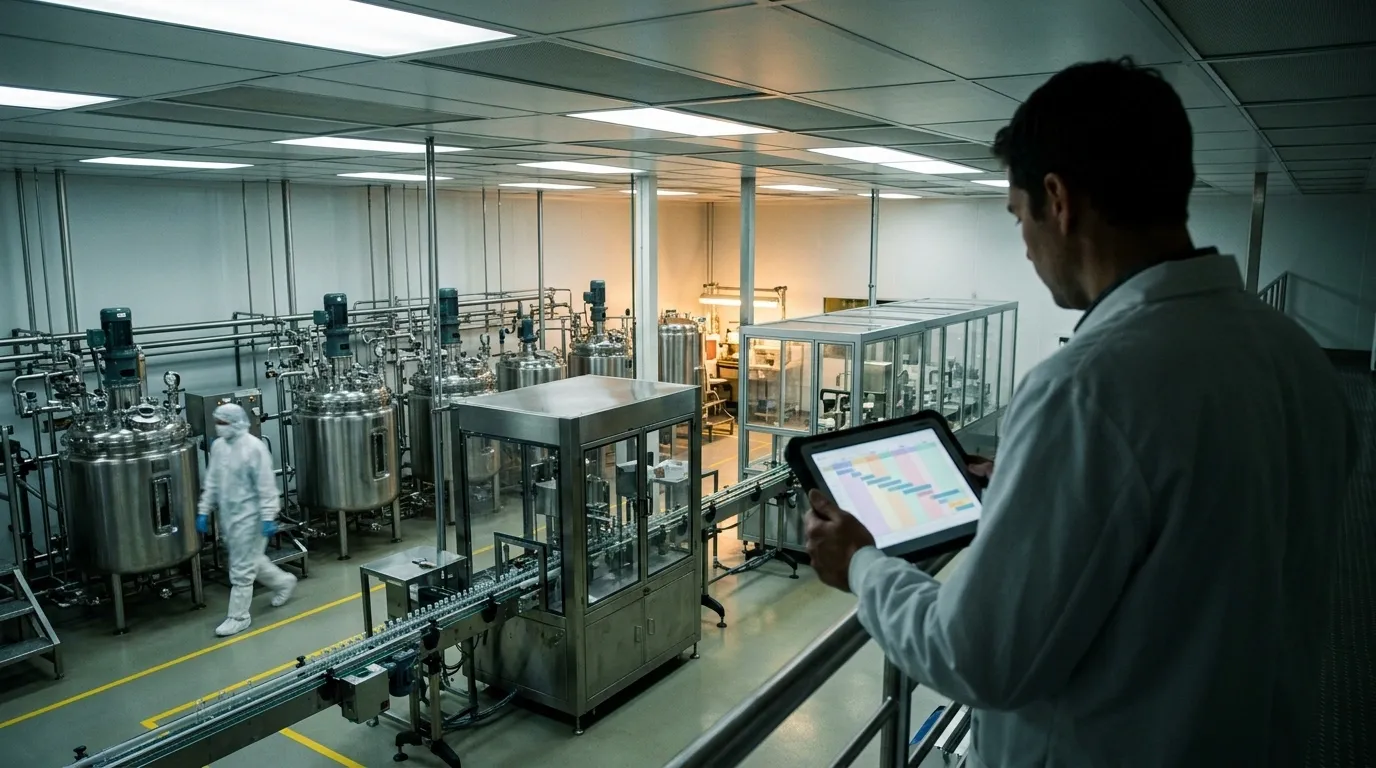
Chitrang Dave: Manufacturing is fascinating. If you recall during the pandemic, there was a whole shortage around oxygenators, and Medtronic open sourced their designs and the plants in Ireland multiplied their throughput like four, five X just to keep up with the pace of demand. Lot of respect for manufacturing. Coming back to your question, it’s a complex value chain, but the core priorities are not that different — the focus on throughput and yield, managing raw materials, visibility of cost, making sure we have the right materials, the right processes, the right quantity at the right places. A lot of times a device moves through multiple plants before it becomes a finished product that can go out on the distribution shelf. Lot of dependencies and making sure all of this stuff flows. The other challenge that became obvious during the pandemic was just availability of raw materials. There was a lot of shortage, and figuring out where our plants are, where the alternatives are, just making sure stuff is able to flow and continue flowing through.
Ross Katz: Are there any feedback loops between the data that’s coming off of the devices themselves and manufacturing and supply chain? I’m imagining something like logs or error codes that would come off of a device. How does that kind of information get consumed at a manufacturing level when thinking about medical devices?
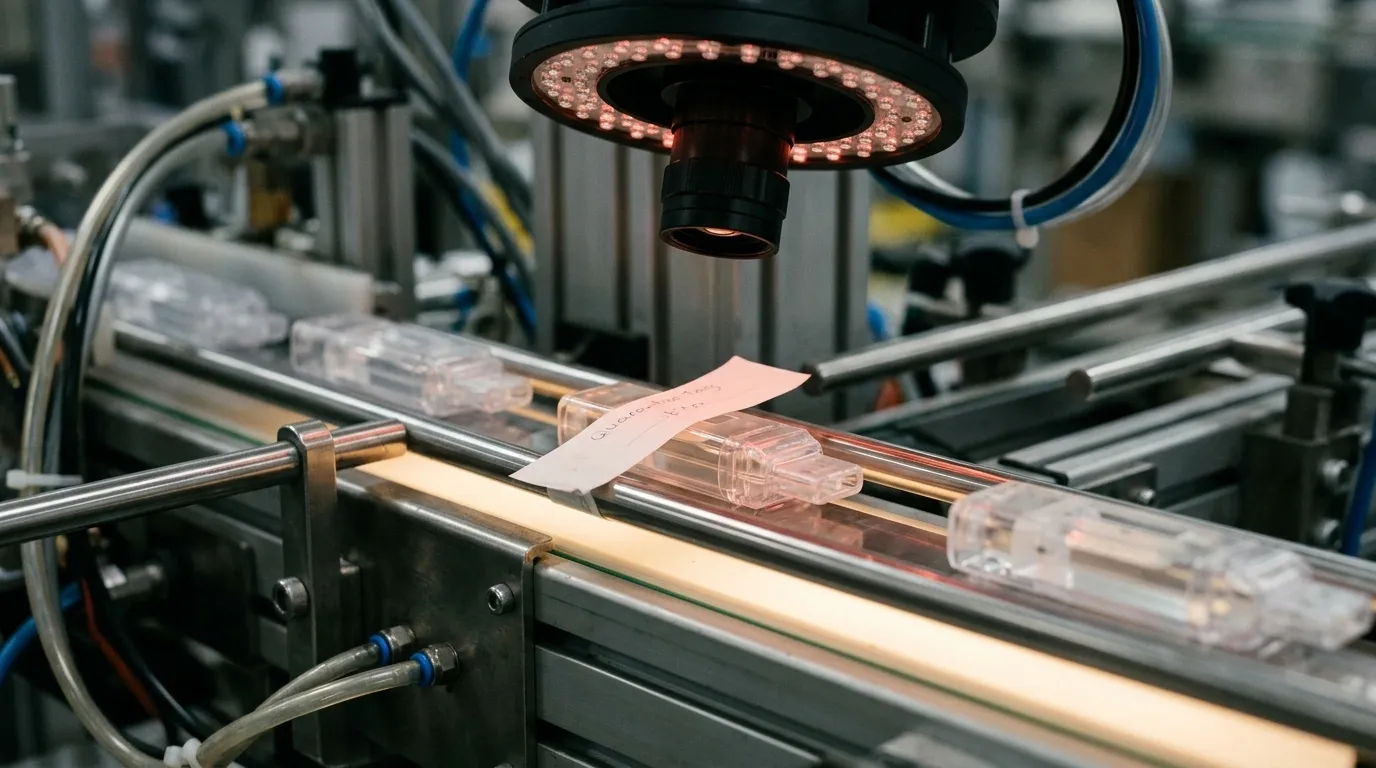
Chitrang Dave: This is why I have been harping on real-time and streaming data, especially in the manufacturing context. Automation is another big opportunity. Volumes are going to be a little bit different in MedTech compared to semiconductor, but the opportunities are there, and there are a lot of IoT type devices in the manufacturing process that generate signals — to be able to consolidate, stream data in real-time and make quality decisions, automate some of the QA processing through imaging. A lot of these devices actually have a very manual process in them. Valves, for example, are sewn by hand in a lot of instances, and if you can monitor those steps, those video feeds in real-time, maybe be able to provide coaching or training or identify opportunities that you could correct before it gets further down into the manufacturing process and has to be scrapped. There’s a lot of potential for automation, for real-time data in manufacturing.
Ross Katz: As we move to a world where medical devices are providing more real-time data to the different stakeholder groups you mentioned earlier — the providers, the patient, the hospital systems, the physicians, and back to the MedTech company — what do you view as the biggest opportunities you would see happen in a world where real-time data was more accessible off of medical devices?
Chitrang Dave: The greatest impact I see is in identifying potential patients who could benefit from a therapy. There are lots of signals out there today in EHR records or in other places where data is being captured for billing purposes or for other reasons — if we could process this at scale and combine and be able to analyze. Identifying those patients and potential patients who could benefit from therapies that are available today, that’s one area. But imagine a world where you get diagnosed with something and you have a need and you have a device that’s available and you’re able to get that as soon as possible. You don’t have to wait for an appointment, you don’t have to wait for the results to come in — you are able to be identified, be diagnosed and have the devices available in a matter of days or hours rather than weeks, which is what it typically takes today. Anyone working on shortening and making that delivery of care efficient is going to win. It’s going to be a win for patients, efficiency gains for the system as a whole, it’s going to help us drive cost out of the system. I heard this stat yesterday on Alzheimer’s — simply diagnosing patients earlier when they’re at the mild-to-medium stage would end up generating seven-to-eight trillion dollars in savings, because as the disease progresses it becomes more and more expensive to treat or to manage. Early detection can generate so much things.
Ross Katz: There’s the comprehensiveness of the data you have available about the person so that you can personalize the treatment, the response. And then there’s the timeliness of the data that allows you to be responsive to what you’ve learned with that more 360-degree picture. But obviously the thing that always comes up when you have this conversation is the tradeoffs between maintaining patient privacy, abiding by the regulations that are out there, and enabling the improvements to patient outcomes and care that you just mentioned. How do you think through those tradeoffs as you’re working with data in the medical devices space?
Chitrang Dave: This is a no-brainer. You have to do both. In life sciences and MedTech, quality and trust are key. Organizations and leaders in this space start with quality as the first thing we will talk about regardless of what function you’re in. Quality, privacy is key — folks in this area really take this responsibility very seriously. It’s non-negotiable. It is our responsibility to figure out how to use the data effectively that we have, how to put the right controls in place and the right governance in place and the right security in place.
Ross Katz: To shift a gear a little bit, what are some of the most innovative uses of analytics or ML or AI that you’ve seen in the front end of the pipeline when you’re going to market with a new device or planning to launch a new product in the MedTech space?
Chitrang Dave: The Cancer AI Alliance — I don’t know if you’ve seen that one. This was a big announcement, I think it was $40 billion. AWS, Microsoft, Nvidia, Deloitte, Slalom — really the heavyweights from a technology side and a services side coming together to solve some big problems. This is the way forward. I’m very encouraged to see that. This is the kind of big, innovative thinking that we need in this space. I see that as the beginning of innovation, identifying new pathways or new solutions to some big problems that we have. And then within the launch and go-to-market space, there are some really innovative things you can do with data — identifying patient populations, making sure the physicians are trained, making sure you have inventory in the right places around the globe. Those very tactical things that you need to do to ensure a successful launch, this is where data and analytics can really play a key role.
Ross Katz: There’s the market sizing and the targeting opportunities, and I imagine there’s also understanding the value proposition of the medical device that you’re bringing to market and the way that diagnoses get done and the way the medical device gets assigned. You mentioned some of the partnerships between big tech and medical device companies, and you also mentioned earlier that Apple and Meta are entering the MedTech space. How do you see the relationship currently and in the future between these big tech companies and MedTech companies evolving?
Chitrang Dave: I’ve been watching this very closely. Big tech really brings a lot of funding and disruptive thinking to this space. Where they’re making a big difference is really fundamentally providing new ways of addressing problems. Google’s more recent GenAI announcements around Med-LM, and the work they did early on around AlphaFold — this kind of more fundamental tools for addressing some of these challenges, this is where their key strengths are. Productizing, creating solutions around that — I think that remains to be seen. Ultimately a lot of the MedTech companies have tried to partner and that may be the right approach. There is something to be said for domain knowledge and being able to bring the domain expertise, but big tech can really bring some strong technology muscle to help solve.
Ross Katz: It’s also interesting because these big tech companies are used to operating in arenas where the regulatory requirements are somewhat lower than in the healthcare space, and in the current day and age where big tech companies are getting exposed to more legal risk, I wonder what the appetite will be for that legal risk among these companies. No one can doubt their technical capacity, but are they going to have the business desire to get into these arenas where as organizations they’re exposed to much more regulatory and legal risk than they ever have been? Do you have any perspective on that?
Chitrang Dave: This is absolutely spot on. The appetite for it, and the patience. In software and in big tech you can iterate quickly and bring stuff to market and prove out a hypothesis or a product or that product market fit real quick. It takes a while in life sciences — you have to go through the approval cycles, you have to go through validating a lot of your initial assumptions and trials and all of this, and it takes a ton of investment and patience to see that through.
Ross Katz: One of the benefits that big tech companies tend to bring with the technologies they create is the integration of the different technologies that you’re working with — the Apple Watch and the iPhone, and obviously you’re talking about AirPods as hearing aids. I’m interested in how you see that environment looking in the future between the integration of consumer wearables and the medical grade devices that have gone through FDA approval for patient care. How do these things work together — can they work together?
Chitrang Dave: I’m cautiously optimistic. There is a lot you can do on the detection and consumerization with wearables. If it helps people take more ownership and makes people more aware of how their own bodies are changing, evolving, improving, or getting worse, that’s a win for the system overall. And then with the implants themselves, I’ll take the diabetes example with the Dexcom or Medtronic. These are devices that people live with, and they’re probably the closest in terms of implants — closest in terms of a patient experience or a direct-to-patient kind of experience. People are used to their iPhones and smart devices, and then you have a user experience with some of these devices that feels like it’s a decade or two behind. This is where big tech can really help — improve that whole overall patient experience with implantables. You can see this even in the operating room now with surgical robotics and some of the consoles and physician interfaces that they’ve created, which are much more modern. This is the influence I see of big tech and the thinking around user experience.
Ross Katz: As we come towards the end of our conversation, as data science and the data you can get off of devices continues to evolve, what are some of the future trends? Obviously we’ve touched on real-time, but if there are other trends that are interesting to you — in the technologies, in the devices, the data collection or the analytics — that you think will have a transformative impact on MedTech?
Chitrang Dave: I see potential for more opportunities for collaboration. That is probably one of those areas where we can really transform, disrupt what we do with data, with AI in healthcare, life sciences. Clinical trials is super expensive. We generate a really small set of data compared to big data — it’s a really small subset of data that we collect as a part of a trial, and it’s a very expensive way to generate the data. I look at what kind of collaborations can we create and put in place so we can do more with this data. Can we use it more than once? Can we use it more collaboratively? Can we share? This is why I brought up the Cancer AI Alliance — because now we have this initiative that is allowing data sets that are siloed or have been collected for different reasons to be brought together and analyzed for solving much bigger problems. I see a lot of potential in this whole theme around collaboration, and I hope we do more of that.
Ross Katz: And so where can people go to learn more about you and your work?
Chitrang Dave: These days I’m very active on LinkedIn. I try to share as much as I know through my experience, my history but also new developments I see, and if you’re interested in this kind of stuff, find me on LinkedIn and happy to connect.
Ross Katz: Chitrang it’s been a pleasure to talk with you today, really appreciate the time and look forward to connecting down the line.
Chitrang Dave: Absolutely Ross, love talking to you.
Jason: And that’s it for this episode of Data in Biotech. If you enjoyed the episode, please subscribe, rate, or leave a review in your podcast platform of choice. See you next time.