Listen on
Overview
Despite advancements in medical science, chronic disease burdens individuals and healthcare systems more than ever. The problem isn’t a lack of scientific progress, but a healthcare model built on short-term, episodic care that fails to address the longitudinal nature of chronic conditions. This structural flaw leads to fragmented data, misaligned incentives, and a system that reacts to illness rather than preventing it—driving costs higher while healthspan declines.
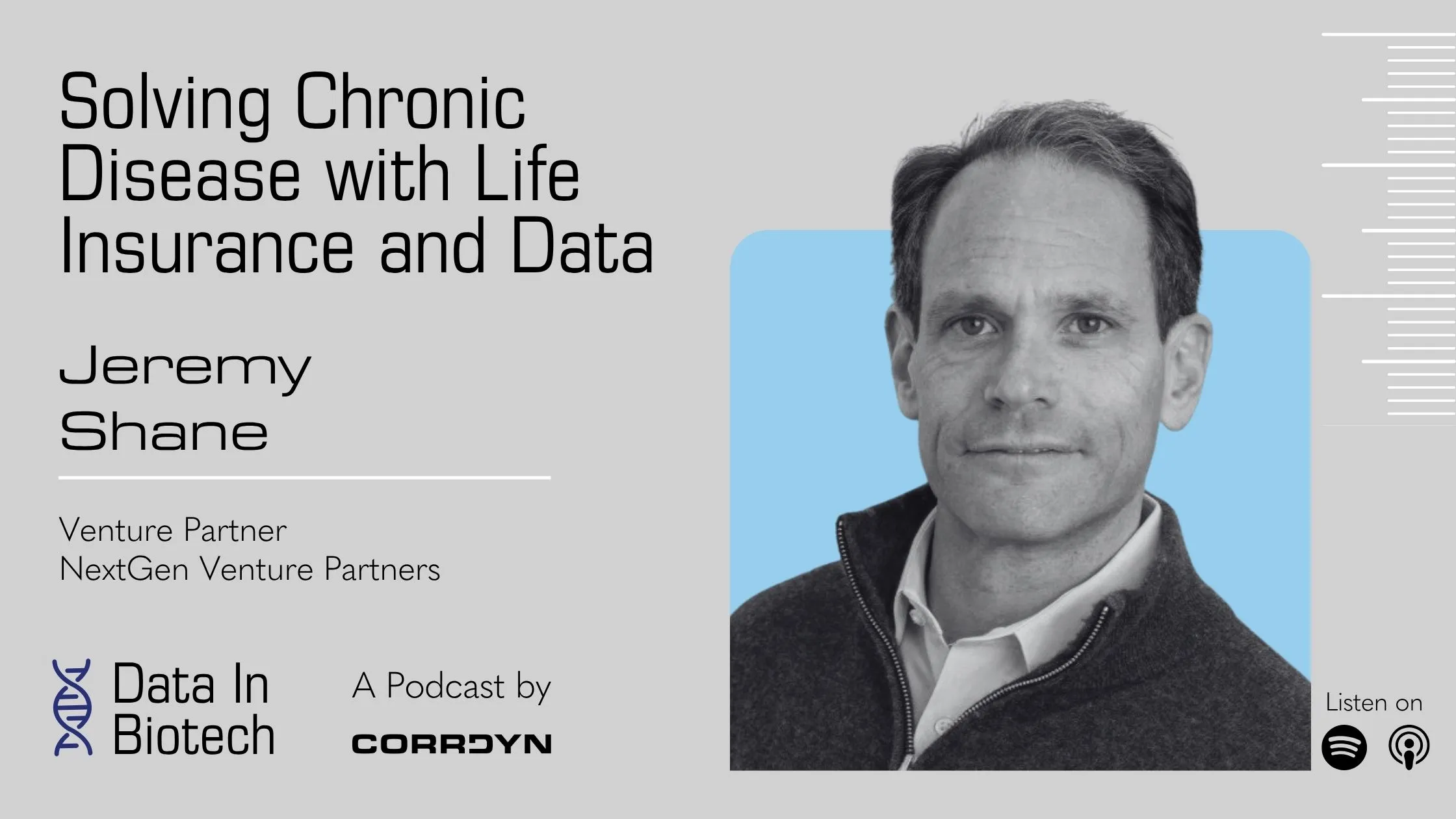
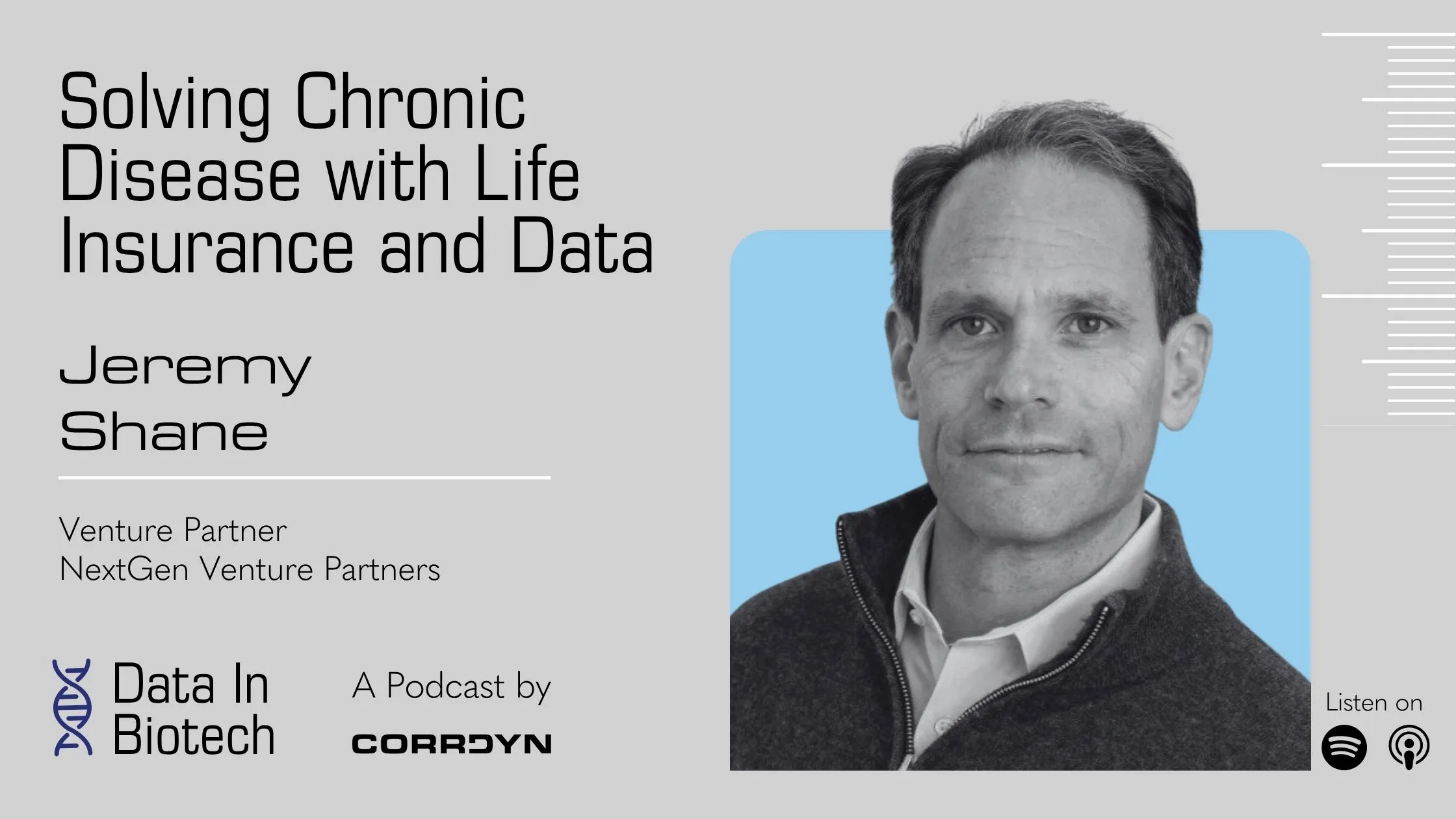
Host Ross Katz speaks with Jeremy Shane, founder of Life for Health and author of an upcoming book, who proposes a new model that addresses these fundamental issues. Drawing on deep experience in healthcare, Shane advocates for a system rooted in life insurance, designed to align incentives across patients, clinicians, and pharmaceutical companies for long-term health outcomes. This approach fundamentally reshapes how data is collected, valued, and used to predict and prevent disease.
This episode explores the current system’s failings, from the ‘chronic disease cascade’ to the disconnect between drug discovery and clinical practice. Shane outlines how Life for Health creates a continuous data feedback loop, introduces outcomes-based annuity pricing for breakthrough drugs, and re-imagines clinical trials. The conversation concludes with concrete steps stakeholders can take to build this new healthcare system.
Key Takeaways
Fragmented, reactive healthcare data actively impedes chronic disease solutions.
The existing system captures data only during acute episodes, biasing information towards symptoms and billing rather than complete health narratives. This episodic approach prevents the longitudinal analysis needed to understand chronic disease progression, predict risk, and develop effective, early interventions. Building a new data foundation requires shifting from reactive clinical records to continuous, complete data capture.
Life insurance models align financial incentives with long-term health outcomes.
Current health insurance struggles to justify investments in long-term prevention due to short-term enrollment cycles. A life insurance framework, with its lifelong horizon, enables significant upfront investment in disease reversal and ongoing maintenance. This structure allows for outcomes-based payments to participants, aligning their financial gains with sustained health and supporting a continuous commitment to wellness.
Outcomes-based drug pricing extends revenue for biotech and boosts real-world drug efficacy.
Transitioning from high upfront costs to annuity-based payments tied to verified patient outcomes reduces access barriers for breakthrough drugs like GLP-1s. This model extends a drug company’s revenue stream well beyond patent expiration, while simultaneously incentivizing them to integrate with broad care models that ensure patients achieve and maintain better health outcomes, ultimately refining therapy applications.
A continuous data feedback loop enables ‘pre-qualified’ clinical trial populations.
Embedding data contribution and pre-qualification into a participant’s ongoing health journey fundamentally redesigns clinical trial recruitment. With longitudinal health data, potential trial participants are identified and tracked over time, reducing recruitment friction and accelerating trial initiation. This also facilitates observational studies and helps drug makers quickly validate therapeutic refinements for specific population segments.
Related: CorrDyn helps companies enhance data capabilities in biotech and life sciences through effective data engineering and digital transformation. See how biotech manufacturers use data.
Full Transcript
Jason: Welcome to Data in Biotech, a podcast from CorrDyn where we explore how companies leverage data to drive innovation in life sciences. Every two weeks we sit down with an expert from the world of biotechnology to understand how they’re using data science to solve technical challenges, streamline operations, and further innovation in their business. In this episode, Ross is joined by Jeremy Shane, author of the upcoming book, Life for Health. Jeremy introduces a groundbreaking healthcare model that combines life insurance, longitudinal data, and patient engagement to combat chronic disease. Together they explore why traditional healthcare systems fall short, how economic incentives can improve health outcomes, and the potential of outcomes-based pricing to transform drug development. The conversation also dives into early cancer detection, a new approach to clinical trials, and the actions different stakeholders can take to bring this visionary model to life. Here we go.
Ross Katz: Jeremy Shane, welcome to the Data in Biotech podcast.
Jeremy Shane: Thank you, Ross. It’s great to be here.
Ross Katz: Awesome. Well, just to kick us off, would you mind giving us an introduction to your background and what brought you here today?
Jeremy Shane: Sure. I’ve worked in a variety of different industries, in healthcare and energy and education. But in healthcare really had a focus on chronic disease, working with patients, understanding the patient experience, ran a company for a while called HealthCentral as part of the founding team, still exists. We really focused on helping people manage all aspects of chronic disease. And that really introduced me to some of the challenges of our healthcare system as it exists, both systematically as well as from the perspective of people who it’s supposed to serve. And catalyzed a lot of the kind of thinking that we’re going to talk about here today with Life for Health.
Ross Katz: Yeah, awesome. Well, Life for Health, I believe is your upcoming book that’s preparing to be released. So, excited to talk about Life for Health and the ways that it touches Data in Biotech. Would you give us an overview of Life for Health, maybe with a little bit of a lens on the ways that data plays into it?
Jeremy Shane: So Life for Health is both a book, but it’s also an approach to business and enterprise. And fundamentally, the goal of Life for Health is to solve chronic disease. And the reason to solve chronic disease is it’s the greatest threat that we have to healthspan. When President Kennedy was alive, most people lived about 70 years and spent about 10% of their life in ill health, generally towards the end. Today, we live 10 years longer, but people spend 20% of their life on average in ill health. And so lifespan has gotten longer, but healthspan has gotten shorter. That’s problematic both for people, in terms of their ability to accumulate wealth, equity issues, but it’s terrible mostly for the healthcare system. I’ve spent a lot of time thinking about this and the notion for Life for Health is basically chronic disease and age-related disease are fundamentally different from short-term kinds of issues. The healthcare system and health insurance was designed to treat acute episodes, short-term episodes, or emergency situations. And it works really well for that. That’s what it was originally designed to do. After World War II, as infectious disease started to recede and we started to approach things like cardiovascular disease and cancer and other kinds of things, that just got added on to the system as a natural course in terms of the system that existed. But they’re fundamentally different kinds of scientific sorts of threats and challenges, as a lot of your guests have talked about. And they require a completely different kind of system to solve. And so that’s really the goal of Life for Health. It’s to approach chronic disease on its terms, which is looking at the longitudinal time dimensionality, the complexity in the causes, the onset, the progression, the treatment response, and build a system around that. And I think the key aspect of Life for Health is about how do we use life insurance to create the right kind of longitudinal incentives to create alignment amongst insurers, clinicians, and people to create a long-term kind of outcome where we can either reverse disease where it exists and maintain longer healthspan or really, this is where the data I think really comes into play, is predicting and preventing risk and preventing disease from starting. We’ll get in when we can talk about what does it mean if we have a Life for Health system for chronic and age-related disease, and we also have this health insurance system and we can talk about that. But fundamentally, the idea is let’s have a system that really meets chronic disease on its terms and create an ecosystem that can help advance our understanding of age-related disease and make healthspan as long as possible. There’s tremendous technological and medical and data gains from that, but there’s massive kinds of societal benefits as well.
Ross Katz: Yeah, awesome. That’s a great introduction. I want to just ground the conversation in a lot of the previous podcast episodes we’ve had around data-driven drug discovery in biotech and how that relates to how the health system works. What I’d love to hear from you is what is the drug discovery process doing now in the context of the current healthcare system, and where is the disconnect between that and where you think that the ecosystem would need to go in order to solve the chronic illness problem that you’ve just articulated?
Jeremy Shane: Well, first of all, I think there’s incredible advancements that is happening in drug discovery and has happened over the last 20, 30, 40, 50 years. The challenge, I think, particularly in chronic disease, is that we are trying to address individual kinds of symptoms and situations. And what we find really is that chronic disease is not a series of diagnoses or other kinds of things. It’s a systemic situation. I call it the chronic disease cascade. You have issues that start in one area, generally in a lot of cases in chronic disease, metabolic issues can be decisive. And they spill over over time and they build up. And other at some point they become such accumulation of conditions that it’s overwhelming both for the individual and for the system, and that’s where you see massive costs and disability. And so both the drug discovery and how we integrate treatments, and not just only drugs, but services and gather data that we can feed back into drug discovery is a much more systemic kinds of issues. And I think one example of this that we see today is with the GLP-1 drugs. I’m sure we’ll talk a lot about GLP-1 drugs, because Life for Health is focused initially on looking at metabolic multimorbidity. These drugs are amazing, and they’re amazing because they have systemic kinds of effects. I don’t think anyone, even in Novo and Lilly, anticipated that if they could achieve long-term sensitivity in the brain, that it could have that kind of systemic sorts of effects throughout the body in a range of different kinds of systems. That’s the way the system has to be set up so that there’s a very close integration between what is happening with people’s treatment plans and their actual treatment over time, what are the results, how does that get fed back into drug discovery? And I think it’s important to draw a historical context to this a little bit, Ross, because for a lot of the 20th century, really from Rockefeller and started the Rockefeller Institute and other kinds of things, for a variety of reasons through World War II and the creation of NIH and so on, there was a very close synergy between drug discovery and even surgery and hospitals and what was happening in terms of clinical care. There’s this great retrospective article looking at the Framingham study after 50 years. And it’s got this great chart of the heart disease death rates relative to different publications that started to come out of Framingham 10 years into the study. And you just see as the publications built up around blood pressure and early detection and other kinds of things, the death rate declined. And obviously there are other things that were going on in terms of anti-smoking and so on that helped create an overall kind of ecosystem, but that just underscores how closely connected the researchers were to cardiologists, to what was happening in surgery, what was happening in drug discovery. And in the early 1970s, in the book I actually pinpoint the year 1973, you can argue about that, I can talk about why that is, but you really had this divergence where the healthcare system became really focused on using financial controls to limit access to treatments and care. And there were a variety of historical reasons for that, but really the zeitgeist of the time was around people really couldn’t be trusted. They would just want more medical care. Doctors would give people medical care, Medicare, medical care for a whole range of reasons that the system. And on the other side, in drug discovery and the reason I pinpoint 1973 is you have this amazing confluence of events in 1973 with discovery of the cholesterol receptors, proof about how you could make monoclonal antibodies, genetic engineering, it exploded into what became the biotech industry. And obviously now we’re going through a second explosion with AI and machine learning. And while the rate and the pace of potential discovery and capability is exploding in the biotech and drug discovery, you’re still stuck with this healthcare system that again is trying to solve a problem for which it’s not well designed. And so the whole goal of what we have to do systematically and how we use data is to bring these worlds back together, and it’s going to require a different kind of system that very closely connects the kind of data that is gathered and the way we advance drug discovery. Maybe if it’s okay, perhaps it’ll be helpful to just give a two-minute summary of how Life for Health works in a practical way and I think that can illustrate the connection between care delivery and drug discovery.
Ross Katz: Please do.
Jeremy Shane: So the notion of Life for Health is let’s focus on metabolic conditions. You have somebody, for example, that has maybe obesity and diabetes. They join Life for Health. The whole idea for Life for Health, basically, the four action verbs are reverse, maintain, predict, and prevent. And so the first part of it, for example, for people that have disease, is you join Life for Health, you’re matched up with a clinician that has expertise in managing metabolic conditions, whatever their specialty, original specialty was, and you develop an intervention plan based on a total look at what your genetic situation is, your health situation is, a full look at your metabolic condition and so on. And you decide on an intervention plan and basically the idea is over two to three years, you reverse whatever disease you have and restore metabolic health. And then you go through, it could be decades long process of trying to maintain that health. And what’s important in that whole process is throughout that, the participant, that’s the individual, I call them participants rather than patients, is working with the clinician to set health outcome goals in six month, in year increments depending on what the situation is, about what they want to do. And throughout both that initial intervention period as well as the maintenance period, people are going in periodically and getting both checkups, but also getting blood draws or other kinds of analysis that is relevant for their situation, potentially opting into other kinds of screening or other kinds of situation based on their background or situation. And that data becomes a longitudinal basis that can help in all kinds of drug discovery, as well as validation of which condition, which drugs work well. To bring it back to GLP-1s, for example, because obviously they’re going to be a big part of metabolic disease. The drugs that are out there are already amazing and the ones that are in the pipeline at least look like they’re doing better, but they’re all being looked at primarily based on percentage and amount of weight loss. That’s only part of the picture, as we now know. There are going to have to be different variations potentially for postmenopausal women so that you have bone density and muscle mass protection. There are going to be versions that we might potentially just want to work in the brain and not as much in the gut. And so creating the ecosystem which Life for Health creates in terms of understanding what is the plan, what are the results, what are the outcomes, and integrating it with all of the other aspects of the person’s situation will just much more rapidly create the data that we need to understand combination combination therapies, new kinds of therapies, new delivery mechanisms, and so on. And particularly not so much in the reversal stage, but in the decades thereafter in the maintenance stage where I think that is really the very large question with all of these things in terms of metabolic disease and chronic disease: once you achieve reversal, how do you maintain that over the long term?
Ross Katz: I have so many follow-up questions on this. I’m just going to try to take it step by step. So first thing, can you draw the connection between managing metabolic conditions and the chronic illness problem that you highlighted upfront as being the basis for needing this new system?
Jeremy Shane: So I think when you look at the way people talk about the healthcare system traditionally is in terms of how much we spend. We spend $5 trillion a year and like $4 trillion of it is for people with chronic disease. That’s looking at the whole system backwards. The way we should be looking at the system is in terms of disease prevalence and incidence, looking at it like a chronic disease cascade. And it’s so interesting, in 2017 the RAND Institute did this great study where they looked at the overall population in terms of the number of chronic disease conditions people had. And then they related it to spending on those groups of people. And so you’ve got like 40% of people that don’t have chronic disease account for 10% of costs. And it’s almost exactly the opposite in terms of where it is with people who have very advanced metabolic disease. And it’s not only related to aging, obviously it is progressive and it gets worse as aging goes along. But a couple of years later, Medicare did a similar kind of study, and they found actually very similar kinds of breakdowns between incidence of multimorbidity and where the spending is in the system. And so we really need to reorient the whole way that we think about the system and work basically at both ends of the chronic disease curve. And I think the cascade, and I think this is where it comes back to your question about data as well, is it’s not only about reversing disease in people who have advanced conditions and maintaining better health, it’s also about preventing it on the front end. We’ve got to work both ends of the chronic disease cascade at once. And so what you learn from people later on can help people who are in middle stage, both prevent and predict and have much more effective treatment much earlier, as well as then feeding that data earlier on to understand what are the risk profiles, what are the things that can be done much earlier on to prevent even onset. Because the goal here is not that we all live to a 100, that’d be wonderful if we could, but we spend as much of our life in a much better health condition than we have overall. I think the piece that also brings us back to life insurance and the Life for Health notion and the longitudinal alignment is one of the big challenges in our system as well and one of the biases I think in drug discovery is there’s a tendency to try and keep pace with disease. So statins were fantastic in postponing heart disease, heart attacks or earlier heart attacks. But now we have epidemics of heart failure and people who have heart failure also have respiratory failure and early stage kidney disease and liver disease. It’s again, more to the systemic stage. And so those drugs are amazing for start heart failure, but let’s stop it much earlier. Let’s have potentially higher cost interventions much earlier that pay out over a much longer time frame. And that’s the longitudinal alignment the system has to create that will change the emphasis of where it’s not just drug discovery, but it’s this predictive analysis of who is most likely to progress and what are the things that we can do in diet as well as in treatment as well as in the whole participant experience to change their trajectory.
Ross Katz: Yeah, I want to get to the economic portion of it a little bit later on in terms of how incentives become aligned between all of the different parties in order to create the system that you’re describing. But first, you mentioned that you’ve got these four stages: reverse, maintain, predict, and prevent. And that as part of this Life for Health paradigm, you’re matched up with a clinician with expertise in managing metabolic conditions, and they’re doing a battery of tests to get a sense of your entire genetic situation, your health situation, so that they can engage in this process of reverse, maintain, predict, prevent. Could you maybe draw a contrast for me between what you’re envisioning there and the way that patient data is collected today and how it’s used today?
Jeremy Shane: So I think the first thing to realize is that patient data is very episodic and clinically oriented because that’s the way the system works. That’s when we collect it. People show up, doc, I’ve got a problem. Or I think I might have a problem, by and large. One, that’s too late, and two, that’s far too narrow. And I think one of the key issues with data is that it’s not really given value. And so culturally we look at the person with the condition as a patient and I really dislike the word patient because it implies a subservience. And a reception of medical knowledge when you have a kind of condition. And I really prefer the word participant, which gets to your question about why things are different in the data. The person has incredible information, not just in their medical and clinical information, but in their whole life experience. And the data they are providing is incredibly valuable, not only now, but much later in time. One of the examples I think that’s a great one of the heroes in my book is this NIH researcher by the name of Keenan Walker. There was, some of your listeners may be familiar with it, a longitudinal study done from the ’90s onwards called the ARIC study, ARIC, looking at cardiovascular treatment in non-urban areas. And part of it was that they took blood from all the people who are participating over many, many years, in addition to having their electronic health record or their health records and knowing their ultimate outcomes. And Walker and his team went back 30 years later, long after the data was collected, decades before proteomics was a feasible kind of thing. And they’re able to go back and do the proteomics and look at the trajectory of what are some different protein abnormal protein expression levels that might be indicative of higher risk of various kinds of diseases, especially Alzheimer’s. And this is stuff that Tony Wyss-Coray and his team is doing with the biological clocks and other kinds of things. But if you didn’t have those biosamples collected over 30 years in addition to this information, you wouldn’t have the ability to effectively create a time machine and go back in time and look at all the different things that can happen. And so I think a key part of that is we have to bring participants into the system. We have to value their data. We have to compensate them for their data. We have to solve some of the issues that we have between privacy and control. Which I think get very blended and blurred in very unproductive ways in the way our whole data ecosystem works. Privacy, obviously, should never be violated. People who don’t know need to know your identity shouldn’t know it. But that’s very different from giving participants control over how their data is used and potentially even wanting their data to be used more widely on a de-identified and anonymized kind of basis to drive research that might benefit them or other people like them, 20, 30, 40 years. So I view data really as not just the data that’s in the EHR, that is biased in many cases by billing and priorities in the way the existing system works. I view data as really as this narrative. And you have the clinical data is just one piece of it. There’s other kinds of activity data that comes into it. There’s also the information that a person provides in real time about what their health situation is or just their life situation or their outlook on progress towards different health outcome goals or just the stuff that’s going on in their lives. And I’m sure we’ll talk more about this, but this is where AI just in terms of a consumer experience of having a system that prompts you, not every day, not like the quantified self incessant self-monitoring, but prompts you occasionally, like how are you doing? How are you feeling? It’s been a while since we’ve checked in. Looks like you’ve been doing some great activities, or how have your meals been? How have you been feeling? And it has that underlying data, but you get that layer of the qualitative information that really gives you a sense about people’s motivation and their engagement and that reflective process that you want to create for people about how they’re living and their health. And so that’s again where the integration of the improvement in the clinical experience, that’s part of the clinical and the treatment and the maintain space, creates data that can then be used and marketed with somebody’s permission and with their ability to receive some value for that for the prediction and the prevention. And that benefits them and it benefits other people like them. The one final thing I’ll just say on this around data is it’s critical to have feedback loops. Not only am I giving you permission to use my data, I want you to tell me, I want to be able to see how it’s being used. And if there’s information down the road that’s relevant to me, even if it’s 20 or 30 years later, you should be telling my clinician. You should be contacting me so that I can get involved in studies or benefit from that kind of experience. I think that has incredible economy and value for drug discovery as well because, obviously, so much of the energy and time and money that goes into drug development or realizing the potential drugs is not on the front end, it’s in the clinical trials and then the marketing. And anything that we can do to create greater efficiency: if I know already there’s a million people out there that have this set of conditions that is likely to yield this kind of range of result in the use of my drugs, what a difference that could make, especially if you have an intermediary that has a relationship or an ability to broker that kind of benefit for the participant to consider whether they want to participate.
Ross Katz: Awesome. Yeah, let me just say back to you what I heard from a data collection perspective to make sure that I’m tracking. So one of the things that I heard from you is the data collection today is much more reactive in nature. The patient is coming in because they’re experiencing some sort of problem and then the data that’s being collected is a much more targeted set of data that represents the nature of the illness or the issue that’s being explored that’s there and the paradigm that you’re proposing is a paradigm that’s much more of a consistent set of data collection that builds up over time and that having that more narrative-based dataset will allow for a system that utilizes tools like machine learning and AI to better understand how these chronic diseases emerge, how they can be predicted, how they can be prevented so that interventions can occur much earlier on in their progression. Am I thinking about that right?
Jeremy Shane: Absolutely. We have to move from diagnosis to detection, from treatment to prediction and prevention. These proteomics studies are amazing, but we have to bring it home to understand the mechanisms and then how to engage them as early as possible.
Ross Katz: Yeah. And then I heard two sets of feedback loops that you were describing. One is the feedback loop back to the clinician, I guess it’s multiple, but feedback loops back to the clinician and the patient with regard to the data that’s being collected to help them understand how the data is being utilized and what insights have been able to be gained about a person’s health situation based on the data that’s being collected. And the other is a feedback loop into the biotech space, into drug discovery, where these longitudinal datasets would need to be somehow made available to these different companies that are developing therapeutic approaches to then increase the quantity and quality of interventions that could be applied to people in this system. Am I thinking about that piece right?
Jeremy Shane: Absolutely. I think there are both of those. And I would emphasize in the first, I think there are two really important landmarks or models in the participant aspect of the feedback loop. I would say one is in HIV in terms of the ability to involve patients at the time in looking at experimental therapies much earlier. That created a kind of trust and connection. I know there was a lot of issues over the pricing of medication and access to medication, but that was really the prototype of the connection amongst clinicians, advocates, participants to really advance drug discovery. I think another one that is really important as a model that is being replicated in other ones is cystic fibrosis where the Cystic Fibrosis Foundation really organized the whole patient community, participant community. And effectively packaged it up ultimately for Vertex as part of that deal of the co-investment in the drug discovery, but basically what they’re offering is we can de-risk the clinical trials and the clinical validation with this participant population. And there was even a critical point, if you remember the development of that drug where the first drug, the first target that Vertex was going after really only benefited about 5 or 6% of the cystic fibrosis population. And they had to get the community bought into this is the overall plan, we’ll start here and it creates value and how we’ll be able to accelerate the future development. Those are the kinds of relationships that need to be built not just across condition areas but helps create that cohesive glue between participants, advocates, clinicians, and the actual researchers. I think the other piece just on the second part, the ability that we now have, we’re just seeing the tip of the iceberg as you’ve seen with a lot of your guests, Sapient and others, in the capability of AI to find unexpected sorts of correlations or tendencies or trends and the faster we can get back to the actual people that are the sources of that, the faster we’re going to know: are our models over-fitting or they’re not or there really is a trend here or something to look into.
Ross Katz: Yeah. Okay, so I think most people who listen to this podcast would agree with the idea that a more comprehensive and less biased population-level dataset would be of benefit to the entire community that’s trying to develop and implement therapeutic approaches to disease. So I want to return to Life for Health and the idea that life insurance provides a better economic model to create this paradigm that you’ve just described. So how does your vision for Life for Health rearchitect the system to create the incentives that are needed that get everybody bought in?
Jeremy Shane: So I think there’s a couple things with life insurance. First of all, and in here I’m talking about the life insurance that would be part of Life for Health would be a whole or universal life kind of policy where people can save and the savings accumulate on a tax-deferred basis. That’s really important that the participants have that. The main value for life insurance is it is potentially lifelong and that aligns the insurer and the participant to want to get what is the finish line. One very clear finish line is let’s get as many people to age 65 in the United States to Medicare age without multimorbidity as possible. In 2001 or 20, 24% of people entering Medicare had multimorbidity. Today it’s north of 40% going up to 50%. That is a massive change that has to be addressed and reversed and so on. And so the first part of it is the investments that are necessary to reverse disease, whether that’s weight loss surgery, whether that’s drug therapy, whether it’s potentially both over time and the services around it. Health insurers don’t want to pay this on a one year, two year, even five year kind of basis because the real value of reversing disease when you’re in your early 40s isn’t now, it’s 20, 25 years later for both the insurer and the participant as an individual. And so what life insurance allows you to do because you’ve got that long time span is you can afford to make larger upfront investments. And frankly the payback on a lot of these now in terms of disease reversal is two, three years potentially in terms of health savings depending on how far along someone is in their trajectory. But even someone younger, preventing the disease onset, you’ve got 20, 30 years to realize the difference between absent that intervention and with that intervention happening, what the value is. And the life insurance policy, insofar as a person who is part of Life for Health again would be setting goals with their clinician for health outcome goals, which could be biometrics, it could be activity level, could be any kind of what they are relevantly. As long as people are hitting their health outcomes goals as assessed by the clinician, not the insurer, as assessed by the clinician, that person earns a health outcomes payment. And that payment can grow over time as they get older in addition to the earnings that they have on it. And so this is a mechanism to really drive the maintain phase of it. It’s great if you lose 25% of your weight loss and get your A1C back to normal, but you really want to have that over 15, 20, 30 years thereafter. And there’ll be fluctuations, but keeping people focused and ensuring that they also are gaining savings that they later can use for a catastrophic or other kind of situation I think makes a tremendous difference. I think the one other area that this also helps in is life insurers want you to live. And so another piece of this we haven’t talked about, we focused a lot on metabolic, but is also in cancer care. You look at people who get their tumors assessed from a NCI CCC, comprehensive care center, from the beginning or get treated there from the beginning, they have better survival outcomes. And so the ability to embed in a life insurance policy that obviously also you’re doing better in terms of detecting cancer risk or various other genetic risks or polygenic risks as we understand them, but you are in reducing their metabolic multimorbidity, you’re reducing their cancer risk, and you also build in the possibility that if somebody is diagnosed with cancer, they can immediately go to an NCI CCC for the diagnostics. Now, they may have a tumor that can be treated in the community setting perfectly well and so on, but if they don’t, they get that in the first round. They get the neoadjuvant immunotherapy in the first round that has a much higher likelihood of survival benefit. And so this is where life insurance for both chronic and age-related disease really is transformative because it allows longer investment horizons and it really aligns the participant and the clinician to continually be doing better and better and you wake up at 65, you don’t have multimorbidity, you’ve got tens of thousands, maybe hundreds of thousands of savings in your life insurance policy from your health outcomes payment, and you’ve avoided a tremendous amount of medical expense all along the way.
Ross Katz: That makes a lot of sense. But let me say it back to you to make sure that I understand. So as a patient, rather than paying health insurance or having an employer that pays health insurance on a monthly basis, that health insurance is now being put into Life for Health insurance and as part of this Life for Health program, I am visiting what is ostensibly my general practitioner whose goal is to help me reverse, maintain, predict, and prevent the diseases that might exist or might come to exist in the future. If I’m able to manage my own personal life to reduce my risk of any illness that might occur in the future, then I’m able to share in the financial gains that the system gets from me not getting sick at some point in the future because the money that I’m putting in this Life for Health program is then, a portion of it is being saved for me to draw down at some point in the future. Am I thinking about that right from the patient perspective?
Jeremy Shane: Exactly, exactly. I think what’s a little bit hard with Life for Health is imagining this thing that doesn’t exist. And some of the vocabulary and the nomenclature like you were talking about a primary care physician, which in the existing healthcare system, there’s this illusory belief that the primary care physician is this great manager of chronic disease. And primary care physicians are the most beleaguered in many ways and put upon by the existing health insurance system. And so I don’t think about it in the triagy way that the current health insurance system works. Let me go big picture and then middle and then get to the ground roots of exactly what you’re talking about systematically about how this can work and happen.
Ross Katz: Sure.
Jeremy Shane: Health insurers collect over trillion dollars private health insurers, I’m going to leave Medicare, Medicaid would be part of this but leave Medicaid aside for a second but private health insurers collect a trillion dollars in or more in premiums every year. Life insurers collect about $200 billion for whole life and term life policies. That should flip. And the aggregate amount of premiums should go down as people’s health gets better. So much of the money that goes into health insurance is for treadmill running to stand still keep up with the chronic disease multimorbidity as it’s escalating and particularly later on in Medicare. Medicare is the dumping ground of unfunded disease liability that private insurers haven’t solved while people are in their working years, it just gets dumped onto Medicare and socialized to the rest of us. So what does that mean in practice? It means in practice actually that we have two different systems. Health insurance is for what I call routine and emergency elective medicine. Routine medicine is all the things that we would think about going to a primary care physician. Emergency elective, I’m in a car accident, I need joint replacement surgery, I might need a stent. These are commodity surgeries, not that they’re not intricate and highly valued, but they’re highly refined. That is what health insurance was originally for and that’s what it can still do and that’s like 200 billion of that 1.1 trillion that the health insurers now collect. The rest of that money moves over to a system that deals with what I call serious medicine and predictive preventive medicine. And serious medicine is all the things we’ve been talking about, GLP-1 and weight loss surgery and the cancer care and all those things to treat serious kinds of conditions. But it’s also this predictive preventive, which is using this data to refine our understanding about what people’s trajectories could be, not just what their disease trajectory can be, but what their health trajectory can be. Because the more that we are continually predicting where we think somebody’s going to be from now to the next year on a massive scale, the better the system is going to get at picking treatments, mixing treatments. When I say treatments, I don’t just mean the drug, but it is also the diet and the exercise. And sleep and stress and inflammation and all those other things that contribute. But I think bringing it fully home in that relationship that you have in a Life for Health system with your clinician, who I call a clinician in charge, because you need to have somebody who is with you, who has the authority and the ability to work with you on your treatment plan and potentially even overrule other specialists. Never happens in the existing system and that’s a revolution in and of itself, but this clinician in charge and the services they have access to are not just around what drug you’re taking and let’s measure that. It is looking at you holistically and helping you find counselors, exercise programs, and other kinds of things or integrating those into your overall care trajectory because it is holistic. And what’s really interesting is you starting to see this particularly in obesity medicine with startups, you see it in some of the value-based care as well, particularly for Medicare patients and so on, where people have this model of they recognize the holistic stuff but the system just doesn’t support it because the system is paying it’s stuck in the present tense and it has no sense of the value over future time horizon and that’s where the system needs to move towards. In a Life for Health world, you would have a health insurance policy, you’d also have a Life for Health relationship. It may be through your employer, it may be directly, but all this money right now that is going into premiums that I would say is largely wasted in the sense of preventing multimorbidity, that gets moved over to Life for Health system. And what’s really interesting just as a final point just practically, the vast majority of people in America or the majority of the workforce gets its health insurance coverage from what are called self-insured employers where the employers are actually paying for the care. To the person, it looks like you’ve got a standard traditional insurance plan, but actually your employer is on the hook. They have the ability, their CEOs and CFOs have the ability to say, ‘I don’t want to spend the money over here. I’m moving it over here to Life for Health. Whatever we’re spending on chronic disease care, we’re moving it over here.’ You don’t need the health insurer’s permission. You don’t need Washington’s permission. That’s something that companies can do right now under existing laws and regulations that can help kickstart this system.
Ross Katz: Yeah, interesting. And I want to talk about implementation a little bit later, but before we get there, I know that you’ve proposed, so I want to touch on some of the areas of the healthcare and biotech ecosystem that Life for Health might change. So you’ve proposed a different approach to pricing breakthrough drugs like gene therapies and GLP-1s, which I believe is called outcomes-based annuity pricing. Can you give me a sense of what that model looks like and how you see drug pricing changing in this Life for Health world?
Jeremy Shane: So I think just big picture and structurally, again, just to recap, the value of the longitudinal and the Life for Health kind of structure is you realize value over time. You don’t have to pay for realize all the value upfront when a treatment is delivered or given. And that’s true for clinicians as well. Clinicians could be paid and have a share in their overall patient’s outcomes relative to some sort of baseline, not unlike value-based care, but not just in the next year or the next two years, but over much longer kinds of timeframes. And so realizing value over time, continuous kind of improvement is something that can also apply to breakthrough drugs. And proposed this specifically with GLP-1s, but it could apply to cancer drugs or certainly for cell and gene therapies. And the basic idea is the development of drugs is this clock is ticking. This patent clock is ticking, get as many patients or people to take the drug as possible while it’s in the patent window and then. That made sense in ’84 when the law was established to create that and actually it was meant to help accelerate the benefits into the generic industry and so on. It doesn’t work anymore with drugs that potentially can be given once and have potentially millions of dollars of value over time. Or these drugs like GLP-1s, which while they might be given monthly or daily or however they’re given, their real value is over time in terms of what people’s outcomes are. Some people can take the drug once a week, some people might be able to take a lower dosage once they’re in the maintenance phase, once every two weeks and so on. And that value needs to be realized over time. So in outcomes-based pricing, basically what you’re trying to do is reduce the upfront price. This increases the access. If a GLP-1 drug right now is whatever it is, I’m just making up round numbers, $6,000 a year, the upfront price during the first two or three years that somebody’s on the drug is more like $1,500 or $2,000 a year. And then basically the drug company earns an annuity each year of fixed dollar amount so long as that person is still hitting whatever the metabolic or outcome target is. It might be, I really dislike BMI, but some sort of measurement in terms of what their metabolic function is or A1C or other kinds of things. So long as they’re doing that, whether that drug then goes generic and they’re taking the generic version or not, the value is in the original IP, that drug maker should continue to receive that annuity, which might only be $100, $200, $300 a year and it can also escalate with the person’s age, so that you’re making sure that you’re rewarding drug companies also for people who have very long-term kinds of benefits. And so what this does is it really ensures the drug companies care a lot about the clinical delivery. They don’t just care about scripts. They care about are you getting treated, for obesity medicine staying with GLP-1s, in a proper obesity medicine practice or in a holistic practice that’s working with behavioral counseling, dietary counseling, exercise kinds of counseling because that changes the outcomes. And that really aligns the drug companies over time with the outcomes that are in the system. The second thing it also does is it means the drug companies really have this annuity stream that over time can be worth a lot more than the current structure in part because with a lower price upfront, even during the patent period, you’re going to have much higher script volume just naturally because you’re not going to have as much of the insurance barrier as you currently have now whether it’s health insurance or in your Life for Health. Plus you then have this annuity value that can extend even into the generic time frame. And it was kind of interesting in Life for Health, this idea first occurred to me actually when the first Hep C drugs came out, particularly the Gilead drugs. The Gilead franchise is what are the most successful drug franchises all over time? I think over those four or five years, they made tens of billions of dollars until the AbbVie drug came in and like all the prices had collapsed. If you had outcomes-based pricing where Gilead instead of having all the fighting over the price at like $50,000 per treatment course or whatever, if they had started with outcomes-based pricing, they could have had much lower price closer to what was in the standard of care plus these annuities, they would have actually made more money over time. And both Gilead and AbbVie would be making more money now. And you would have a lot more people treated with Hep C. I mean, we in some populations in the Veterans Administration, they did a fantastic job because they organized their patient population. But in the rest of the population, you’ve got Hep C burden that’s still there and a lot of these drugs ended up being used much later in people’s disease trajectory so they still progressed to liver cancer and other kinds of things. And so it changes the dynamic and the incentive that it allows much greater access earlier on. It’ll eliminate a lot of the issues of the challenges for example Medicaid in terms of the cost outlays that they have upfront, and it aligns everybody to make sure. The other thing it’ll do just bringing it back to data is, think about it right now, even with these post-marketing kinds of studies, there’s no consistent infrastructure to gather the data about how people are doing. And imagine it in addition in a Life for Health world where you’re not just looking at weight loss or A1C, you have a holistic picture of how the population is doing and the response rates and you’ve got all this other potentially proteomic data or other kinds of things. That sort of feedback loop will help drug makers much quicker figure out combination therapies or iterations for particular subsegments of populations that right now if you have to go through the whole drug development process, that’s just not going to make sense on an ROI kind of basis or it’d be quite thin. Now you can develop those kinds of combination therapies or iterations of your therapies for particular subsegments of the population that you know not only is it going to have value upfront, but it’s going to really help them maintain and persist.
Ross Katz: Yes. So if I’m understanding correctly, there’s a few benefits to the biotech ecosystem for this. One is that you can access a bigger population upfront, hypothetically because they’re coming in at lower price points, but the total amount you might get paid might be more but over the course of a longer period of time so you can project your cash flows into the future and so there’s a stability to that. And then also there’s this idea that as a result of being in a marketplace where longitudinal data is being collected more consistently and I’m assuming shared back to biotech organizations that have therapies that are in use by a given patient population, there’s an opportunity to close that feedback loop and do more refinement of therapeutic approaches to thereby bring new iterations to market more quickly that both improve the health outcomes of the patient population and thereby improve the economics of the biotech firm that’s in this relationship with the patient population. Am I thinking about that right?
Jeremy Shane: Exactly, and everybody gets I think more transparency about how well drugs are working and treatments in which populations. And again with chronic disease, what are the other surround services or supports that go along with the medication to increase the odds of a much better outcome.
Ross Katz: Awesome. So I want to move on to clinical trials. How do clinical trials change in this Life for Health world that you’re proposing?
Jeremy Shane: So when people join Life for Health, they have a conversation about how their data is going to be used internally, obviously with PII with their clinical team, de-identified in terms of best practices inside of Life for Health. Once they’re starting to achieve their disease reversal perspectives, then there’s a conversation about would you like to contribute your data into this longitudinal library that’s available for licensing externally and here’s how you will get paid, and so on. 20 years ago it would have been impossible to track all these kind of micropayments with licensing and other kinds of things and now we have technologies including for example the blockchain where it becomes much easier to track payments and understand licensing arrangements and other kinds of things. And the reason I say that is in my mind the transformation that needs to happen in clinical trials and there are amazing companies, some of them that you’ve interviewed on your podcast, that are doing everything possible to leverage data to find better populations to have clinical trials and speed up that process and so on. In my mind, it should start much earlier, which is to say everybody in Life for Health is pre-qualified if they opt in for some clinical trial. We don’t even know which clinical trials they might qualify for 5, 10, 15 years down the road. But the data that’s being accumulated can actually one, suggest potential clinical trials for populations that you already have a critical mass of you know where they are, you know which clinicians they go to. It can actually suggest some observational or other kinds of trials that could advance drug discovery. But you also have as new drugs and other things come to fruition, you have this pre-qualified pool of people who are ready immediately available to start joining clinical trials. And you don’t have to have the conversation about clinical trials as this whole big other thing that might be experimental or risky or other kinds of things. It’s built into the whole clinical experience. As part of this clinical experience over the next 10, 20 years as we’re trying to improve and increase your healthspan, there are going to be opportunities of treatments or other new kinds of things that could benefit you and do you want to pre-qualified to know about things as they come along? And so I think it moves that whole trial design as well as qualification and it also changes that whole recruitment paradigm because it’s not like this another conversation, it’s just built into the natural trajectory of the conversation you’re continually having with your clinician about how do I improve and maintain my health trajectory.
Ross Katz: So as we get toward the end of our conversation, could we talk about the implementation of Life for Health, how does this system that you’ve elucidated for us today come into being in an already complicated healthcare system in a country of hundreds of millions of people and in a world of billions of people?
Jeremy Shane: Well, I think simplicity is best, and so I think trying to fit it into the existing healthcare system makes no sense. We have to create a system that’s outside. And so going back to the types of medicine that we’re talking about: four types of medicine, two systems. Health insurance is for routine and emergency elective medicine. Life for Health is for serious medicine and predictive preventive medicine. And the fastest way to start, as I mentioned earlier, is basically with these self-insured companies. Right now, they have workforces that are, nations in the 35 and above traditionally. They can move the money they now spend on health insurance over to a Life for Health system. What would that look like? Instead of your health insurance benefit, people who have metabolic conditions could qualify to join Life for Health. They would associate with a Life for Health entity with their clinician in charge, and they would get this whole life insurance policy basically as part of a group life benefit. And so it’s integrated in that way for the participant. You’ve got a life insurance policy and you’ve got this separate care relationship for all of your metabolic kinds of conditions. And so yes, you’ll have potentially and likely different doctors for different situations, but the doctors or doctor that you’re going to, their primary doctor that you’re going to for Life for Health, they’re wholly focused on improving your chronic disease trajectory and your health trajectory overall. So that can be done right now inside of self-insured companies. It requires, obviously, some administrative kinds of things, but I will point out that when you move over to this kind of system, all these things that drive clinicians and create just ridiculous overhead. Prior authorization. You don’t need prior authorization. You’ve got a treatment plan, you have health outcome goals, you have known interventions. It’s up to the clinician is incented in part for the outcome for their participants in the near term as well as over the long term. Trust the clinician to make the best judgments inside of that approved treatment plan with the things that are available. The participants involved in that. So you can eliminate just so much of the financial overhead and administrative overhead that has been built into the existing health insurance system because it’s trying to minimize as much as being can be spent now rather than focusing on the long-term outcome. So I think that’s tremendously helpful. I think one of the other advantages of this is this can also be portable. So if you leave your job, you have portability to either continue the relationship directly with Life for Health or potentially in your new company they also have a Life for Health and that can transfer over and you keep your life insurance savings and those other kinds of things. I would say just quickly a fun data point is life insurers talk a lot about, I’m sorry, health insurers talk a lot about it doesn’t make sense for them to make large upfront investments because people may leave that company in two or three years and they’ll never earn their ROI. When you look at where chronic disease risk is and multimorbidity particularly in 40, 45 and up age, those are people that have seven, eight year periods of time that they’re with employers and it’s even longer in public sector employers. And so this notion that you don’t even in the existing system you don’t have a long enough relationship to earn an ROI in these investments, it’s just not true. It’s just not true.
Ross Katz: Yeah, that makes a lot of sense. So for people who think that this transformation is a transformation that’s needed, how can people, either patients or clinicians or people leaders in biotech and pharma take action to make this vision become a reality?
Jeremy Shane: So I think there’s a number of things. One is, my desire is to basically establish a, in an area metropolitan area, regional area, kind of a coalition of employers, life insurers, health systems, to really try this out and to demonstrate the viability of it and the ability to work out all the mechanics of it. I think there are pressure from the biotech industry and for researchers that is incredibly important, especially now with all the changes that are happening in the funding mechanisms, which is that we really need to have richer, deeper data. We really need to take advantage of proteomics and other kinds of things. Why not start having programs where when people go even now in the health insurance system, if they’re willing, get a couple of vials of blood that are taken that can become part of an ongoing longitudinal data bank or other kinds of things? These are the things that can start. I think actually some of the work by patient advocates in long COVID, in type 1 diabetes, in a lot of the rare disease kind of work, that is the right kind of energy, it has to be harnessed to the system. And I would say to anybody who is employed in an organization where they’re in biotech or not, the self-insured employer, write to your head of HR or your CFO and say, ‘Why can’t we move some of the money that’s now misspent in the existing system into a new system that’s really aligned around longitudinal care?’ And I think starting to spur those conversations at a senior level where there’s frustration about the existing system, but there’s not an apparent alternative that is as easy or easier and just makes good economic sense. Creating that internal pressure I think would be tremendously helpful. I think the one other thing I’ll also just as a call out to people in your audience, there’s so much energy and investment right now in AI in the clinical experience. Abridge and other ambient learning and those. And I think those are fantastic. And I think Abridge and others are very interesting companies in terms of what they’re going to do. We need that same kind of investment and understanding with the participants as well. How do we create these kinds of experiences where people can passively get prompted with an AI or have a conversation where it’s relevant about how they’re doing just overall in their healthcare? You’ve got Hippocratic AI and others that dial out to people and remind them out and have conversations, remind them about their treatment plan and so on. We need that kind of experience and experimentation on the consumer side as well, even if it’s not directly connected with an episode or a visit or treatment. That really can start to I think build the trust and transparency as well, which is so critical ultimately to the data gathering and the relationship, that people need to have trust not only in their clinician, but trust and transparency around how data is used. The more people get used to using interactive experiences, even if it’s about health, but it’s not got this big wall around it or this specialness like this is special data, the more they can see a narrative that’s developed around their overall living experience and health experience and outcomes, the better off we are. That starts to create the on-ramp to much more fluid kind of integration of data and the creation of these narratives.
Ross Katz: Yeah, great. And where can people learn more about Life for Health and the ideas that you’re putting out into the world?
Jeremy Shane: Please go to lifeforhealth.com. Anybody can email me at [email protected]. The emails is as well on the website and I look forward to any conversation.
Ross Katz: Awesome. Well Jeremy, I really appreciate you joining the podcast today. The ideas that you’re putting out here, I think it’s really important that people envision different ways for the healthcare ecosystem to be architected in order to better collect data, better drive long-term outcomes, and better connect the dots between people’s lived experiences and the very important work that’s being done in the biotech space. So thank you so much for joining and look forward to connecting down the line.
Jeremy Shane: Thank you Ross, I really appreciate the opportunity. And I think seeing how the system can evolve in a way that accelerates discovery, the two can really be reconnected in the way that they used to be. So really appreciate this opportunity. Thank you.
Jason: And that’s it for this episode of Data in Biotech. If you enjoyed the episode, please subscribe, rate, or leave a review in your podcast platform of choice. See you next time.