Listen on
Overview
The biotech industry faces a hidden drag: critical bioanalysis services operate on an outdated, opaque, and non-scalable model. Companies spend valuable time and resources navigating complex, labor-intensive CRO engagements that deliver inconsistent results, resemble consulting projects more than productized services, and fundamentally slow drug development.
This traditional approach creates bottlenecks in preclinical and clinical trials, inflating costs and delaying critical data—directly impacting ROI and time-to-market for new therapies. It’s a fundamental challenge that prevents data-driven organizations from truly accelerating their pipelines.
Host Ross Katz speaks with Ander Tallet, Co-founder and COO of Dash Bio and an early leader at Moderna, who recognized this systemic inefficiency from the “buy-side.” Having managed procurement for a rapidly scaling biotech, he saw an opportunity to modernize bioanalysis by applying lessons from tech marketplaces and cloud computing. This episode unpacks how Dash Bio’s productized, automation-first approach delivers transparent pricing, significantly faster turnaround times—cutting timelines by over 90%—and higher data quality. Ander details how this model overcomes historical industry inertia, addresses regulatory demands, and offers a blueprint for data leaders looking to bring true efficiency to their drug development efforts.
Key Takeaways
Modern bioanalysis offers predictable outcomes, not billable hours.
Traditional CROs sell scientist time, forcing biotechs to manage labor-intensive engagements. Dash Bio’s approach treats bioanalysis as a product, like cloud compute, where clients pay for guaranteed data outcomes. This shift eliminates discovery calls and opaque pricing, delivering consistent, auditable results instead of variable input costs.
Automating lab processes cuts timelines by over 90% and improves data consistency.
Industry leaders often believe automation is only for high-volume, late-stage trials. Dash Bio shows that a custom LabOS running commodity liquid handlers can efficiently process even small sample volumes (down to 20-30 samples). This dramatically reduces turnaround times from weeks to days and delivers superior data quality with lower coefficients of variation.
Next-generation CROs embed GLP and regulatory compliance into their platform architecture.
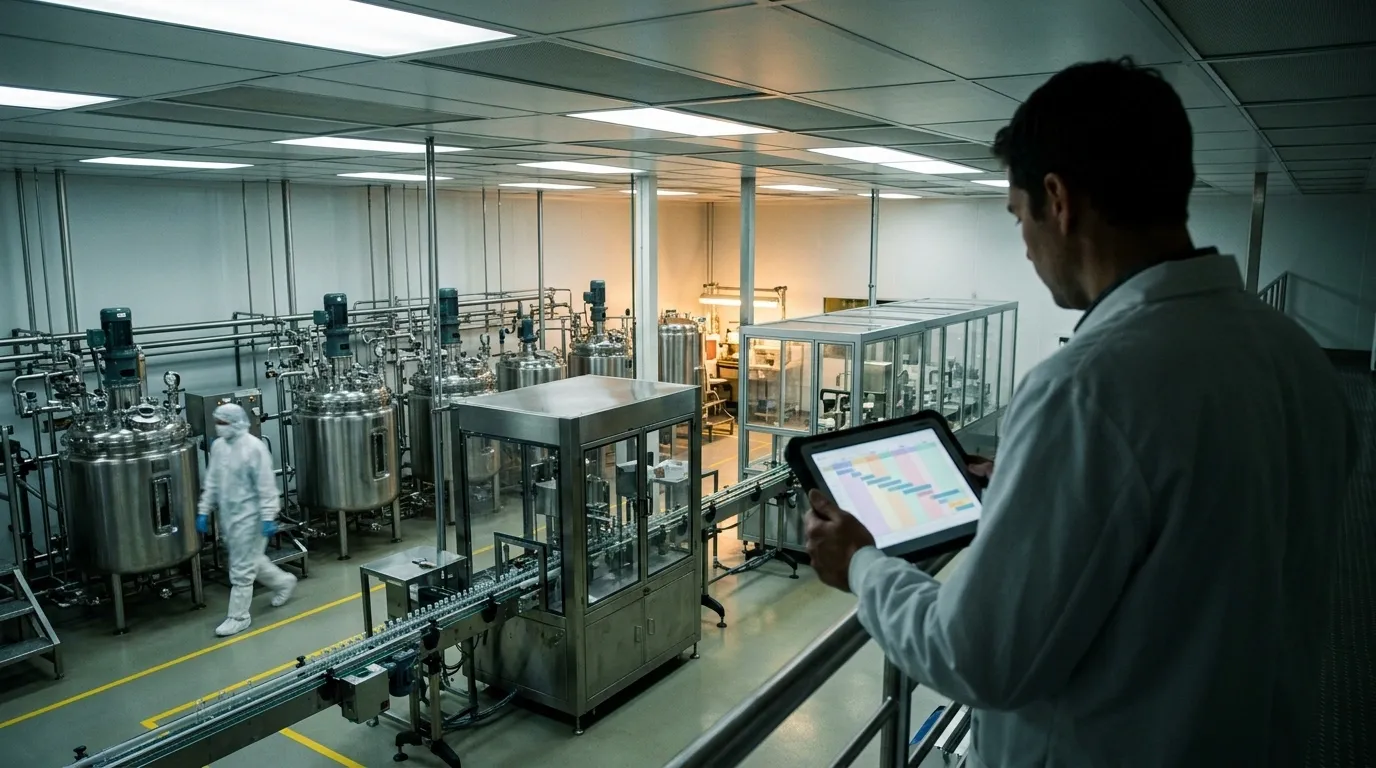
The perception that automation hinders regulatory compliance is outdated. Dash Bio committed a third of its headcount and spend to quality from inception, achieving full GLP status within its first year. By employing software developers experienced in 21 CFR and CSV, they demonstrate that tech-driven platforms can meet strict FDA requirements while delivering speed and transparency.
Current market dynamics favor biotechs demanding transparent, outcome-based CRO partnerships.
During boom cycles, CROs dictated terms due to capacity constraints, leading to slow, expensive engagements. The current funding climate shifts negotiating power to biotechs. Companies can now push for greater flexibility, scalability, data integration, and transparent pricing—terms that productized CROs like Dash Bio are designed to deliver.
Related: CorrDyn helps biotech and life sciences companies build the data infrastructure for scientific advancement. We deliver data engineering solutions and focus on data reliability to ensure the integrity of critical research. See how biotech manufacturers gain data value.
Full Transcript
Ander Tallet: We have a 100% success rate on pilots. If somebody does a pilot with us, they use us. That is not normal in life sciences.
Jason: Welcome to Data in Biotech, a podcast from CorrDyn where we explore how companies leverage data to drive innovation in life sciences. Every two weeks, we sit down with an expert from the world of biotechnology to understand how they’re using data science to solve technical challenges, streamline operations, and further innovation in their business. Here we go.
Ross Katz: Ander Tallet, welcome to the Data in Biotech podcast.
Ander Tallet: Oh great. Thank you. Appreciate it.
Ross Katz: Awesome. Just to kick us off, would you mind introducing us to you and your background and what brings you here?
Ander Tallet: Happy to. Here for AAPS PharmSci 360 where Dash Bio is one of the sponsors. We’ve done a number of events this year as we get out the brand and the name and awareness of the new platform that we’ve built. My background, I actually started in the hedge fund world, went to business school, launched a company, built and sold that company, and then was building my next company, which was called Argent Skis, and I pitched that to Stéphane Bancel, who is the CEO of Moderna, small biotech at the time, 150 people. He made a really good offer, which was, instead of doing that, why don’t you think about coming and joining my biotech? Thankfully, I did that, took him up on the idea. I joined Moderna Therapeutics back in 2015. I teamed up with a good friend of mine and colleague from Moderna, Dave Johnson, who’d gone on to be the chief data officer, and we built Dash. That’s where I am now.
Ross Katz: Through all of your experience, you’ve had a lot of opportunities to be on the procurement side of working with CROs. I’m interested in what was the perspective that you had on the CRO marketplace that led you to want to go into that with the launch of Dash?
Ander Tallet: I’ll actually go back in time a bit. It’s not my first time building a marketplace. I tried in 2012 to build a marketplace for car repair. The idea was, a marketplace will make this better, we’ll be Dutch auctions and an auction model and people can go and get the services that they need. There’s actually a really good analogy here, which is two things. One, people don’t always know all the services that they need. They don’t have enough detail to go and buy. Two, the service providers are not transparent or easy to work with. Regardless of building a marketplace on top of it, if there’s no transparency, if there’s no good discovery function, if there’s no good data management function, the marketplace doesn’t work. If you think about it, the best-run marketplace on Earth is the US stock exchange. It’s a brilliantly run marketplace, and I used to work in that area doing securities lending. When you buy shares, most people probably don’t think about the fact they’re buying them from somebody else. You just transacted with someone else. It used to be now it’s T+1, it used to be a T+3 settlement period, took three days for those shares to be allocated to your account. Nobody cared, because there was a central counterparty that did a brilliant job of matching up all the trades and making sure everything ran smoothly. As a retail customer, you never noticed the difference. But when you talk about it in terms of CRO services, if the quote is, well now we need to talk to you and you have to have five meetings to get a quote, that’s not a product. That’s a consulting engagement. That’s exactly how the industry works today. It’s not productized, it’s not transparent, and it takes four, five, six scoping calls and probably a dinner at Legal Sea Foods before you can actually get a contract, or honestly even get a price. Not even a contract, a price. They literally won’t send you the price until you’ve had four or five discussions and they’ll only send you the price in a PowerPoint deck on a call, you don’t get to do a pre-read. It’s all these really frustrating things that come from opaque markets where it feels like that same frustration we feel with buying a house or buying a used car, areas where we as buyers don’t have transparency and it’s not easy to transact. We feel that with CROs, and it’s a consistent problem.
Ross Katz: Can you unpack what it means for a CRO to embody that level of productization and transparency that you’re talking about lacking in the marketplace?
Ander Tallet: We actually have seen this a little bit in the nucleotide space, in the DNA/RNA space. If I’m ordering oligos, I can get pretty transparent pricing, and a lot of those vendors have gotten better over the years where you just buy from them. You know what you want, you know what it’s gonna cost you, you’ve got some kind of integration set up, maybe even a punch-out set up through your procurement platform, maybe you’ve got a P-card or V-card, some way to easily transact with them. You just go buy what you need. With that pricing you don’t even think of them as CROs anymore. You wouldn’t think of them as a CRO. That’s the way that we want Dash to be to our customers. We’re providing CRO services, but we don’t want people to think of us as a CRO because to us what it means is we’re not a consulting-based model. We’re not selling labor. It’s not how many hours did our scientists work on this. You’re buying a product, an outcome. You’re buying a result. In that way it’s much more like AWS. If you ask me who are the database architects who work on my AWS account, the answer is I have no idea. I will never know. I would never ask for their resumes. But when you buy bioanalysis services today, the first thing you do is you say who’s going to be the person on my account? Because what you’re essentially doing is buying that person’s time. With Dash, we get that question because that’s every other vendor, that’s the question you need to ask. But with us, that’s not really a question that has a lot of impact, because essentially you’re buying an outcome from a productized platform that guarantees a result. You pay for the result. You pay for the data that comes back to you, that’s what you’re paying for, as opposed to paying for the input. You’re not saying, I’ll basically almost pre-pay for the labor and I hope we get the data back later. It’s a very different model. Hopefully we help change the industry for the better and accelerate things.
Ross Katz: This is very close to my heart because I’m a consultant, I work for a consulting organization, I’m very familiar with the division between consulting services especially on the data and analytics side and the productization. One of the challenges that you constantly run into when you’re trying to productize something that’s more services-oriented is how you standardize your offerings so that you can understand your own cost basis, understand the work that’s going to go in and you can give that transparency to your external customers. I’m interested in how you think about that problem in terms of how you establish Dash as a platform that offers that transparency and makes it the business that you need it to be for it to work that way.
Ander Tallet: Building a transparent platform, one of the challenges that you’ve seen historically in the CRO space is that it was difficult to productize because everything was seen as an edge case or corner case. That’s often how you I’ve also built a consulting company and there are times that that is the right answer. The right answer is, I have really good consultants and good project management and the problems are unique. These are unique problems that require unique solutions. But when you look at the bioanalysis market, ELISA is a sixty-year-old assay that we know well and honestly it’s not unique. Every one of them has very common steps. There’s a lot of commonality between each ELISA and we can parameterize that, plug it into in our case a custom-built lab OS operating system that we built, basically a LIMS LES system. The terminology LIMS has been overused and means a million different things, but essentially it runs the equipment. It takes the order, builds the run list, and pushes that down onto the equipment. In this case, the equipment is a combination of liquid handlers and readers, and some processing steps up front if you want to do extractions and sample management. You put that together and you’ve taken something that was historically a consulting engagement and you’ve turned it into a product. The best analogy I can give for this, there’s two that I use consistently. It’s the SpaceX building the Falcon 9 of, here’s a fixed, consistent way to get a kilogram to low Earth orbit as opposed to the Boeing ULA model of, we’ll do a cost-plus engagement to build you a rocket however you want it to look. It’s a very different concept. The other of course to me is always AWS. Before AWS, there were lots of people who would help you build a data center, but you couldn’t just go out and buy compute on demand. Our goal is to be that kind of transparent, easy-to-use infrastructure backbone for your biotech company, for your pharma company.
Ross Katz: That makes a lot of sense, but what might help me is understanding from your perspective the competitive dynamics of the bioanalysis market. One of the things I’ve heard a lot in the conversations today and in the conversations in the past is that a lot of biotechs and pharma want to use fewer vendors, and I see a lot of vertically integrated CROs that’ll just do all of the different services so that it’s a single point of action. But you’re much closer to it. It’d be interesting to hear where do you see the opportunity for this model inside of the competitive landscape of CROs?
Ander Tallet: There is this classic debate in the clinical world, which is functional service provider versus full-service outsourcing. It is literally the same discussion as in the SaaS world, best of breed versus best of suite. It’s the same concept. Just like in the software world where it vacillates and over time it goes from best of suite to best of breed, best of suite back again. We’ve lived this shift. 90s was all best of suite, I go to SAP I buy everything I need, or Oracle. 10 years ago was all best of breed, I integrate it all myself, and now I feel like we’re shifting back again with companies building best of suite models. That same back and forth happens in the clinical outsourcing world where especially big pharma goes through these cycles of, we should own each one of the relationships and get the best provider for each one, or, it’s actually way easier for us just to have one relationship and they handle everything. The good news is in either one, us as a bioanalysis provider can succeed. No large CRO wants to do the kind of bio-A work that we’re doing at scale. They can maybe do a little bit of automation, maybe a little bit of tech applied to their bio-A processes, but they’re nowhere close to the infrastructure investment that we have. The turnaround times, the quality of the platform, we’re breaking boundaries significantly, not by a little bit. We’ve cut timelines by over 90%. It’s not a small drop, it’s a massive shift. There’ll always be a good place for a best-of-breed type vendor for a functional service provider in the bio-A space. Frankly, we’re very happy to partner up with other CROs.
Ross Katz: You’ve had this experience being in procurement for Moderna, and as part of that procurement I’m assuming you were procuring CRO services. The webinar that you just put on was how to beat up your CRO. Oh, how to beat up the CRO. Okay. I would love to hear what are some of the questions that you would recommend that organizations ask their CROs as they’re considering which CROs to work with and understanding the tradeoffs of decisions that they make in that domain.
Ander Tallet: I’ll start with an anecdote, which was actually on the CDMO side, the manufacturing side, but I was buying CDMO services for Moderna, and this was pre-pandemic, 2018 time frame, 2018-2019. The question I got from the CDMO was, how would you like the data back on a USB stick or a DVD, a burned DVD? I thought, wow. That is just a wildly anachronistic question. Neither. I want an integration. I want you to send me my information. I want to tie it into my system, a LIMS or MES, as needed. I want to tie it into the platforms that I run, and I ran enterprise systems for Moderna, so I was in charge of all these large systems. That’s still what we see in the CRO space. How would you like your data? It’s this anachronistic model. A few years ago we went through a boom in biotech. That changed a lot of things, where biotechs could raise money and that was great. There was a risk-on environment from an investor perspective and a lot of capital flowed into biotech. But on the other side of that, the same pipeline existed in preclinical and clinical, the same service providers and they’re linearly scalable, they’re hard to scale. It’s hard to hire more senior scientists in Wisconsin. That is a hard problem to solve. If the way you’re solving scalability is how many senior scientists can I have at a facility in Wisconsin, you’re not going to be able to double or triple capacity. That’s the huge difference with Dash, where for us, that’s a CapEx question. It’s how do I buy and finance more equipment, but I don’t need that linear growth. Because of that, with the CROs unable to scale up, 2021, 2022, we saw a huge demand constraint. There’s a capacity constraint. You saw it in lab space in Boston, 97% occupancy in lab space in Boston. Similarly, it takes a while to scale up lab space, it’s a physical constraint in that case. The CROs were in the position of having all the power in the negotiation. We’re at full capacity, you’re a smaller biotech, all the bigger players are buying up everything I’ve got. First, even if I take the time to talk to you, I don’t really need to negotiate anything. I just dictate terms. It’s kind of a take it or leave it type situation. Fast forward two years later, unfortunately, we’ve gone through a real downturn in the funding cycle for biotech. We’ve seen some real challenges over the last 24 months for biotech really since November of 22. Actually, I guess it’s three years. It’s a very different market. But the good news is for the biotech companies that are scaling, that are heading into the clinic, going from phase one to phase two to phase three, you have a lot more leverage negotiating with your CROs than in the past. You’ve got a lot more ability to dictate terms, to push for terms that are preferential to you, flexibility, scalability, data management, integration, all the commercial terms where maybe they have to put some skin in the game, they have to put something at risk. It’s a very different market than it was a few years ago. I spent most of my career on the biotech buy side, if I was on the buy side right now, I’d say use that leverage. The cool thing is building Dash, we built that concept in. Now we have fully transparent pricing, it’s all up on the website on our pricing page. Beyond that, we’ve actually built, as far as we know an industry first, a full self-quoting tool. You can go on our website, go from the pricing page to the quoting tool, and you can build your own quote for bioanalysis surveys. It’s got everything that you need on there, you can do multiplex, you can do the different assay types, you can see the discounts on sample volumes, send that quote in to the team, and very quickly we can turn that into a project for you. Extremely rapid turnaround. Completely transparent pricing. I’d rather shop at a store that tells me a price before I walk in. That’s a benefit to a customer. Usually opaque pricing is the seller trying to take some advantage of the situation through that opacity. We believe in transparency, we believe in making it easier on the buyer, and hopefully that’s all an advantage for the biotech companies out there.
Ross Katz: As I’m hearing you talk, it occurs to me that you’ve been in the situation of not having transparent pricing and of having terms dictated to you, but also having an industry landscape where the expectations on CROs were not necessarily that they send you data in an API-friendly format. There’s an element of culture change that needs to happen here. Can you help me understand what that culture change is and why you think things are the way they are, and what it takes to get the industry to a place where they have these reasonable expectations that you’re suggesting?
Ander Tallet: Biotech is an industry that traditionally has been light on tech. Obviously somewhat ironic. But look, the science is incredible. The science is absolutely incredible. But we haven’t as an industry invested that much in tech platforms. There’s a whole bunch of structural reasons for that being the case. Structurally when you think about a biotech company, maybe this is somewhat cynical but it’s really true, its job is essentially to de-risk an asset for big pharma. That’s the valuation model, that’s the funding model. If your funding model is how do I take an asset to phase two, phase three, maybe commercial, but that’s actually really rare, all the other things that you would build if you’re building a large commercial organization, there’s no reason for you to build. Frankly, you’re not only not rewarded for that, you’re kind of penalized, because you’re spending investor dollars on things that don’t add value to your business. As an industry, we tend not to have been historically very tech-oriented or forward-thinking on the technology front.
Ross Katz: It sounds like you’re doing really interesting things on the automation front, and I would love to dig in. What does automation look like in Dash’s lab? From sample arriving to result reporting, can you walk us through the process of how things look internally?
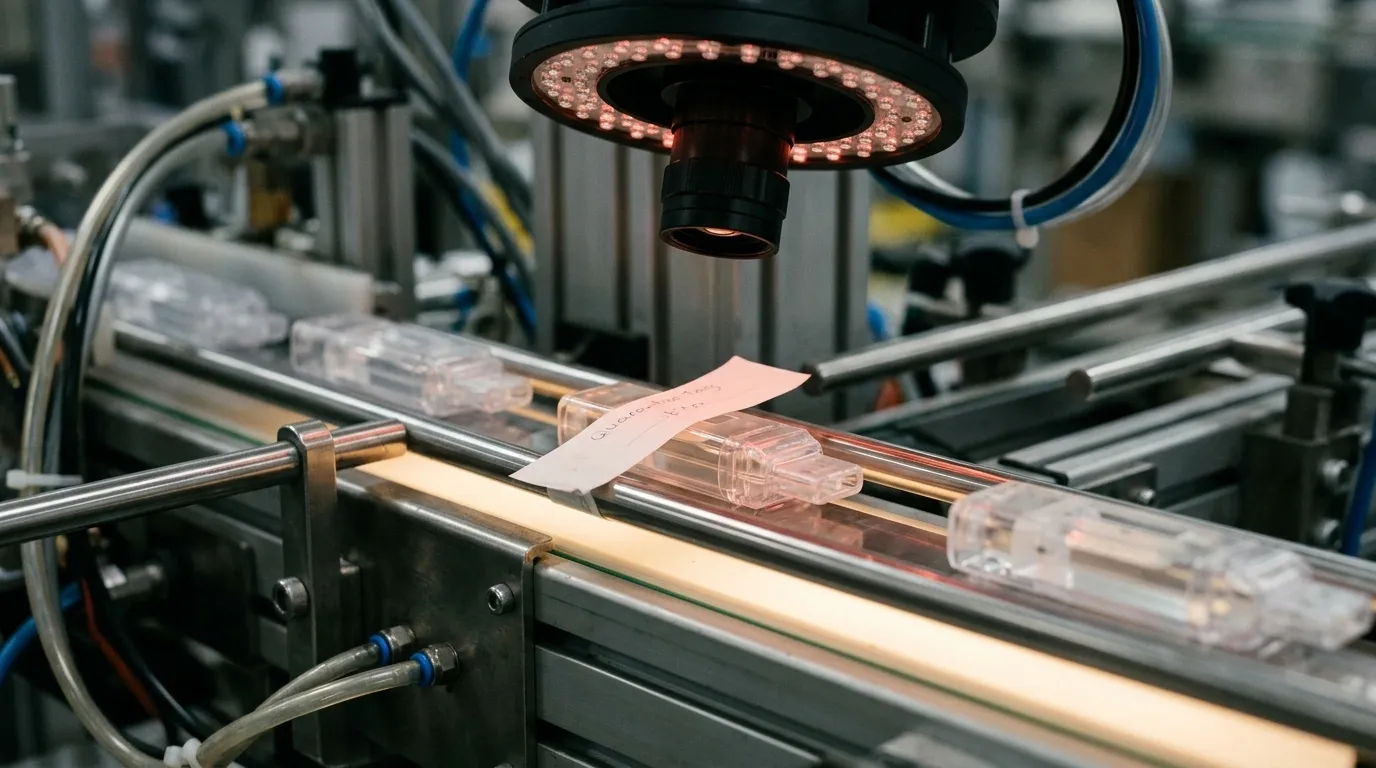
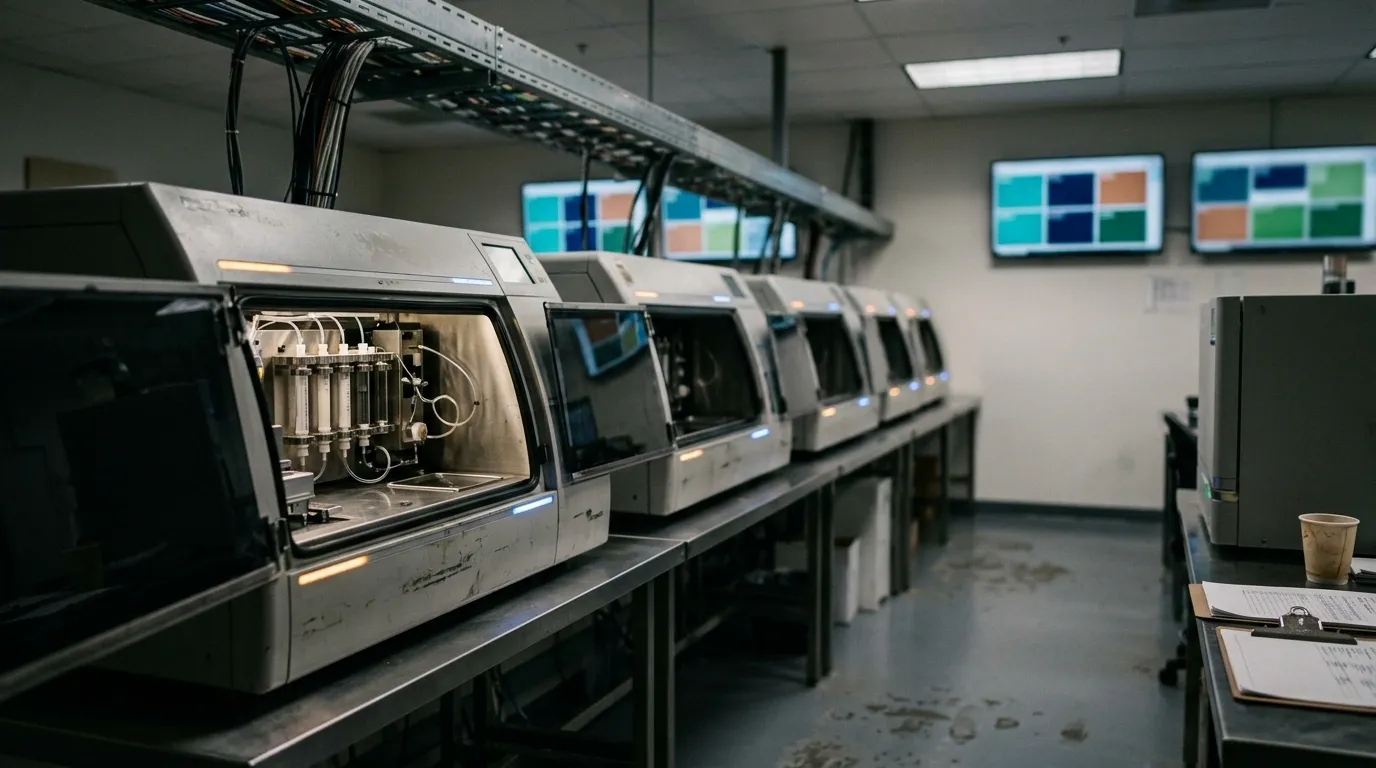
Ander Tallet: Absolutely, because it is really different. We use commodity hardware. We use Hamilton liquid handlers, which have been around for quite a while. We have a great relationship with Hamilton, they make an amazing product. We used them extensively at Moderna as well. They’re available to anyone. Any CRO can go buy Hamiltons and use them in their lab. Traditionally, the view was that robotic liquid handling automation in the bioanalysis world is difficult, and because it’s difficult it really only makes sense in very high-volume settings. If I have a phase three infectious disease study and I’ve got thousands and thousands of samples coming back in, it’s worth having my automation team build a method on Hamilton or TECAN or whatever the platform is, HighRes, and worth them building that method to run the same thing over and over again thousands of times. But what we’re offering is a flexible platform that can run any ELISA, any MSD, any LCMS assay, and do it in a way that’s extremely efficient even all the way down to a very small number of samples. If you come to us, we have sample minimums because we don’t charge for materials, so we eat the cost on the plates and the consumables and we run a plate. It depends on the assay, but it’s often 20 or 30 samples is the minimum. If we’re running 30 samples for a client, we would still do it on our automation platform. We would not revert back to some kind of manual hand pipetting, manual process. It’s extremely different than the traditional model. What happens for us is it comes in, if at all possible it comes in on compatible labware, actual vials that we can read on the deck. If not, sometimes we come in later in the process where we don’t get to define tube types and that’s something that’s already been decided before we get involved. We can still accession. We move it across to the tube types that work on the deck. From then on essentially everything happens on the deck. ELISA’s a great case of, that’s what we started with, almost all the steps are liquid handling. In some of the other assay types, there are minimal interactions of moving a plate onto a reader or minimal things like that. In general the idea is to dramatically reduce the number of human touchpoints, dramatically reduce the human labor aspect, and you see it in the numbers. Quantitatively we can show this. When you look at plate effects or you look at CVs on our platform, you get really phenomenal numbers compared to doing things by hand. We actually have data we’re going to be publishing, we have a press release and other cool stuff coming up, we’re going to be talking about the quantitative difference between running assays on automation hardware and running it manually. We’re going to be addressing what have been seen as some of the traditional concerns about automation hardware including low sample volumes and retains, and there are very much ways to solve for those challenges.
Ross Katz: All of the benefits of automation are in the way that you’re describing it. You’ve got the fast turnaround time because the automation can be working hypothetically 24/7. Then there’s also the better CVs or coefficients of variation, the better reproducibility relative to the manual labs. What am I missing in terms of the criteria by which someone would evaluate a bioanalysis lab? Taking a skeptical eye, why would someone choose to do things the way that they were done previously, or is there something that they’re just not understanding or not trusting about it?
Ander Tallet: Look, the first part it’s an interesting outlier. If you came and said, we need really high quality making these chips for Intel, so we’re going to do it by hand, you’d be like, that doesn’t make any sense. You literally can’t at this point. The quality and variability that you get in somebody like TSMC is way beyond what we traditionally see in bioanalysis, which is impressive, extremely impressive. Intel started by hand-etching chips, but stopped hand-etching chips in 1971. That was the last time they hand-etched a chip. I think we’re at that moment now in bioanalysis. We’ll see that shift. That said, buyers are rational. Bioanalysis is where your biology turns into data. You’ve spent all this money on a clinical trial or an in vivo study and essentially all of that money is to generate the data that comes out of the bioanalysis process. There’s other data generated as well, but the majority of it is to generate this data. Because of that, it is an understandably risk-averse market. It’s a highly regulated market, a market where tradition holds a lot of sway, the way that things have been done. That’s not a bad thing, it makes sense in a risk-averse regulated market. We as a new vendor, new supplier with a new approach, have to show the market, all the scientists, the buyers, the brilliant people who work in this space, we have to show them that we’re a trustworthy partner and the right option. I also totally agree with you, big picture you said, I’m going to design cars using CAD modeling and 3D printing and then I’m going to hand-assemble them, wouldn’t make a lot of sense. But that’s actually what we do in drug development where we’re used to a high degree of automation in high throughput screening and hit to lead type work and early stage research work, we do a lot of automation and everyone’s used to that, but then you get to a GLP lab and it’s done by hand with literal paper and pen. The change has not happened there yet and I hope it does soon. That’s what we’re pushing for.
Ross Katz: The thing that occurs to me as I’m hearing you describe it is that the market might be used to the pain of those three meals and the Legal Sea Foods dinner where you finally get a quote, they’re used to it, but also the level of customizability that they get or the level of hand-holding that they get. Is there an element of fear there of letting go, of ceding control in some regard that might be there? I’m just not as close to it as you are.
Ander Tallet: I don’t think it is control. I think it’s a legitimate concern about, the science is hard. Am I going to get as good support from an automation-centric shop as I’m going to get from a consulting-centric shop, a labor-centric shop? The truth of the matter is, we have an advantage there. We’re a high-growth VC-funded startup based in Boston. We’re not just in a primary market, we’re the primary market for biotech and the primary market for biotech scientific talent. We get to hire from a different talent pool. We get to hire people who want to change the world and have a huge impact and join a really high-growth team that literally shifts the fundamental metrics on this industry. The traditional bioanalysis CROs tend to be in secondary and tertiary markets, Midwest, Quebec, places where they can bring down their cost structure to maintain their margin because they’re worried about their margin. I made the joke earlier about hiring senior scientists in Wisconsin, but that’s literally the problem that they face. Because of that too, if you’ve done bench work in the past and most people in the bio-A space have, doing the same assay over and over again tends to be where people start their career maybe right after their PhD or something like that. It tends to be where you start your career, but you don’t really want to do it for long. It’s a tough job. You’re doing this repetitive task and it’s not super rewarding, you’re disconnected from the value delivery from the patient, from the creation of value in the industry. They’re going to have a harder time, and there’s retention problems, there’s turnover, it’s a high turnover job, which makes sense. I wouldn’t want to do the same ELISA a thousand times in a row. When they need to accelerate, often they’ll charge 2X or 3X to move twice as fast or three times as fast, which is still weeks. It’s nothing close to the days that we do as turnaround time. It’s because they literally have to ask a senior scientist with a PhD to work nights and weekends instead of going home to their family and their kids. That’s a tough ask. Do you want to come in at night on the next three days to keep these ELISAs running? That’s a really tough ask. We have a different model, where it’s running on automation equipment, it’s technician labor, it’s automation scientists, but we can scale up much more rapidly. It’s a very different platform. We can attract a different caliber of scientist, which moves the method development work, the core scientific work which tends to be upfront, rather than the execution. We’ve got really brilliant people that do that with our customers.
Ross Katz: That makes a lot of sense, and to the extent possible you can try to reduce the burden of that method development and support and scaffold that in whatever ways are possible. For sure. I’m interested in the regulatory angle on the type of automation that you’re bringing to bear because as I understand it, a lot of the outputs from what Dash does end up in regulatory packages. How do you think about the platform that Dash is developing in the context of meeting the needs of both your customers that have regulatory requirements and your internal operations that I believe are subjected to regulatory requirements as well?
Ander Tallet: We’re a full GLP lab, Good Laboratory Practices, which is for us a major milestone to do that within our first year and then achieve that milestone this fall. We’ve gone through two audits now and we are fully committed to being a clinical lab going forward, meaning you need to be GLP to do clinical work. That is a significant regulatory burden, a set of rules, and to the point that since founding, roughly a third of our company by headcount and probably more than that by spend because we use some consultant hours as well, has been dedicated to quality. Quality as a group has been one of the largest teams at the company, and will continue to be a very significant part of the company going forward. That unique combination flows through to really all aspects of the business. A lot of our software developers come directly from larger Moderna and other companies where they’ve done software development under CSV or 21 CFR, which is computer systems validation or 21 CFR, which is a specific FDA regs around software. That combination of experience, team, people, process, technology, is really difficult. There’s no way around it. It’s hard. It’s why most startups in our world avoid the clinical space. You get kind of a donut hole where you get a lot of startups in the preclinical world, including tech bio and other companies that focus on that space, and you get a bunch in the commercial or direct-to-consumer or real-world type models, clinical trial enrollment and things like that. But the actual core scale-up of drug development has been a little bit of a “there be dragons” piece of the map when it comes to funding startups, and part of the reason is you have a huge regulatory burden. It’s tough, you have to go out and explain that one of the first things you’re going to spend a lot of VC dollars on is quality before you ever get to product-market fit. The good news for Dash is we knew exactly where we wanted to go with the company. We’re experienced operators and industry veterans, so we were able to make that happen, but it’s not easy.
Ross Katz: Given that you’ve got the donut hole model and you all raised your seed round and were able to find funding for the model, clearly you were able to get believers behind you to put the money up for, as you put it, the heavy CapEx investment that’s required in order to embody the model that you’re describing. What were the hardest questions that your funders asked you that you had to answer, and how did you convince them that even in a biotech space that is in a downturn with regard to funding, you all were able to find this niche?
Ander Tallet: It did take some time to refine our pitch and figure the go-to-market strategy and show that this was an area it made sense to invest in. One of the fundamental questions that we got from the beginning was why not build a tool or a marketplace or something that was just the tech? Why not just build the tech? The answer was that the service providers weren’t there. There’s nothing to integrate to, there’s nothing to back-end it with. I can’t just call up their services via an API or somehow integrate with these providers and put them together in a marketplace. They wouldn’t even know what to do with that. You’d get back one-line quotes that somebody generated. It would all be one-offs. You wouldn’t have a data model that worked, you wouldn’t have an ontology that worked, none of that would actually function. We’ve seen that in the previous attempts to build marketplaces for this space. Getting that story across, that ultimately I think is where we got our wins with VCs. Well then if we can do that, if we can build that model, Amazon didn’t build AWS by buying old data centers, it didn’t build AWS by integrating with other people’s data centers. They had to build the hardware. But once they built the hardware, it became a sticky, almost tech-based play. That’s the huge value prop that we’re trying to deliver to customers, which is if you start using us, honestly we’ll make it easy for you to move off of us, but why would you want to? We’ve seen this already with our first customers, which is how we raised our second round so quickly, our first customers. We have a 100% success rate on pilots. If somebody does a pilot with us, they use us. That is not normal in life sciences. In life sciences, typically you get this death by pilot, big pharma will offer pilots, they’ll try it out, there’s the cool new thing, they’ve got FOMO, they don’t want to miss out on something, but it doesn’t become a sticky service that then rapidly scales up. So far at Dash, and long may this continue, everybody who’s done a pilot with us then goes on to use us commercially. That’s a great story to tell.
Ross Katz: As you were describing the AWS comp, if I recall correctly the story of AWS is that AWS always had the one big customer in amazon.com that could serve as the main driver of efficiencies into the primitives that were developed within AWS. Through being in Boston and having the relationships that you all have, you’ve been able to get those first customers, and it sounds like the low number of samples that people can start with means that they can pilot relatively cheaply and understand the capabilities of the platform relatively easily. Am I thinking about that right?
Ander Tallet: The cool thing for us is we’re going to market with a better mousetrap. I’m interested to see how the AI market shakes out, and I’m talking specifically within life sciences. There’s a lot of new products that have come to market with this idea of, we’re a net new product and it’s really cool and you should use us. But you don’t have anything in your budget for this. You’ve never heard of this before. We promise it’s got a high ROI. The problem with that is, I’ve known people in larger pharma, they work in oncology, they are getting a hundred-plus pitches a year for things like AI for drug discovery. They can’t buy a hundred products. There’s no way. Even if you bought a hundred products, you couldn’t deploy them or use them successfully. The ROI can’t be true for all of those. You’re going to see consolidation. The difference for Dash is we’re building something that is a solution to an existing and known problem and a critical path item that you already have to pay for. You have to pay for bioanalysis. It’s part of your clinical development timeline 100% of the time. Every single biotech pharma company, this is something either they’re paying for directly or through an aggregated larger contract, but either way it’s something that they’re paying for. When we come in and say, we’re doing exactly that, you know exactly what we’re doing, but we’ve got really fantastic data on how it’s higher quality because of the automation, it’s much faster turnaround time because of the automation, and because of those two things, we don’t have to pay a huge amount of human labor costs, so it’s actually cheaper as well. There’s no gotcha moment. There’s no other pass-throughs that we charge you or fees that come out at the end of the study. There’s no study setup costs or data transfer fees or materials costs, we don’t even charge for the materials. It’s just better, faster, and cheaper. Then why not use it? And then there’s all the reasons why, the reluctance, the industry, the regulatory environment, you have to prove that you can use a new thing. But that’s the big difference between us and a lot of the pure play AI companies, that they’re trying to convince customers to use— honestly buyers are tired of hearing it. I wonder when VCs will get tired of hearing it. We’ve fallen a little bit into the trough of disillusionment in that cycle, and then we’ll get to the value realization over time. To me that’s what Dash is, value realization on using technology in an applied way that solves a problem that exists, that’s already on your critical path as a biotech or a pharma company.
Ross Katz: Are there any areas where you think AI has a particularly high opportunity to drive value in the space, or places where it should be being applied more rapidly than it’s being applied presently?
Ander Tallet: First, I would love it if AI for drug discovery works brilliantly. As somebody who’s got a rare autoimmune issue, for me a lot of the journey behind Dash and what I do is driven by this realization I had over the past few years that I’m in the industry, I have a lot of access to care, I’ve had a lot of great people working with me on the challenges that I’ve had with all kinds of nerve damage, neuropathy, and Meniere’s disease, the best options available to me were still gabapentin and prednisone. I don’t want to be on prednisone for the rest of my life. That’s one patient population among many who just don’t have the treatment options that they should have. I would love it if we can dramatically accelerate drug development. My take, and this is one of the reasons that we founded Dash and that Dash is the company that we’ve decided to build around the clinical scale-up side of it, is that even if we dramatically accelerate the preclinical world and we are able to bring more drugs through right up to an IND filing, we still have the same pipeline in the clinic that we’ve had. We still approve about 50 new drugs a year, and we’ve done that for the past 40 years. That number has not shifted much in four decades. We’re not bringing more drugs to market, we’re not bringing more new solutions to patients who need them. Obviously over time it aggregates, but the pace hasn’t accelerated. That to me is the thing that really needs to shift. That’s the thing that I really care about. I do think there are some areas, I invested in a company called Synctrello, that’s AI for post-stroke care. There’s companies like that that are focusing on what happens in terms of managing care for patient populations. I think it’s a brilliant use of AI. We’re seeing a lot of it in the patient and note-taking and other areas within the healthcare world. Within the drug development space, it’s going to take some time to see the benefits apply through, but I truly believe Dash is an example of where we take an applied approach, look at a problem that exists in an existing capability that needs to be accelerated, that we can dramatically shift those metrics. Again, I’ll use my favorite AWS example, compute existed before AWS. But you couldn’t buy it by the second. If you wanted to do some next-gen sequencing work, you had to build this big data cluster yourself. Now I can spin it up, use it for five minutes and shut it down again. That’s an incredible capability that just cut my costs by 99%. On its own, that changes the model. Now anyone can do NGS. Anyone can do these huge data projects that they never would have been able to do 15 years ago.
Ross Katz: I want to be sensitive to your time. I’ll just give you the final point. Anything else you want to leave us with in terms of your work at Dash?
Ander Tallet: It probably comes across, I’m just extremely excited. I think we’re at an inflection point here as an industry where we’re going from a traditional analog paper-based model and we’re taking all the value creation of the last 20 years that’s been applied in other industries, markets, areas, and applying it to clinical drug development. I think that is such a meaningful impact if we can bring down those costs, accelerate the timelines, and then help bring those drugs to market for the patient populations with the unmet need. That’s the thing that I care about.
Ross Katz: Where can people go to learn more about Dash and more about you?
Ander Tallet: dash.bio. You can see dash.bio has the pricing page, the quoting tool, the video of our lab with all the automation running. We’re an extremely transparent shop and very easy to work with. If you build up a quote and send that in, that’ll come to my team, and we’ll be able to quickly get back to you with a proposal.
Ross Katz: Awesome. Well, Ander, it’s been a pleasure having you on the podcast. Really appreciate it.
Ander Tallet: Thanks so much.
Jason: And that’s it for this episode of Data in Biotech. If you enjoyed the episode, please subscribe, rate, or leave a review in your podcast platform of choice. See you next time.