Listen on
Overview
Many promising drug discoveries stall, not due to scientific hurdles, but because the drug development process remains fundamentally un-industrialized. While drug discovery pushes boundaries with new technologies, drug development often operates like an artisan craft, relying on labor-based consultancies and bespoke methods that drive up costs and slow market entry. Dave Johnson, who served as Chief Data & AI Officer at Moderna, built the data and automation systems that enabled its mRNA platform to scale rapidly, culminating in the COVID-19 vaccine. In this episode, Johnson shares insights from Moderna’s explosive growth, revealing how organizational changes constantly challenged how data teams delivered value. These experiences inform his current mission as CEO of Dash Bio, where he applies a tech-first, product-centric approach to standardize and automate clinical bioanalysis. This conversation explores why an industrial model for drug development is essential, and how data leaders can apply Johnson’s lessons on organizational adaptation and value delivery within the biotech sector. Host: Ross Katz.
Key Takeaways
Drug development’s artisan model restricts innovation more than discovery challenges.
The current drug development sector relies on labor-based consultancies and bespoke processes, resembling pre-industrial manufacturing. This structure rewards effort, not outcomes, and inhibits standardization and scalability, preventing promising drug discoveries from reaching patients efficiently. Shifting to an industrialized model is critical for releasing industry potential.
Organizational scale dictates data team value delivery; constant reinvention is necessary.
As companies grow from hundreds to thousands of employees, the appropriate engagement models and organizational structures for data teams shift dramatically. What worked at one scale becomes a bottleneck at the next, requiring data leaders to constantly reassess and adapt their approach to delivering strategic impact and finding high-impact problems.
Lab automation offers quality consistency, not just scale, across all sample volumes.
Many view lab automation as only valuable for high-volume studies. However, automation’s primary value extends beyond merely processing large volumes of samples cheaply. It also significantly improves the quality and consistency of results by reducing human variability, making it valuable even for small sample batches, especially when driven by configurable software.
High-impact AI in biotech demands novel, rich datasets, not just more GPUs.
While powerful compute resources are important, the greatest opportunities for AI in drug discovery lie in dedicated efforts to generate massive, consistent datasets. These datasets must capture crucial biological information like function, toxicity, and biodistribution to truly inform predictive models and move beyond structural predictions alone.
Related: CorrDyn provides data engineering services to clients in biotech and life sciences. We also guide digital transformations and help biotech manufacturers gain data value.
Full Transcript
Jason: Hi everyone, this is Jason, producer of Data in Biotech. Before we get started, I wanted to let you know about our latest white paper. It’s a comprehensive guide to implementing machine learning models in biotech manufacturing. It’s a complete overview of all the potential problems of ML adoption and, more importantly, how to solve them. To download it, simply visit connect.corrdyn.com/biotech-ml. We’ve also dropped the link in the show notes of this episode. Okay, let’s get into it. Welcome to Data in Biotech, a podcast from CorrDyn where we explore how companies leverage data to drive innovation in life sciences. Every two weeks we sit down with an expert from the world of biotechnology to understand how they’re using data science to solve technical challenges, streamline operations, and further innovation in their business. In this episode, we speak to Dave Johnson, CEO and co-founder of Dash Bio. During the conversation, Dave shares his journey from being Chief Data Officer of Moderna to founding Dash, a next-gen drug development services company. He discusses the challenges faced during his early days at Moderna, particularly in scaling up for the COVID-19 vaccine, and the lessons learned about organizational structure and engagement as a company grows. He then shares Dash’s vision to standardize and automate clinical bioanalysis to improve outcomes in drug development and highlights the challenges faced in lab automation and the need for a shift in business models within the biotech industry. Johnson also shares insights on the roles of AI and quantum computing and offers advice for aspiring data leaders in the biotech sector. Here we go.
Ross Katz: Dave Johnson, welcome to the Data in Biotech podcast.
Dave Johnson: Thanks for having me.
Ross Katz: Well, just to kick us off, could you give us a brief introduction to who you are and how your career led you here today?
Dave Johnson: Sure. I’m Dave Johnson, CEO and co-founder of Dash Bio. We’re essentially a next-gen drug development services company. Instead of delivering capabilities and development in a labor-based consultancy model, we’re using a tech-first product-centric approach. Our first capability is a highly automated GLP compliant bioanalysis lab. Prior to Dash, I was at Moderna for about 10 years. Started when it was maybe a 150-person startup working on the basics of mRNA tech and left when it was 5,500 people, about a year ago, to start Dash. I was Chief Data and AI Officer, so I owned all of the custom tech capabilities — all the software engineering, data science, AI, analytics, and then all R&D tech. Prior to that, I was consulting in the informatics and data science field in large pharma for a number of years, and prior to that I did an undergrad in math, PhD in information physics, and then a master’s in biotech.
Ross Katz: What I’d like to do is start by taking us back to your Moderna days, exploring what happened there, and then leading from there into how that led to the founding of Dash. What were some of the biggest problems that you faced when you were at Moderna?
Dave Johnson: In the early days of Moderna, we were a purely research stage company trying to figure out does mRNA work? Is it impossible to work? One of the great insights of the leadership of Moderna was that if it was going to work, it was going to be a bunch of drugs. This isn’t a single asset company. It would be an entirely new modality and many different medicines would come out. No idea which those would be, but it would be a platform of large capabilities. Everything was built from the science, from the technology and from the software perspective with that in mind — that you have to build things in a reusable way. In the early days of Moderna, one of the key activities my team was doing was supporting the high-throughput mRNA synthesis work. The idea was that in a traditional research cycle, you would need to synthesize some mRNA, run an experiment, review the output, and then do that cycle over and over again to figure out what’s going to work. But if you instead parallelize that — get 10 different mRNAs for your target all at once, do 10 different experiments at once — you obviously get the readout much faster. In order to do that, you need a really high-throughput capability to produce really consistent preclinical-grade mRNA. We built all of that with high-throughput robotics and liquid handlers and integrated software to drive all of that. That’s the first work that we started. My team expanded from there, capabilities all across research, and then as we moved into development, built capabilities there as well.
Ross Katz: The way that most people have encountered Moderna is through the COVID-19 vaccine and Moderna’s ability to rapidly develop the vaccine using mRNA. After you had laid the groundwork that you just described, what were some of the challenges that you faced as you were running up against that problem and trying to scale up the work?
Dave Johnson: Thinking about laying the groundwork or the framework is the right way to think about it, because we had built all of this capability before. When you think about that early research stage, it was something like 40 days from when the sequence was released from Chinese authorities to when we had GMP material ready. In a lot of ways, it was uneventful because we had built all of this technology and AI algorithms and process and manufacturing all together to do that incredibly quickly. It was based on research we’d done for years at NIH and so on, so all of the stars aligned to do that incredibly quickly. But then moving into the clinic and the manufacturing, there was a huge amount of problems to solve to scale up from what was an early clinical stage company — I think we had just started our first phase two study — to then running one of the most massive phase three studies on an incredibly tight time frame in the middle of a pandemic. And then the next year, produce a billion doses of drug. That’s a lot of crazy growth for the company. When I think about that time, one of the key problems we had dealt with was figuring out where to run the clinical study, the phase three. If you think about what it takes to prove that a vaccine works, you need to inoculate a seronegative population, wait for that to become effective, and then they need to be challenged with the virus to see do they get infected more or less relative to a placebo? If you look at different parts of the country at the time — New York City, for example — the disease had already ravaged the city. So many people had already had it. There weren’t a lot of seronegative population there to choose from. And then if you go the other extreme to really rural populations, they may not get the virus for another six months. So what we were trying to find is where in the US do you go where you can get a bunch of people, inoculate them, and six weeks later the virus is going to hit them — because there was a two-dose series four weeks apart, it takes a couple weeks after that. It’s a really difficult problem to figure out. Thankfully, everyone was working on this problem, so multiple government agencies had models working on this, multiple private companies, different consulting companies. I think we ended up looking at about half a dozen different ML models and mixed epidemiological models trying to predict where the virus is going to be to inform that. We coupled that with, here’s the list of all the realistic sites that have the capability and quality to do what we need to do — how do we use these models to help us stack rank and prioritize those? It’s a really difficult problem to solve. In a normal endemic virus like flu, it’s hard enough. But in a pandemic setting where no one’s ever seen this thing before — historically unprecedented — and so much was driven based on government decisions like are you locked down or not, what size groups, and those can change at the drop of a hat. Some incredibly difficult problems.
Ross Katz: It sounds incredibly difficult, and obviously there was a lot of urgency — a crisis situation for the country and also a major opportunity for the company. The way that Moderna had designed the mRNA-based drug development pipeline was automation-focused, data-focused, leveraging machine learning from the very beginning. As the platform was developing and then there was this catalyzing moment around COVID-19, how did your role and the role of the data teams that you oversaw change throughout that process?
Dave Johnson: The biggest change is probably driven more by the scope and scale of the company. This is something folks should pay attention to: a 1,000-person company is not the same as a 5,000-person company. It’s not the same as a 100-person company or a 10-person company. These kinds of order of magnitude changes mean that the organization is a radically different place, even if there are cultural throughlines. Your engagement structure — just how you manage an org that big — is very different. The biggest change I felt, and my team felt, is that we had to constantly rethink our engagement model, our organization structure, how we ensure that we’re delivering value.
Ross Katz: Were there any lessons learned from changing your engagement model over time?
Dave Johnson: It was always too late. The biggest learning is that you have to constantly reassess whether what you’re doing is working, because often the capability and the structure and the model that made you successful at that previous scale is a hindrance for the next one. Being on the lookout for when you have to reinvent yourself is a really difficult thing to do.
Ross Katz: Can you give us an example of when you ran up against that “what got us here won’t get us there” situation?
Dave Johnson: The biggest one is just: who are the decision makers? In the early stages of the company, you’re so deeply connected to everybody, everybody knows what’s going on, it’s really quite easy to know what’s the most important thing to be doing. As a company scales and grows, that’s not obvious anymore. You may be engaging with folks at the grassroots level who are doing the work themselves and see an opportunity to improve something, but from a strategic perspective, it may not matter at all. If what the company is trying to do as a whole is get a particular asset through the clinic, you helping this one person solve this problem — which may be really beneficial and life-altering for that person — may have no impact in the overall view of the company. Figuring out where value comes from, where decisions come from, is an important thing to adjust.
Ross Katz: In an environment where there are hundreds of data problems to be solved, you have to find the highest leverage places to apply your expertise that can really impact the company.
Dave Johnson: Absolutely.
Ross Katz: You mentioned highly automated and also leveraging AI and machine learning. Can you share some of the ways that, in your view, AI or machine learning were most important in contributing to the accelerated drug discovery and development at Moderna?
Dave Johnson: There’s no one answer for that because bringing a drug to market is an incredibly complex process with numerous different steps involved. A lot of folks look for what is the one unlock, what’s the one thing you can do that’ll magically fix this? You can see things like AlphaFold — incredible revolution there — but its impact is minor in the whole grand scheme of things because there are so many other things. Great, we’ve solved that problem, but now everything else is broken around it and you’ve got to solve that. We ended up having the most luck by looking across the full R&D flow of what it takes to bring a drug to market and solving many different problems. What you might find is that you could sink all your time in getting a 99% accurate solution to one problem or do 12 solutions that are 80% accurate. Turns out the latter often delivers way more value. I see a lot of focus on AI drug discovery, which I’m super bullish about and think it’s going to be the future of drug discovery, but then a huge swath of problems that are just ignored. That’s part of what we’re trying to do at Dash — there are literally hundreds of AI drug discovery companies, but if we can’t fix what’s broken in development, none of that matters because we don’t have the capacity and resources and capital to actually develop those innovative medicines.
Ross Katz: You said fix what’s broken in development. What do you see as broken, and how is Dash addressing those challenges or those inefficiencies?
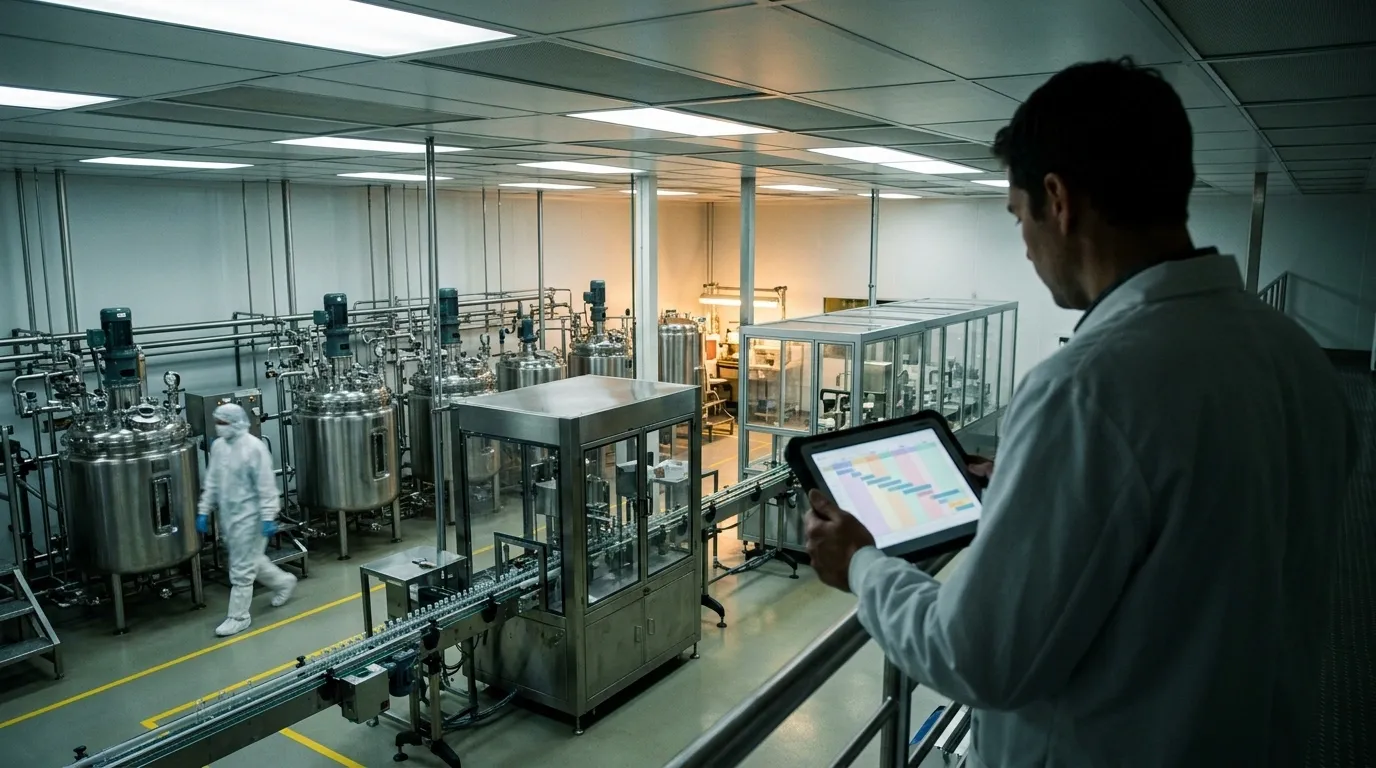
Dave Johnson: First let me define the difference between drug discovery and drug development. Drug discovery is where you’re coming up with novel ideas for medicine — a novel target you’re trying to develop medicine for, a novel compound, or even an entirely new modality like mRNA that can bring a whole bunch of different drugs to market. Your goal in drug discovery is to prove that that idea is a concept that could work. You’re running studies, trying to develop something and it looks like it might work. Then you move into drug development where you’re actually proving that with deep regulatory compliance, to prove that it’s safe and effective in humans. It starts in preclinical development with IND-enabling toxicology work and then moves through the clinical studies. These are very two different worlds. It was a bit of a learning for me moving into the industry — there’s a bit of a wall between those, and you’ll find folks on one or the other side of that wall who have no idea how the other operates. The former, drug discovery, is a research-driven, hypothesis-driven, experiment-driven capability. The latter is much more operationally focused. You’re taking this thing, don’t actually know what it is, doesn’t matter, just put it in people, test and see if it works. But it’s heavily regulated, so the types of people who are drawn to that type of work tend to be much more operational-minded. The reason we think drug development is broken and an impediment to the industry is that it’s in no way industrialized — which is a bit of a surprise because it is really an operational capability. But it still operates in an artisan, craftsman-style flow where the predominant business model is labor-based consultancy. You go to a CRO, you say what you need, they draw up a contract, a statement of work, you get a project manager team assigned, and they charge by the hour, or if it’s fixed price, there’s a change order if something changes. You’re paying for labor. The problem with that approach is that the incentive structure is around effort, not outcomes. It’s not like anyone’s evil or trying to do lousy work, but you’re fundamentally not incentivized to transform your process in a way that eliminates labor. I use the word industrialize very intentionally. If you think about manufacturing prior to the Industrial Revolution, it was craftsmen — a really high-skilled person building things by hand. Manufacturing was called fit and file, or file and fit. You’d actually make the parts by hand and then file them down to fit into an assembled good. Not only is that incredibly expensive to assemble in the first place, but it has this long-term cost effect because there’s no interchangeability of parts. Something breaks, someone else has to file another part and put it in there. I read a stat just the other day that in the early 1800s, the British Army had something like 200,000 muskets sitting waiting for repair because there were just not enough craftsmen to fix all of these things. That’s the problem that industrialization solved. Yes, the technology and steam power and all that was critical, but the notion of standardization is what drives scale. In drug development, there is none of that notion. Everything is very bespoke to a particular study, a particular drug — no economies of scale, no notion of standardization or productization. That’s what we’re essentially trying to do at Dash: find the capabilities across development where we can standardize them, with high degrees of customization for the particular needs of a study, but that give us the ability to scale. If we can do that, we believe it’ll fundamentally transform the economics in development and unleash the industry as a whole to allow all of this innovation in drug discovery to actually be realized.
Ross Katz: There’s the standardization of this workflow, and it sounds like you see a path toward the standardization, the automation — what you described creating at Moderna in terms of end-to-end connecting all of the experiments through the analysis and the experimental feedback loop. Can you give us a sense of what you’re visualizing from a standardization perspective of how Dash plugs into the ecosystem at large?
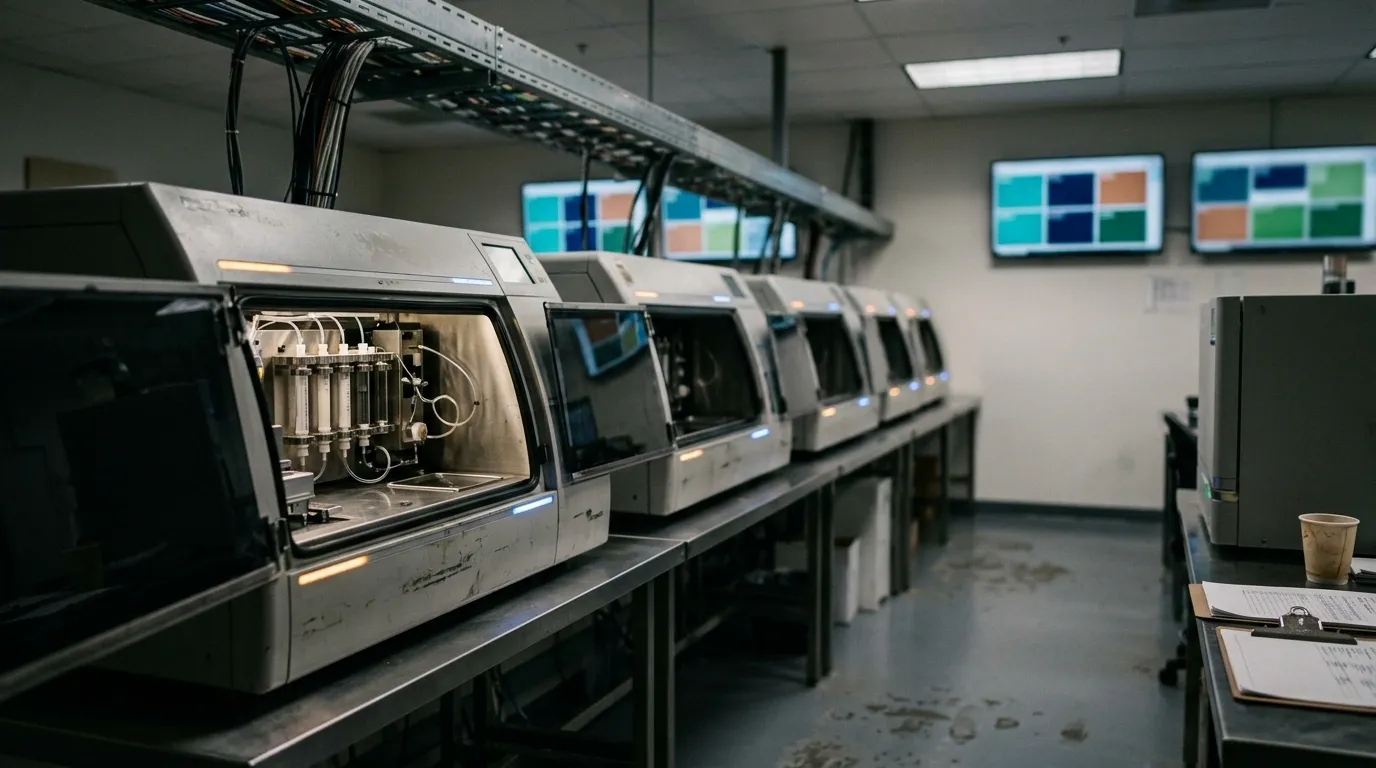
Dave Johnson: We’re very much seated in drug development. That is our focus, because we think that’s where the majority of the challenges are and the value that we can provide with our approach. Our initial focus is clinical bioanalysis — the testing of samples coming from clinical studies. They’re run at a bunch of different sites. You dose patients with some sort of treatment, then you take blood samples typically or other tissue samples and you measure what’s the level of drug concentration at different times. Are there toxic effects, things under cytokines — is the drug working? Do you see the biomarkers that you expect, protein or gene expression and so on? That’s what clinical bioanalysis is. The predominant way this is done in the industry is by hand — scientists at lab benches pipetting manually, doing this work manually, building analysis and reports manually as well. Our goal is to end-to-end build this with robotic liquid handling platforms, integrated equipment, automate the analysis with AI algorithms, automate the reporting as well, so that end-to-end this is much faster but much higher quality.
Ross Katz: So while the vision is a broader form of standardization, you’re focusing on clinical bioanalysis in the immediate stage.
Dave Johnson: That’s exactly right.
Ross Katz: I know that you just raised $6.5 million in seed financing — congratulations on that.
Dave Johnson: Thank you.
Ross Katz: Can you give us some insight into how that gets deployed in terms of standing up the system that you just described?
Dave Johnson: Absolutely. The important thing to realize is this is heavily regulated activity. We have to be a GLP compliant lab. This isn’t two scientists in a shared co-lab space. We have to have full end-to-end control of our facility, full end-to-end control of our technology and automation, validate all of those activities. It’s an incredibly difficult process that requires software engineers, automation engineers, scientists, and quality folks to put all these pieces together. That’s what the capital will be used to do: purchase all the equipment we need, get the site up and running, build all of the software we need to control that in a highly configurable standardized way, and automate all those activities. It’s quite a lot of a build, so that’s what we’re doing with the funds.
Ross Katz: What does success look like for you following the build?
Dave Johnson: Success is radically different KPIs for this space. That is success for us. We don’t want to be just another bioanalysis vendor. We want to be radically different. We’re targeting something on the order of a 10x speed improvement and dramatically higher quality. If we can achieve 10 times faster assay development and sample analysis, then we’ll have achieved the goal that we’re after.
Ross Katz: I want to head back to the lab automation part of Dash’s approach. Can you share why this kind of lab automation hasn’t been done before in the development space?
Dave Johnson: It’s somewhat surprising for those of us who have lived and been indoctrinated in lab automation for a long time. It’s mostly used in larger phase three studies where you might have tens of thousands of samples where it warrants it. But the overwhelming answer we got from folks used to this bioanalysis work is: it’s just not worth it. If you’ve got a thousand samples, it’s easier to do this by hand rather than build all this automation. I think that’s based on two misconceptions. The first is that the point of automation is just scale and cost. But it’s much more than that. Going back to the Industrial Revolution example — it’s the quality of what you’re doing, the consistency of what you’re doing. Even if you’ve got 10 samples, putting it on an automation platform gives you much higher quality and consistency than if you were to do this by hand. There’s also this shift from human labor, where a lot of that variability comes from, to automation equipment instead. Beyond that, there’s a misconception that automation is heavily rigid. If you implement it in a naive way, a lot of this equipment is designed for someone to go and drag boxes and build this method once and then go through validation and qualification of this equipment and methods. Yes, that’s a huge amount of work. But if you have the understanding of how this can be driven with software — where you instead put an orchestration layer in front of this so it can be more highly configurable and variable — it transforms that automation. Instead of having built an automation method that works for a single clinical study, you now have something that can work for a broader host of different clinical studies, which is our approach. It just requires that in-depth understanding of both the software, the automation, the AI, and the science to pull that together.
Ross Katz: It strikes me that there’s a bet you’re making — with the high-quality team that you’ve assembled — that you’re able to figure out the right level of abstractions in the software to cover all of the different use cases in clinical development. Has your experience given you the confidence that this exists, or is this the big bet of the company?
Dave Johnson: We’ve absolutely built this exact kind of automation before — these more generic methods — so I have a great degree of confidence in the ability to execute on that. Your point about finding the right level of abstraction is right. There is nothing cookie-cutter in this industry. Every study, every drug is indeed a unique study and has unique requirements. We’re going to have to develop assays specific for each of those. But by dialing in the right level of abstraction, we can do that with enough reuse to make this work exactly.
Ross Katz: That makes a lot of sense. How do you envision Dash evolving over the next five years?
Dave Johnson: Our goal is to continue to grow and expand. We expect in five years to be beyond clinical bioanalysis, to have quite a few capabilities there, but also capabilities beyond that, moving into a world where these are integrated together so that they work together more seamlessly. That is another challenge in the development space — there are a bunch of different discrete capabilities that go into bringing a clinical study together, and often those do not work well. They are not seamless interactions. A lot of these companies have grown by acquisitions, they don’t have common systems between them, and so there are painful handoffs between different groups. As we build more and more of these capabilities, we want to seamlessly integrate those.
Ross Katz: Should I think of that as moving in the direction of earlier in drug development and then later in drug development, or what are some of the different capabilities that you expect to bring together?
Dave Johnson: We talked about data management and other types of lab capabilities for pharmacovigilance. There are countless different capabilities we could talk about and go after. There’s one level of expansion of expanding to more and more capabilities. There’s another level of expansion just around scale and scope — the number of studies, number of samples we’re able to process. And then there is that question of how much do we push into the drug discovery space as well. I think the challenge in drug discovery is the workflows are far more varied there. You’re trying to interrogate novel biology, and a lot of times they just don’t get the value of these highly automated standardized workflows that are necessary for GLP compliant work. It’s a tough sale in these early days. But what we do expect is that over time, as we really change the economics of this space, we’ll see folks in research as well — particularly those AI drug discovery companies where they need to build data sets at large scale, where they need that consistency — finding a lot of value in what we’re doing. I think about it like the AWS model: in the early days of the cloud, the notion of all these companies using S3 was crazy. They were servicing companies that had very specific needs where the scale and control and quality and dynamic nature of AWS was important. But over time, it started to take over everything. It used to be in a lab: why would I put my NGS data up in AWS in S3? I’ve got a box right here, I paid $1,000, it’s sitting on my lab floor. But no one in their right mind does that anymore. It all goes into— We do see that same thing happening to the extent that the products and capabilities we’re building are amenable and useful for folks in research. We’re very happy to expand into that direction, too.
Ross Katz: Are there any advances in lab automation that you view as making this a particularly opportune time to found Dash?
Dave Johnson: I don’t think there’s honestly been all that much change in the lab automation space. There’s large manufacturing automation — that you see in large commercial manufacturing facilities — which is heavily industrialized, but it is very rigid automation. And then you’ve got lab-scale automation. I think it’s largely been the same. The technology in my mind hasn’t advanced all that much. They’re caught in a tough middle ground where they’re trying to create capabilities for high-throughput and automated activities, but they’re also supporting a diverse set of workflows and scientists who have to program these things themselves or want to change things. There’s a limit to what they’re actually capable of doing there. It’ll be interesting to see how things evolve for us from an automation perspective, because we’re not in that same flow. I don’t care about the drag-and-drop user interface to build methods, because I’m going to drive it all from software anyway.
Ross Katz: Would you say those interfaces and the lack of interoperability are one of the biggest bottlenecks to future progress in lab automation, or are there other bottlenecks you would point to?
Dave Johnson: It’s a problem with lab software and lab technology in general. Everybody wants to own end-to-end their piece of the puzzle and no one interoperates really well at all. It’s quite a big frustration for me in general. That’s true for lab automation as well. Everyone’s working on their own little kingdom, their own little mechanism for doing this. It’s gotten better — a lot of these companies do now have web service interfaces for their software that you can work with. But it’s definitely 2024. It took them a long time to get here.
Ross Katz: That’s one of the value propositions that Dash is bringing to bear — within your realm you’re vertically integrating so that you own end-to-end the interoperability of your system and you can control all of that. Am I thinking about that right?
Dave Johnson: Correct. The idea is that our customers care about executing clinical studies. Why should they care about the equipment interfaces and how this talks to that? This is the level of abstraction that we’re able to provide to them: we take samples, we run them according to the assay you need, and we give you data on the other end. We can figure out all the nuts and bolts of how we make that happen.
Ross Katz: Is there a role for experimentation in the system that you’re developing? You’ve mentioned Bayesian methods a few times. Is experimentation and optimization a part of the value proposition, or is it mostly assay development and then running that assay against samples for multiple studies?
Dave Johnson: Assay development is a huge part of it. We have to develop these assays for each and every study. That’s one area of experimentation and we have plans for highly automated DOE type work to do that radically faster. But beyond that — because now we’re in an outcome-focused mode where my goal is to get the best quality data — we’re going to challenge a lot of the basic priors and assumptions of how this is done. If you think of how a lot of these plate-based assays work, for example, you might lay out your samples on the first two columns of a plate because that’s where you put your ladder and you put your blanks at the bottom and then you lay your samples out together. That’s not the optimal layout for these things. If you actually want optimization, you should mix those samples up, take into account prior information about edge effects on the plates and so on. We’re excited about the potential to push the boundaries of the science as well — of how these assays work — to get even better quality data for our customers.
Ross Katz: Do you think the market is going to be hungry for an outcome-based business model, or do you think there’s going to be some teaching needed to get biotech organizations on board with contracting on this basis with you?
Dave Johnson: It’s a mixture of both. It’s hard to take a market that has been operating in one mode and just change overnight. We don’t have illusions that that’s going to be super easy. But what we do know is that customers are hungry for simplicity and transparency — they would love to just know, what does it cost? When am I going to get the thing? All of those things: information, consistency, transparency. Those are all things we would love to offer customers. It may take a little while to push the market and change the way of working, but that is absolutely the intention of where we’re going.
Ross Katz: As we head toward the end of our conversation, you’ve gone through this incredible journey in different data roles in the biotech space. What advice would you have for aspiring data scientists or data leaders who want to make an impact in the biotech sector?
Dave Johnson: The advice I always give people — and we talked about this earlier — is the focus on value. Where do you deliver value to the organization? And it’s not necessarily to that one person you spoke with. I always think about this one moment with Stéphane Bancel, the CEO of Moderna, where I made an offhand comment about a project: ‘Oh, this will pay for itself.’ And he said, ‘No. Pay for itself is 1x. I want 10x.’ He was right. Obviously it’s been more than that, but that moment stuck with me. What we see a lot of is what I call labor transfer — someone is doing some miserable job and they talk to the data scientist or software engineer and say, ‘Help me with this thing.’ They end up just transferring the work from one person to the other. Now it’s done with software or data science, fine, but that 50 hours of work is now done by a different human being. You need to have better leverage than that. Find the things that truly are those 10x impacts of the work that you’re going to do. And they may not be the most obvious things that people are most vocally griping about.
Ross Katz: That comes back to your point about leverage earlier. Setting aside the problems you’re solving at Dash — since obviously those are the problems you think are the most 100x or 1,000x problems you could be working on — what are some of the other problems you’ve seen at the intersection of data and biotech where smart people working on them could have a lot of leverage?
Dave Johnson: We’re focused very much in drug development because we think we need to unlock that space. I look at what’s going on in drug discovery and I’m super excited about the potential, but I think a lot more needs to be done in terms of data generation in that space to really realize the potential of these models. There’s some notion that all we have to do is throw more and more GPUs at it and all of a sudden biology is solved — and I think that’s foolish. In a lot of cases, we just don’t have the data. Structure is not enough. We need to understand function, we need to understand toxicity, we need to understand biodistribution. We need more data on that. A lot of work needs to go into companies that are spending a lot of effort truly creating and generating those data sets to actually inform these models so that they do work.
Ross Katz: Where can people find you and follow your work?
Dave Johnson: Our website is very simple — it’s dash.bio. We’re on LinkedIn. You can follow me directly, follow Dash — that’s probably where we put most updates and share about the things that we’re doing.
Ross Katz: Thank you, Dave, so much for the time today. It’s been a really insightful conversation and I’ll look forward to connecting down the line.
Dave Johnson: Thank you so much for having me.
Jason: And that’s it for this episode of Data in Biotech. If you enjoyed the episode, please subscribe, rate, or leave a review in your podcast platform of choice. See you next time.