Data Warehouse Migration for a Growing Coffee Chain
CorrDyn migrated a coffee chain from Redshift to MotherDuck with dbt refactoring and a code-first BI layer, reducing costs and complexity.
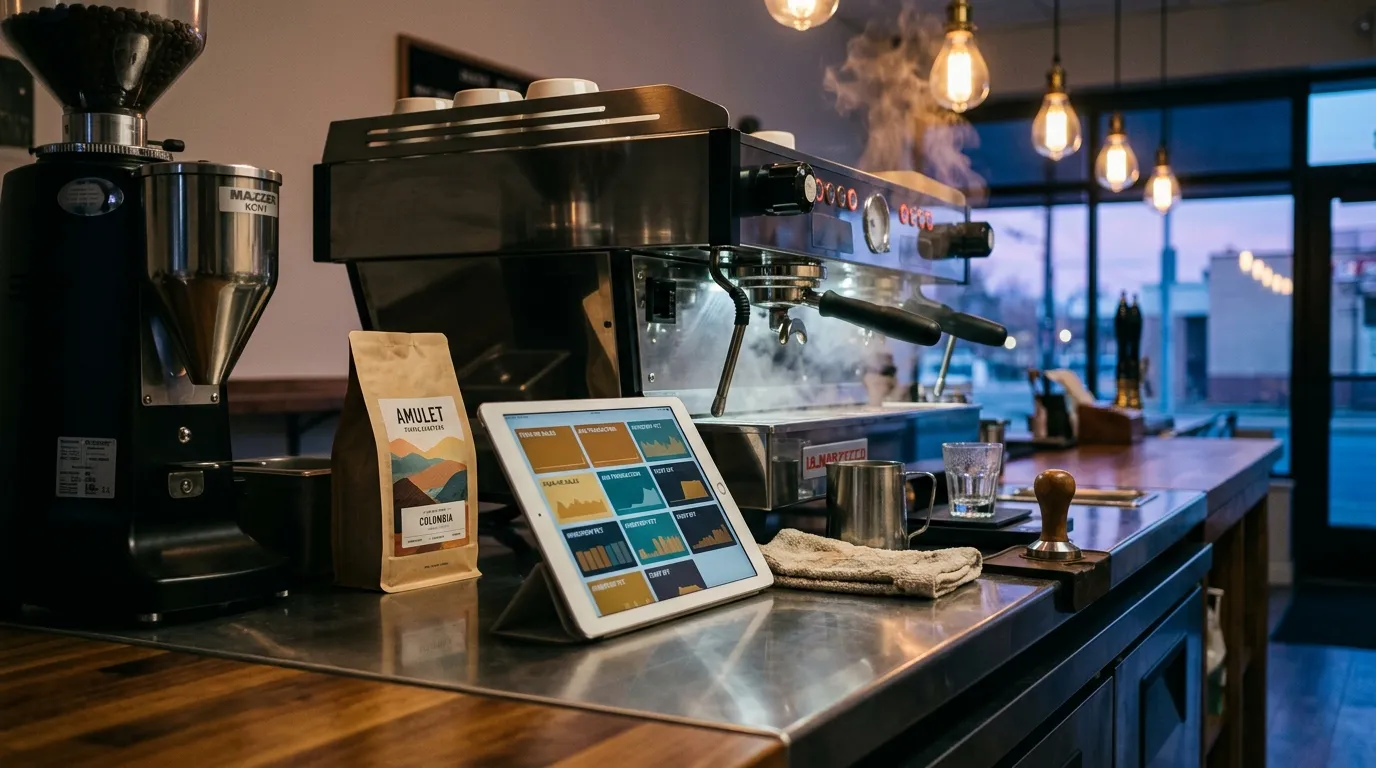
Redshift to MotherDuck
Warehouse platform
Eliminated cluster provisioning and management
Infrastructure overhead
Code-first metric definitions in version control
BI layer
The situation
A fast-growing coffee chain was running their analytics on Redshift. The warehouse worked, but it required cluster provisioning and active management — overhead that made sense at enterprise scale but was harder to justify for a company whose query patterns were variable and whose internal data team was lean.
The cost and complexity of Redshift cluster management were both friction points. The team wanted a warehouse that scaled with usage rather than requiring them to size infrastructure in advance, and a BI layer that kept metric definitions in code rather than scattered across a GUI.
What we built
CorrDyn migrated the warehouse from Redshift to MotherDuck, a serverless analytical database built on DuckDB. The move eliminated cluster management entirely. Compute scales automatically, and the cost structure matches actual query volume instead of reserved capacity.
The migration required refactoring the existing dbt models. Redshift-specific SQL syntax doesn’t run cleanly on DuckDB, so we rewrote the transformation layer model by model, validated output equivalence at each step, and resolved accumulated technical debt in the process. Each model was tested against its Redshift equivalent before the cutover.
For the BI layer, we deployed a code-first analytics tool that connects to dbt and stores metric definitions in version control alongside the models. Dashboards were built on top of the newly refactored transformation layer and deployed for the team after the warehouse migration was stable.
What changed
The team no longer manages Redshift clusters or provisions compute capacity ahead of expected query load. Infrastructure overhead dropped and costs better reflect actual usage. The cost optimization came alongside a cleaner transformation layer: the dbt refactoring removed technical debt that had accumulated since the original Redshift setup. Metric definitions now live in version control alongside the dbt models, so there is no divergence between what the models compute and what the reports display.
Frequently Asked
Questions
We are paying for Redshift but our team barely uses it — is there a cheaper option?
How long does a Redshift to MotherDuck migration take and what breaks?
Why use CorrDyn for a warehouse migration instead of doing it ourselves?
Related Work
Similar engagements across our portfolio.

Embedded Analytics Modernization for a Payroll SaaS Platform
CorrDyn built an embedded analytics PoC for a payroll platform, achieving sub-second latency and 6-minute data freshness at 75% lower cost.

Government Reporting Overhaul for a Home Care Platform
CorrDyn stabilized 100 mission-critical CMS reports for a home care company ahead of a hard February deadline, then transitioned to ongoing data team support.
ML Customer Segmentation for an Automotive Dealer Group
CorrDyn built an ML clustering pipeline on Databricks with LLM-powered profiling to segment customers across vehicle brands for a dealer group.
Related Conversations
Podcast episodes that cover the same ground.
Unlocking the Power of Semantic BI with Hashboard
with Carlos Aguilar, Hashboard
Carlos Aguilar explains how Hashboard eliminates multiple sources of truth in analytics through semantic BI, version control, and governance.
Acceleration Without Stabilization: AI and Data Teams
Ross Katz and Jason Bradwell on the 2026 dbt Labs report: why AI accelerates data work while foundations lag and accountability becomes the bottleneck.
What MCP Means for Enterprise Data Strategy
Ross Katz and James Winegar on what 97M MCP installs mean for data teams, why warehouses beat raw source systems for agents, and security gaps.