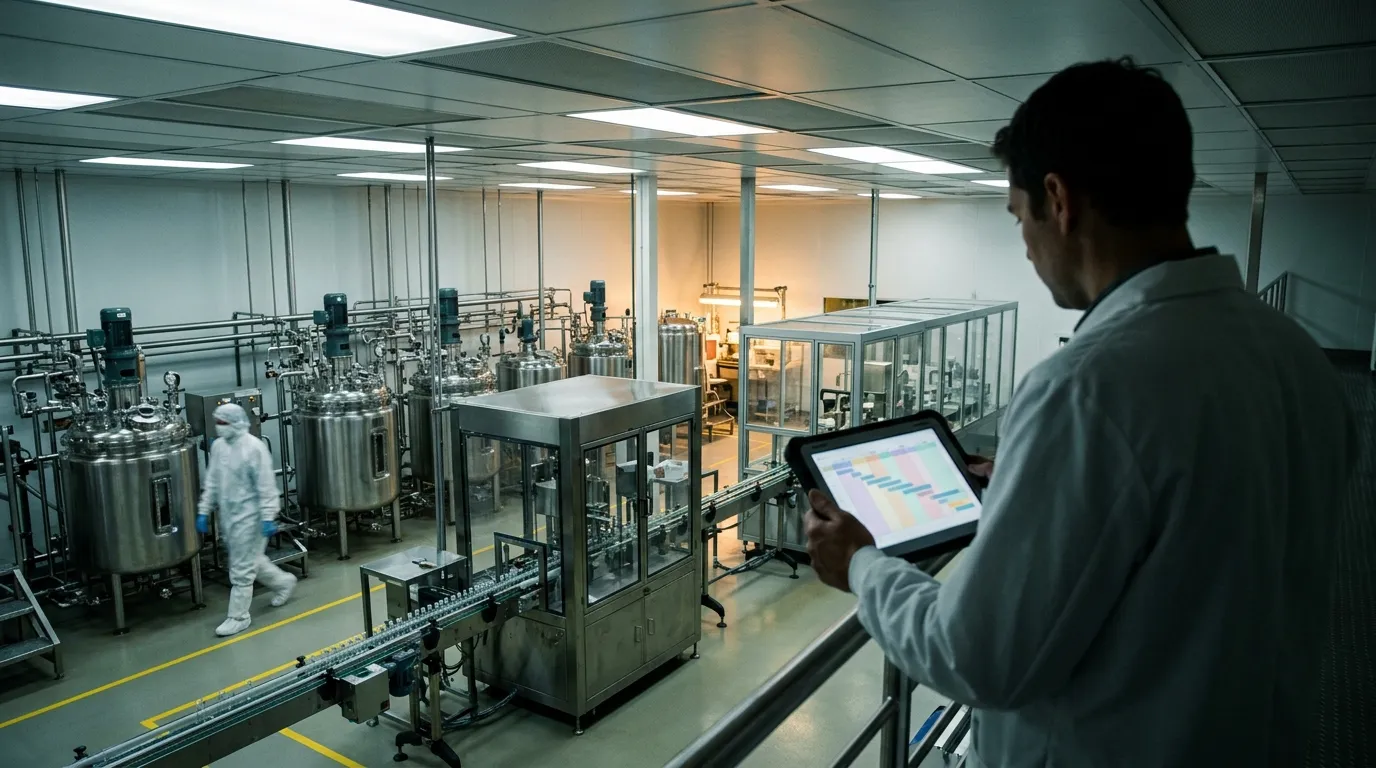
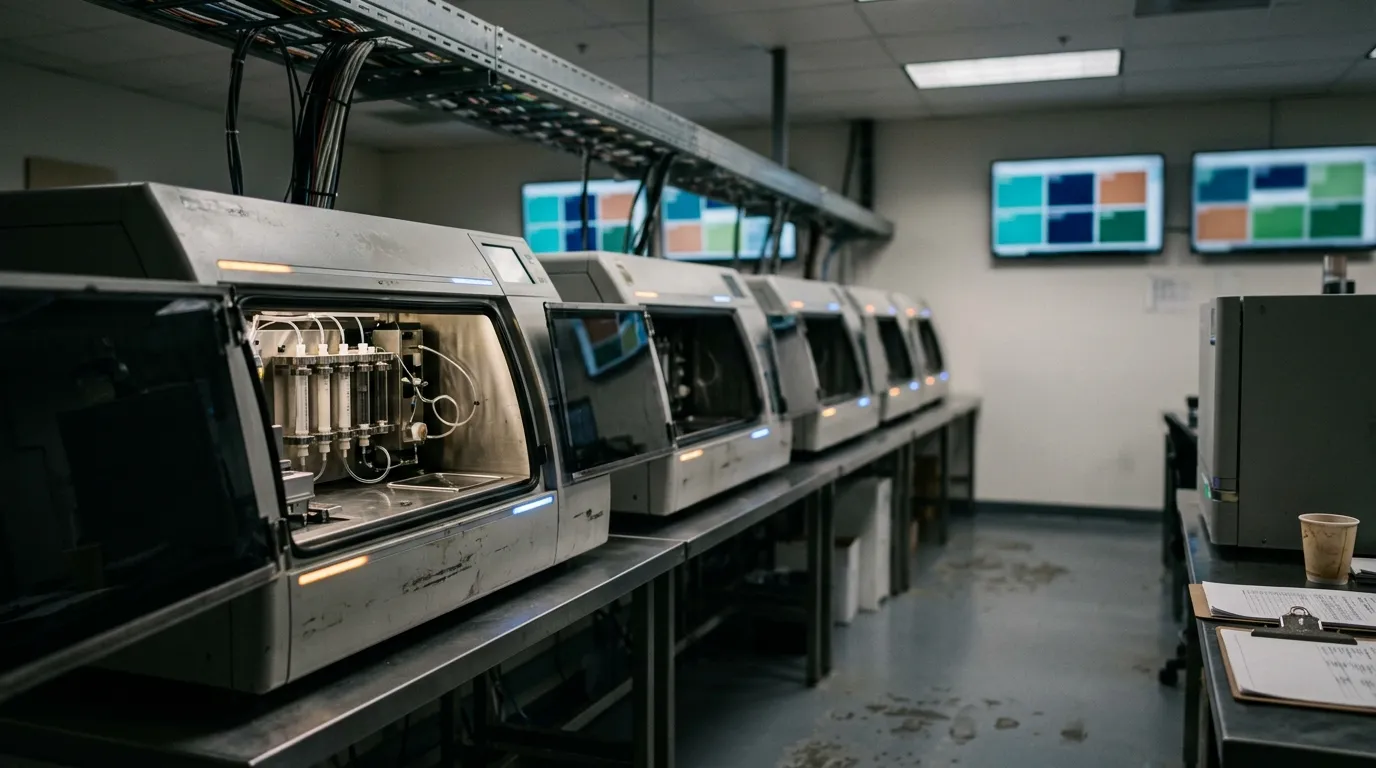
Real-time production monitoring. IoT data pipelines that ingest sensor data at millisecond intervals — fast enough to capture individual machine cycles — store it in time series databases, and render it in dashboards your engineering team checks daily. At one biotech manufacturer, these pipelines process over a billion sensor readings per day across 60+ machines. The same architecture scales to any production environment where machines generate data faster than your team can consume it.
Operational dashboards from legacy ERP data. We connect to your ERP — whether it is SAP, Oracle, JD Edwards, or another system — and build transformation layers that surface the metrics plant managers actually need. At an industrial distributor, we built automated reporting on warehouse productivity, sales orders, and fulfillment efficiency. At a commercial laundry service, we assessed production output tracking, inventory management, route optimization, and chemical usage across two plant facilities.
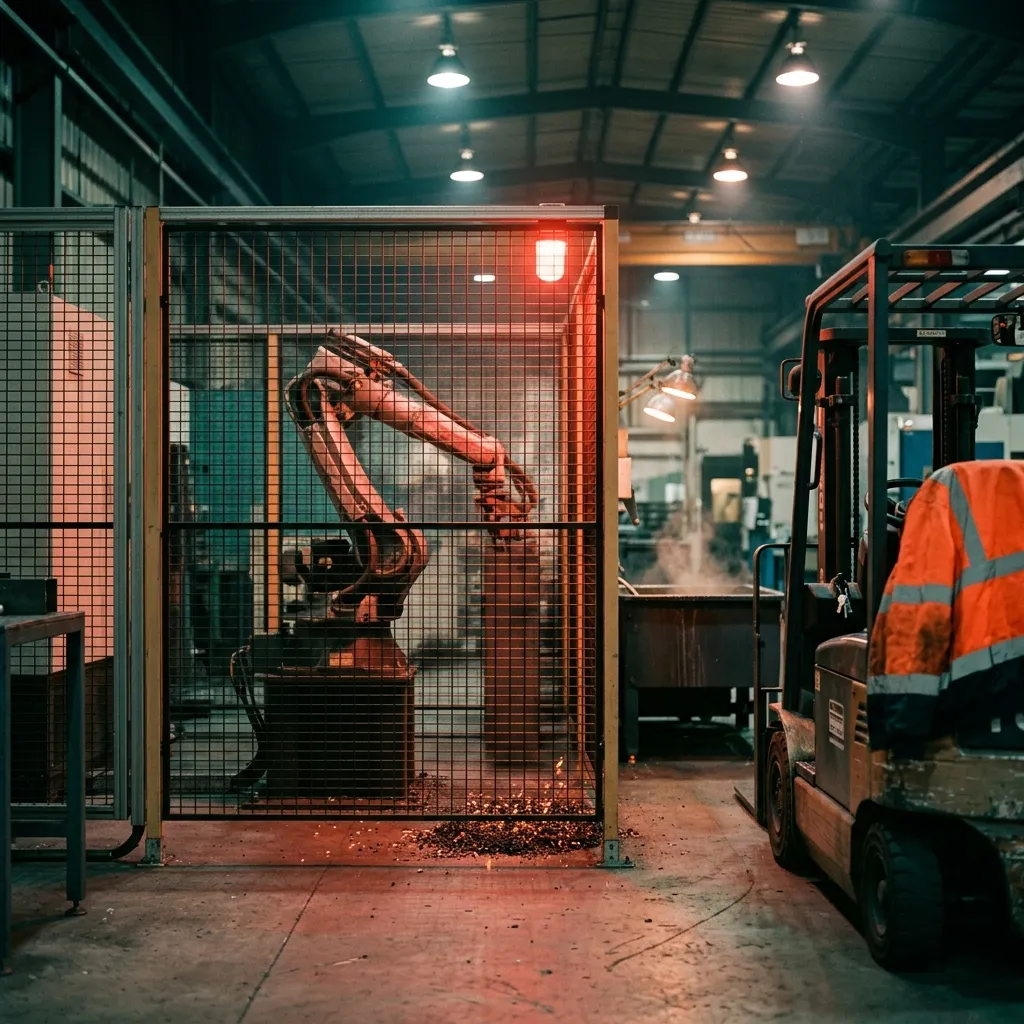
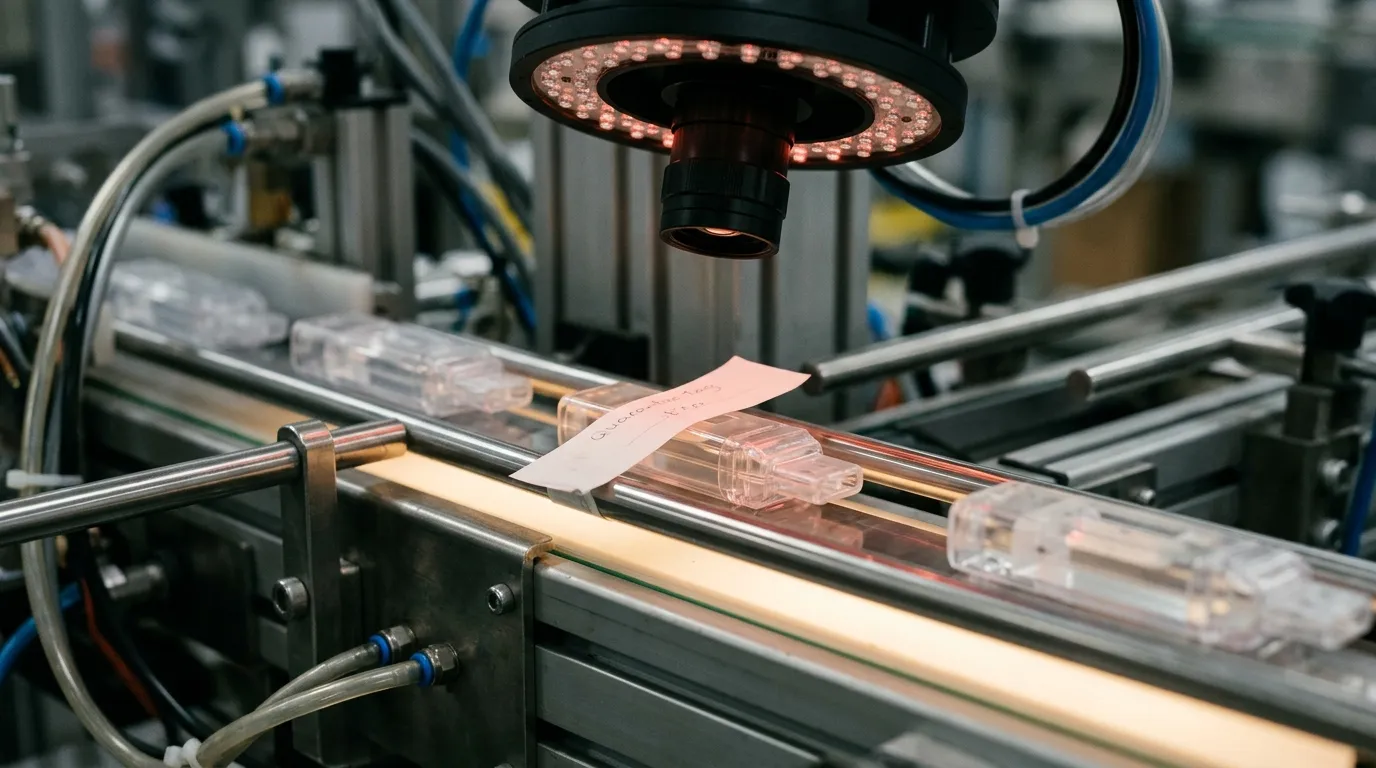
Quality analytics and traceability. Batch-level data pipelines that connect raw machine output to quality outcomes. When a failure pattern emerges in sensor data, your team sees it in the dashboard, not in a monthly report. We have built these systems for robotic arm analysis, vision system analytics, and statistical process control tracking.
ML infrastructure for manufacturing. For manufacturers ready to move beyond dashboards, we build the data preparation layer that makes machine learning possible: feature engineering pipelines, labeled training datasets, and model deployment infrastructure for predictive maintenance, defect detection, and process optimization.
From our podcasts: [Developing Sustainable Materials Using AI with Cambrium with Pierre Salvy](/podcasts/data-in-biotech/ep-16-cambrium-sustainable-materials), and [Biotech Manufacturing Quality with Stewart Fossceco with Stewart Fossceco](/podcasts/data-in-biotech/ep-18-stewart-fossceco-manufacturing-quality).