ML-Powered Failure Detection for a Diagnostics Manufacturer
CorrDyn designed data pipeline and ML model-serving infrastructure for a diagnostics manufacturer to catch cartridge failures before quality control.
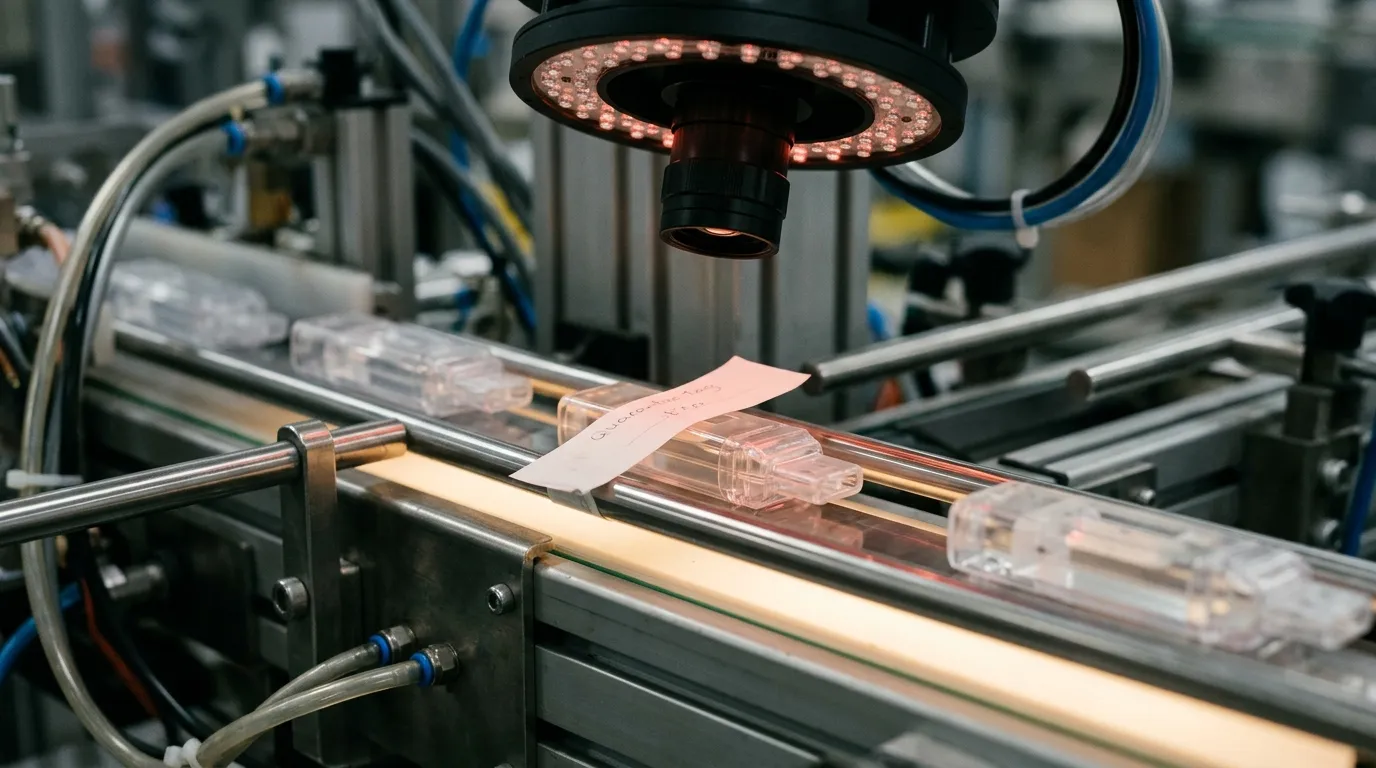
ML models identify defective cartridges before lot-level quality control
Failure detection
Dual pipeline: offline training data warehouse + real-time model serving
Architecture scope
Designed to scale from one machine to dozens across multiple facilities
Scalability
The situation
A diagnostics manufacturer produces cartridges used in medical testing equipment. Quality control is governed by regulatory requirements: if too many cartridges in a sampled lot fail testing, the entire lot must be discarded. Failures stem from defects in ultrasonic welding and film sealing processes, both of which produce rich sensor data and infrared imagery during production. But that data was not being used for early failure detection. Engineers discovered defective cartridges only during lot-level quality control, after the cartridges had already been incorporated into lots subject to regulatory sampling.
The company’s data science team had developed prototype ML models that showed promise for predicting weld and seal failures from production telemetry. What they lacked was the infrastructure to train those models on integrated datasets, deploy them to production, and serve predictions back to the manufacturing line at the latencies required for in-line quarantine decisions.
What we built
CorrDyn conducted an assessment that included 8+ stakeholder interviews, architecture and code review, infrastructure alternatives research, and a working proof of concept. The output was a data infrastructure roadmap and the initial implementation of two parallel systems.
Training data pipeline. Manufacturing machines send sensor data through PLC and OPC connections to Ignition, the plant’s supervisory control system. CorrDyn added a streaming path from Ignition to AWS Kinesis Data Firehose, which lands data in S3 and loads it into Snowflake via Snowpipe. This gives the data science team a warehouse with integrated relational data (weld events, sensor time series, seal test results) and references to infrared camera imagery stored in S3. Data quality checks validate PLC identifiers, serial number uniqueness, image counts, and label integrity before data enters the training pipeline.
Model serving architecture. We designed a containerized model serving system with three layers. Manufacturing machines trigger prediction requests through Ignition. A business logic layer (middleware) receives the request, preprocesses the data, selects the appropriate model based on the event type, and routes the request to the correct model inference endpoint. Each model runs as a containerized FastAPI application deployed on AWS ECS. The middleware returns predictions to Ignition, which can trigger automated cartridge quarantine on the production line.
The architecture supports multiple models per machine (weld failure, seal failure) and is designed to scale from one production line to dozens across multiple facilities. A CI/CD pipeline through GitLab handles model versioning, testing, and deployment.
What changed
The manufacturer gained the ability to flag potentially defective cartridges during production rather than discovering them during lot-level quality control. Quarantining suspect cartridges before lot assembly reduces the probability of regulatory lot failures, saving both materials and production time. The data science team can now develop models against integrated datasets in Snowflake and deploy them through a standardized process rather than ad hoc handoffs. The infrastructure was designed for expansion: bringing a new machine or model type online follows the same pipeline pattern without requiring new architecture.
Frequently Asked
Questions
We are losing production lots to quality failures that a few defective units cause. Can ML catch them earlier in the process?
How do you build ML infrastructure for a manufacturing floor that already runs on PLCs and Ignition?
Why bring in CorrDyn instead of having our data science team build the infrastructure themselves?
Related Work
Similar engagements across our portfolio.
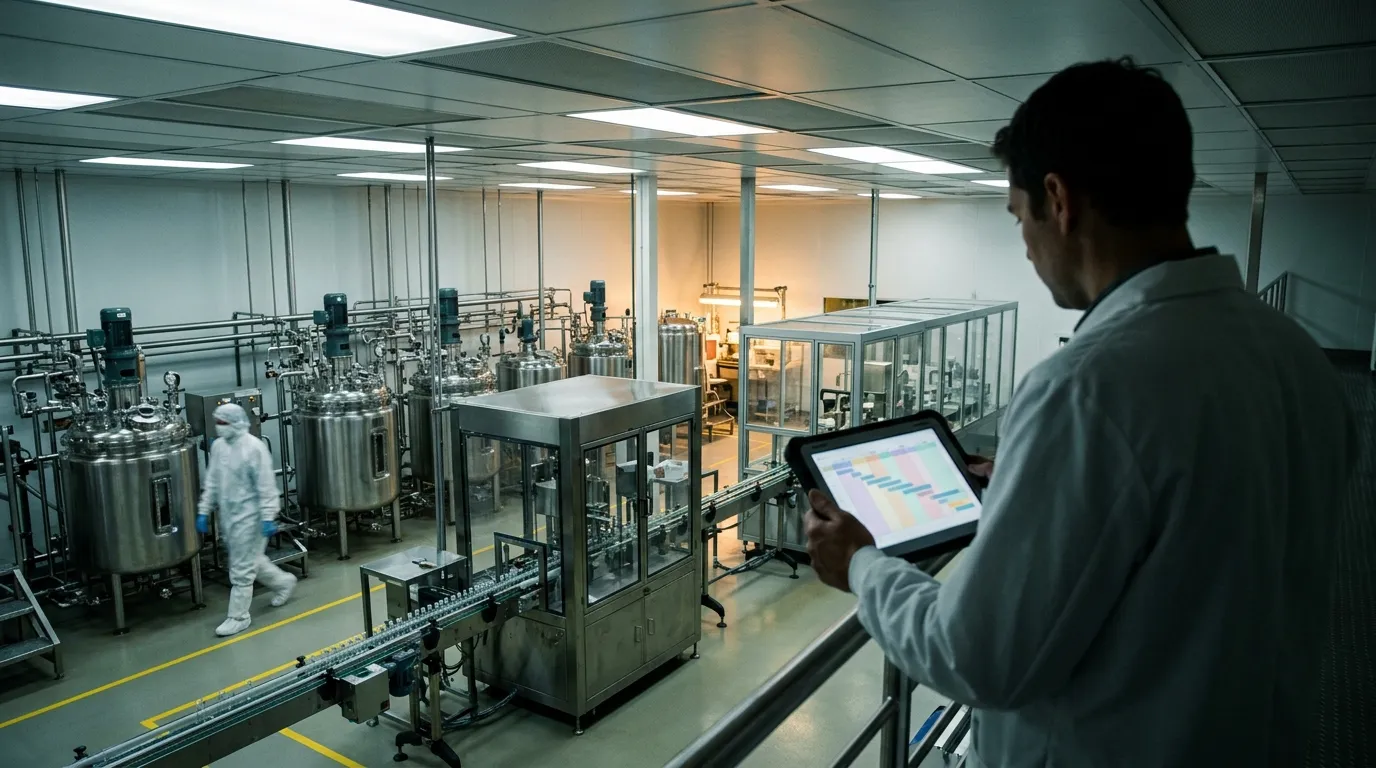
Manufacturing Throughput Optimization for a Biotech Producer
CorrDyn built process time analytics and a batch production simulation for a biotech manufacturer, enabling data-driven throughput optimization.
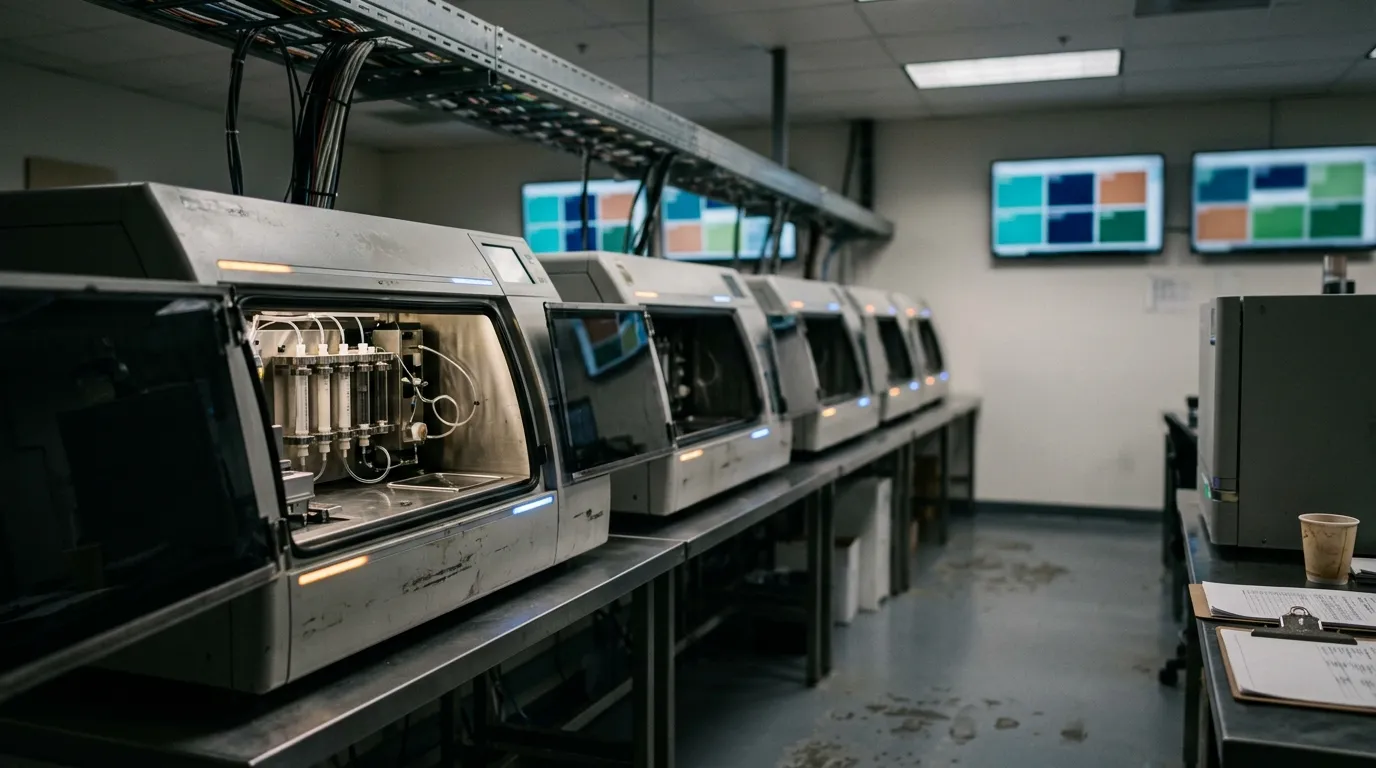
IoT Analytics for a Biotech Manufacturing Operation
CorrDyn built machine monitoring pipelines, ML failure detection, and real-time Grafana dashboards for a global biotech DNA/RNA synthesis manufacturer.
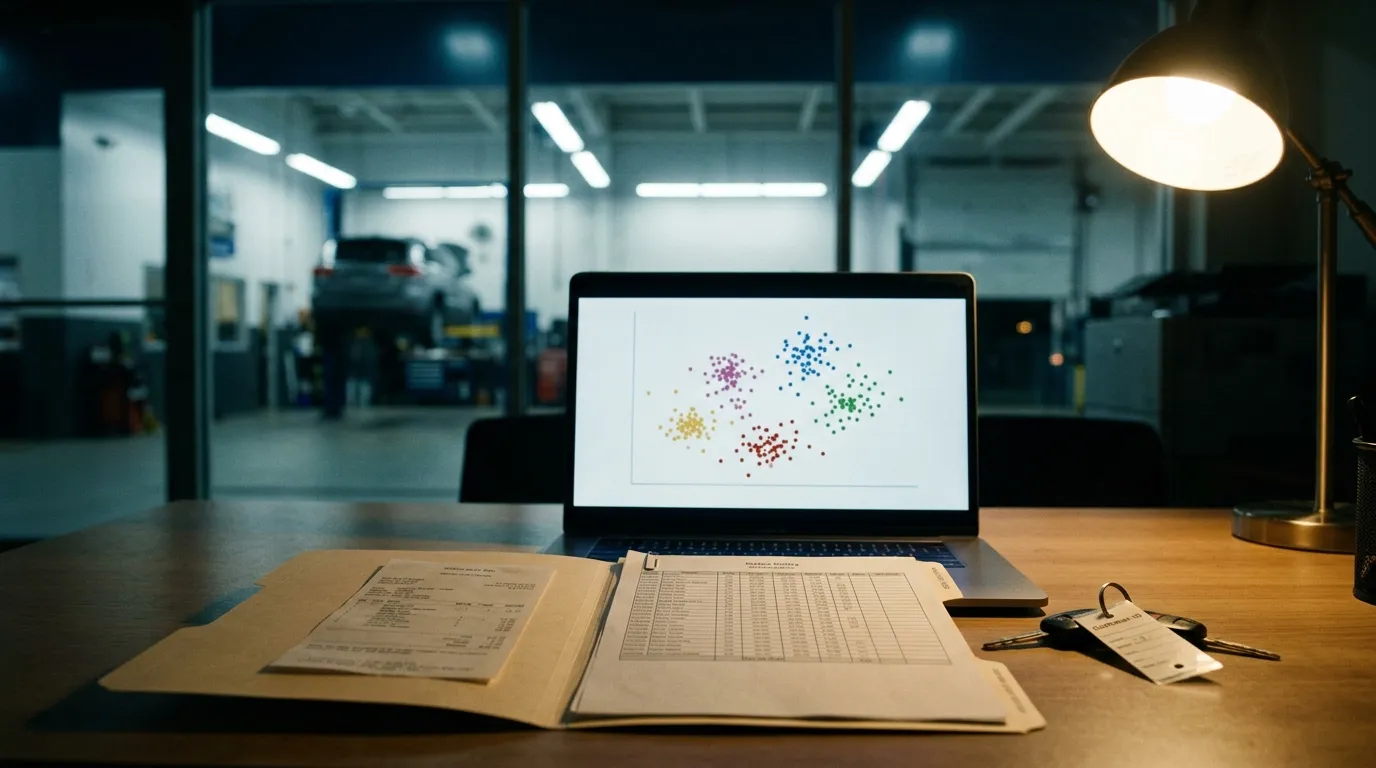
ML Customer Segmentation for an Automotive Dealer Group
CorrDyn built an ML clustering pipeline on Databricks with LLM-powered profiling to segment customers across vehicle brands for a dealer group.
Related Conversations
Podcast episodes that cover the same ground.
Applying ML/AI to Drug Development with Anil Kane
with Dr. Anil Kane, Thermo Fisher Scientific
Dr. Anil Kane of Thermo Fisher Scientific discusses how AI, machine learning, and digital tools are reshaping drug development and manufacturing efficiency.
Machine Learning and Quality Control in Biotech Manufacturing
with James Winegar, CorrDyn
James Winegar, CEO of CorrDyn, on applying machine learning to quality control workflows in biotech manufacturing and unlocking operational data.
Physics, Free Energy, and Computational Drug Discovery
with Robert Abel, Schrödinger
Robert Abel of Schrödinger on why ML alone fails in 10^60 chemical space and how physics-based simulation reaches near-experimental accuracy.